
Juror reveals ‘strong personalities’ in deliberation room led to Lindsay Clancy mistrial deadlock
A mistrial has been declared in the high-profile case of Massachusetts mother Lindsay Clancy, who faced charges in connection with the tragic deaths of her three young children. The jury, comprised of nine women and three men, remained deadlocked after a week of intense deliberations, ultimately splitting 11-1. New revelations from a juror shed light on the challenging dynamics within the deliberation room, suggesting that strong disagreements among panelists contributed to the inability to reach a unanimous verdict.
Inside the contentious deliberation room
Following the declaration of a mistrial, members of the jury have begun to share their experiences, offering a glimpse into the complexities of the decision-making process. One juror, identified as Juror No. 5, disclosed to local media outlets that the lone holdout juror was not the only individual initially firm in their stance. She revealed that she herself had initially leaned towards a guilty verdict for Clancy.
According to Juror No. 5, the deliberation room was marked by “big personalities” and a profound inability for some to move past their initial convictions. This internal struggle, she indicated, was not confined to a single individual. The juror expressed a degree of defense for the holdout, implying that rigid viewpoints were prevalent among multiple members of the panel, making compromise exceedingly difficult.
Understand the case: Unanimous verdict eludes jurors in Lindsay Clancy murder trial, prompting judge to declare mistrial
Divergent views on the lone holdout juror
The identity of the lone holdout juror remains undisclosed, as Judge William Sullivan impounded the jury list at the conclusion of the trial, citing privacy and safety concerns. However, other jurors have openly criticized the individual who prevented a unanimous decision. The jury foreperson, along with two other panelists, participated in a televised interview where they accused the holdout of “admitting he had reasonable doubt” but refusing to alter his insistence that Clancy was criminally responsible for the deaths of Cora, 5, Dawson, 3, and Callan, 8 months.
These jurors described the holdout as “arrogant” and alleged that he disregarded crucial information presented by “nurses on the jury,” implying a dismissal of professional medical insights during discussions. This stark contrast in perspectives highlights the deep divisions that characterized the week-long deliberations, ultimately leading to the jury’s inability to reach a consensus on whether Clancy was criminally responsible for her actions.
More on this story: US jury fails to reach consensus on conviction of Lindsay Clancy in case of death of her three children
- The jury was composed of nine women and three men.
- Deliberations spanned a full week before the mistrial was declared.
- The final vote count stood at 11-1, indicating a significant but not unanimous agreement.
- The defense argued that Lindsay Clancy was not criminally responsible due to postpartum psychosis.
- Judge William Sullivan denied a request to remove the holdout juror before declaring a mistrial.
Postpartum psychosis defense and future implications
The core of the trial revolved around the critical question of Clancy’s mental state at the time of the killings in 2023. Her defense team argued that she was not criminally responsible for her actions, asserting that she suffered from postpartum psychosis, a severe mental illness that can manifest after childbirth. This defense presented a complex challenge for the jury, requiring them to weigh medical testimony against the prosecution’s arguments regarding intent and culpability.
Despite repeated reports of deadlock to Judge Sullivan, the jury continued to deliberate until a mistrial was formally declared. The jury foreperson has publicly stated her intention to attend any potential retrial to support Clancy’s defense, underscoring the profound impact the case has had on those involved. The possibility of a new trial introduces further uncertainty into a case already fraught with emotional and legal complexities, raising questions about how the defense of postpartum psychosis will be presented and perceived in future proceedings.
More news in Latest News (EN)
See more → Massive gas cloud disguises early black hole as cosmic starWebb telescope reveals hidden black hole glowing like star
 Zelda 40th Anniversary Direct scheduled for September 8Zelda 40th Anniversary Direct streams globally in September
 Nicolas Cage beachfront home driveway collapses in MalibuDriveway collapses into sinkhole at Nicolas Cage Malibu home
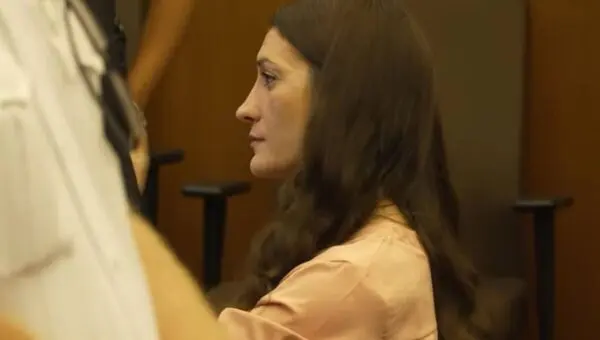 Lindsay Clancy trial jurors recount deadlock over lone holdout
 Meta deploys Muse automated assistant across United StatesAutomated Muse tool arrives in United States to run tasks
 Fi recalls two canine supplements over salmonella threat
 Apple chief teases iPhone 18 Pro camera in short video clipCamera teaser for iPhone 18 Pro surfaces ahead of Apple event
More news on Mix Vale
- 1Inside Adam Sandler’s $12 million California mansion in Pacific Palisades
- 2AI has over 10% risk to end humanity, Anthropic researcher says
- 3Apple plans clear casing and 5,200 mAh cell for iPhone 18 Pro
- 4Apple readies 5,200 mAh iPhone 18 Pro with see-through back
- 5DNA solves 1977 Wilson County case of missing Maryland teen
- 6Apple drops iPhone Ultra moniker for new foldable device
- 7Bilateral security pact brings $48 billion in defense value
- 8Washington weighs massive defense dividends from Israel pact
- 9Deadly cross-border attacks escalate, claiming six lives amid renewed diplomatic efforts
- 10German far-right party secures state election win, coalition prospects hinge on small populist faction