Ankle injury sidelines Patriots’ A.J. Brown during crucial third quarter of NFL season debut By Luís Pereira
3 min read
|
New England Patriots wide receiver A.J. Brown’s highly anticipated first game with the team was cut short on Wednesday evening after he sustained an apparent ankle injury in the third quarter of the NFL season opener against the Seattle Seahawks. The incident occurred at Lumen Field, forcing Brown to exit the contest prematurely and leaving uncertainty about his immediate future with the team. His departure marked a significant setback for the Patriots’ offense in what was shaping up to be a tight divisional matchup.
Brown’s early exit and injury specifics
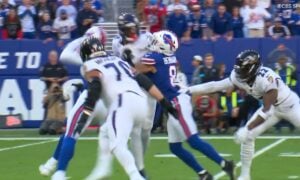
The injury to A.J. Brown took place while he was attempting to secure a catch during the third quarter. A Seahawks defender reportedly rolled into him during the play, leading to the wide receiver falling to the ground and remaining there for a period. Medical personnel quickly attended to Brown on the field, assessing his condition before he was able to make his way to the sideline without needing assistance. This initial sign offered a glimmer of hope, but further evaluation quickly pointed to a more serious issue.
Upon reaching the sideline, Brown entered the blue medical tent, a common procedure for more private assessments of player injuries. He was later observed heading to the locker room, notably wearing only one cleat, indicating the severity of the discomfort in his ankle. The team officially ruled him out for the remainder of the game shortly thereafter, confirming an ankle injury. This swift decision underscores the concern surrounding the star receiver’s condition, especially in the opening game of the season.
Impact on Patriots’ offensive drive before setback
Before his untimely departure, A.J. Brown had already begun to demonstrate his potential value to the New England offense. Despite playing just over two quarters, he contributed meaningfully to the team’s early lead. His ability to draw a crucial penalty also highlighted his playmaking capabilities, directly influencing the Patriots’ scoring opportunities. The team was leading 10-0 when Brown left the field, a testament to their early-game execution.
Brown’s contributions included several key plays that moved the chains and put the Patriots in advantageous positions. His early performance included:
- Three receptions for a total of 26 receiving yards.
- Drawing a 34-yard pass interference penalty against the Seahawks.
- This penalty directly set up the Patriots’ first touchdown of the game.
His absence immediately shifted the dynamic for the Patriots’ passing game, forcing other receivers to step up in a crucial road contest. The team managed to maintain a narrow 10-3 lead over Seattle heading into the fourth quarter, but the loss of a primary target like Brown could have long-term implications for their offensive strategy.
Broader context of game and other player absences
The season opener between the New England Patriots and the Seattle Seahawks was highly anticipated, serving as a rematch of Super Bowl LX, which Seattle won 29-10 in February, securing their second Vince Lombardi Trophy. The game itself saw both teams grapple with significant player injuries, underscoring the physical demands of professional football. The Patriots’ robust defense had held the Seahawks scoreless until late in the first half, showcasing their strength even as their offense adjusted to Brown’s absence.
Seattle also faced its own quarterback challenges early in the game. Seahawks quarterback Sam Darnold was forced to leave the contest in the first quarter due to an unspecified injury and was subsequently ruled out for the rest of the game. Drew Lock, the backup quarterback, stepped in to replace Darnold under center for Seattle. This dual blow to key offensive players on both sides added another layer of complexity and resilience to the opening match, highlighting the depth and adaptability required from NFL rosters throughout a demanding season.