
Rattlesnake blood yields potent antivenom ten times stronger
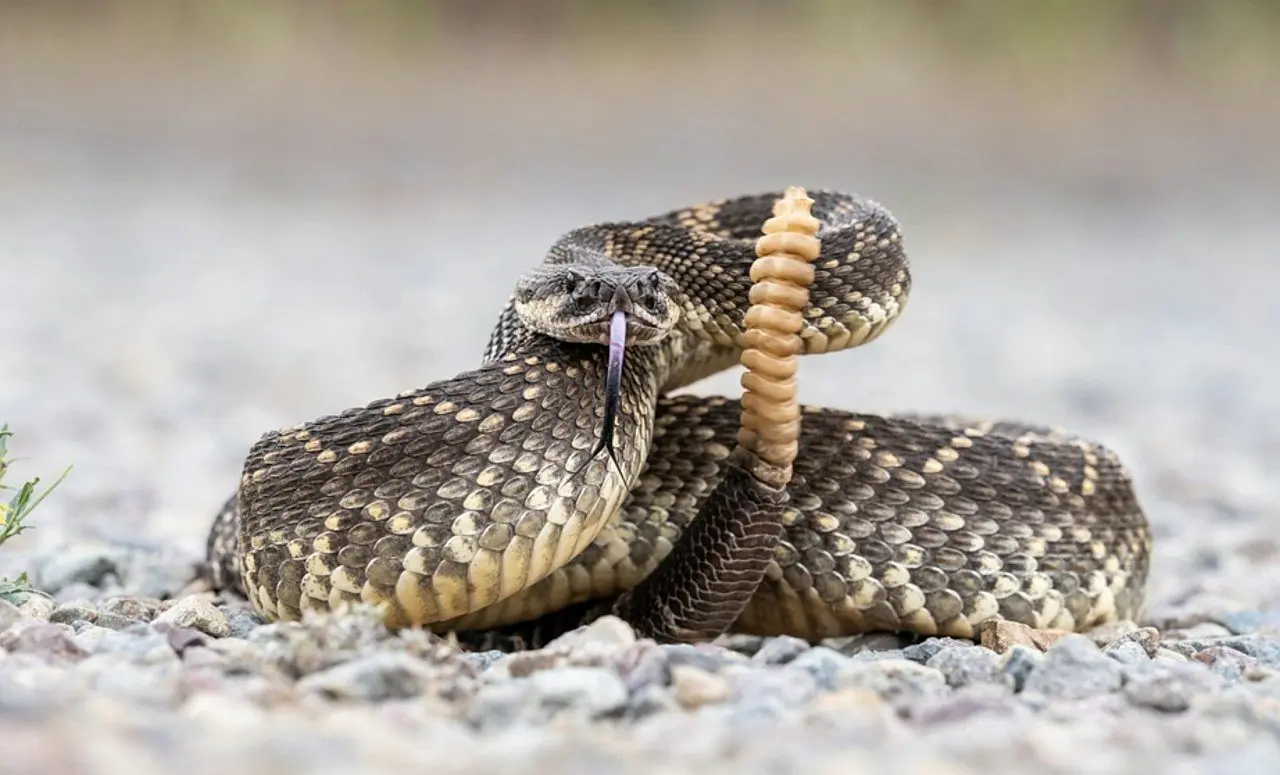
Scientists developed a medical formulation from snake blood proteins that exhibited tenfold greater potency than existing clinical products during laboratory trials on September 7, 2026. The breakthrough emerged from natural venom inhibitors.
Biologists at the University of Maryland created the venom-neutralizing technique by isolating toxin-blocking proteins that western diamondback rattlesnakes generate to withstand their own strikes.
Investigators mixed distinct proteins gathered from serpent circulatory systems to construct defenses against multiple pit viper species. The compound neutralized venoms.
Sean B. Carroll, distinguished university professor of biology, directed the investigation published in the Proceedings of the National Academy of Sciences. The data provides a path toward modern antidotes in regions facing severe envenomation crises. The trial results confirmed that targeted snake molecules neutralize severe tissue destruction.
“This is one of those great stories when nature has already solved a problem we’ve been grappling with for decades,” said Carroll, who holds the Andrew and Mary Balo and Nicholas and Susan Simon Endowed Chair at the University of Maryland.
Read also: Bacteria taken by astronauts manage to survive at the lunar south pole
Snakebites kill over 80,000 people each year across rural communities
Public health agencies classify envenomation among the most neglected tropical health crises on the planet. The World Health Organization estimates that venomous snakes kill between 80,000 and 140,000 people annually, leaving hundreds of thousands of surviving victims with lasting physical disabilities in isolated farming settlements.
Current serum products preserve lives despite enduring notable clinical constraints. Manufacturing conventional treatments requires exposing livestock to snake venoms to harvest therapeutic antibodies, which inflates overall production expenses, generates inconsistent batches that struggle against varied viper toxins, and frequently triggers severe immune reactions in envenomated human patients. These limitations create severe shortages.
Such therapeutic barriers led laboratory researchers to examine serpent biology for alternative molecular responses.
Learn more: How many healthy adults fart per day? Experts respond
“We’ve known from anecdotes for 100 years that vipers tend to be resistant to their own venom,” Carroll said. “But for a long time, nobody knew what exactly was circulating in their blood that protected them.”
Protective mechanisms in viper circulation shield reptiles from internal poisoning
In 2022, Carroll and his team identified an active agent known as FETUA-3. The isolated molecule inhibited metalloproteinase enzymes present in western diamondback rattlesnake secretion. Testing confirmed the protein also bound to toxins produced by several related rattlesnake varieties.
“Why rely on horse antibodies when nature has packaged an effective antidote right there in the snake?” Carroll said after observing evolutionary traits preventing self-envenomation.
Elda Sánchez, director of the National Natural Toxins Research Center at Texas A&M University-Kingsville, contributed to the project by analyzing how individual FETUA molecules influence immune resistance. Her laboratory cataloged the protective behavior of each component.
Individual proteins demonstrated specific physiological actions, such as mitigating internal bleeding or halting destructive enzymatic functions. None of the isolated FETUA agents prevented mortality when administered alone against lethal doses. Complete survival required broader intervention.
Understand the case: ‘Wandering’ supermassive black hole discovered far from galactic center after devouring star

Combined serum elements demonstrate ten times greater efficacy in laboratory trials
Protection rates escalated significantly once scientists mixed multiple FETUA proteins into unified treatments that halted venom toxicity.
Calibrating the formulas remained difficult because viper secretions carry approximately 100 separate toxic proteins spanning diverse biochemical categories. Each serpent lineage displays a distinctive venom composition. Trials demanded extensive testing.
“The ingredients are there,” Carroll said. “We just have to keep testing various mixtures.”
Optimized combinations of the blood proteins proved ten times more potent than standard sheep-derived antivenom during lab tests, neutralizing rattlesnake venom while shielding organisms against divergent viper species.
“The fact that parts of these inhibitors have been perfectly conserved over 50 million years of snake evolution tells you just how real a risk this is for these animals,” Carroll said. Scientists still investigate whether snakes envenomate themselves through mouth lesions, cannibalism, or the ingestion of poisoned prey.
Laboratory formulas prepare veterinary and human applications against viper toxins
The published experiments concentrated on metalloproteinases, prompting the research team to adapt the strategy toward additional toxic families.
“We’re getting remarkably close to having effective solutions for the three major toxin families in vipers,” Carroll said. He noted that laboratory-produced recombinant antivenoms remain within reach.
Commercial rollout will target veterinary applications before clinicians adapt the treatments for human victims.
More on this story: Study reveals real number of daily farts in healthy adults
The biological design could yield therapies that combat diverse venoms with enhanced safety, lower manufacturing expenses, and simplified bulk processing. The model bypasses farming.
“Many of our most important medicines have come from nature,” Carroll said, adding that large-scale production could help resolve an international health emergency.
Fiona Ukken and Yetunde Ayinuola, visiting faculty specialists in the Department of Biology at the University of Maryland, served as co-authors on the paper. They assisted in analyzing the cellular data.
The Howard Hughes Medical Institute and the Viper Resource Center financed the scientific study under grant P40OD01960-22.
More news in Latest News (EN)
See more → Semaglutide use drops asthma attacks by nearly 40 percent
 Charles letter on royal role blindsides Harry and Meghan
 Cosmic expansion slows down as study questions dark energy
 New Marvel’s Wolverine trailer showcases Portuguese dubbing
 Marvel’s Wolverine presents rapid battles with Jean Grey
 Marvel’s Wolverine posts 77 average Metacritic score on PS5
 GTA 6 Controller for PS5: Check Price, Release Date, and Where to Buy
 Donald Trump pledges $500 rebates to 1 million ACA enrolleesNYC lawmaker faces mounting pressure to avoid 9/11 commemoration amid controversy over past remarksAaron Rodgers desafia integridade da ESPN e expõe suposta omissão em cobertura de caso Vrabel-Russini
 Sony opens GTA 6 DualSense PS5 controller sales at $84.99Podcast community mobilizes fans to reinstate controversial ‘Gator Bait’ chant for Florida Gators football
More news on Mix Vale
- 1PlayStation reveals Grand Theft Auto VI controllers for PS5
- 2Divorce deepened Nicole Kidman’s emptiness during 2003 Oscar
- 3Kidman endured deep personal void after 2003 Oscar victory
- 4Walmart recalls 4 household items across multiple states
- 5Fossil of 20-meter dinosaur found at rail terminal in Brazil
- 6Voters promised $5,000 cash dividend if Republicans win Congress
- 7High-profile Tate brothers denied bail in Florida, face UK extradition on serious charges
- 8Liberal MP Hastie’s reluctant Ben Roberts-Smith defamation testimony ignites One Nation criticism
- 9Intact Chimu royal burial site unearthed in Peru’s desert offers unparalleled historical insights
- 10Foundation honors 9/11 hero, provides over 1,700 mortgage-free homes, combats national tragedy being forgotten