Comets rarely delivered intact hydrogen cyanide to Earth, Cambridge study finds By Luís Henrique Costa
5 min read
 |
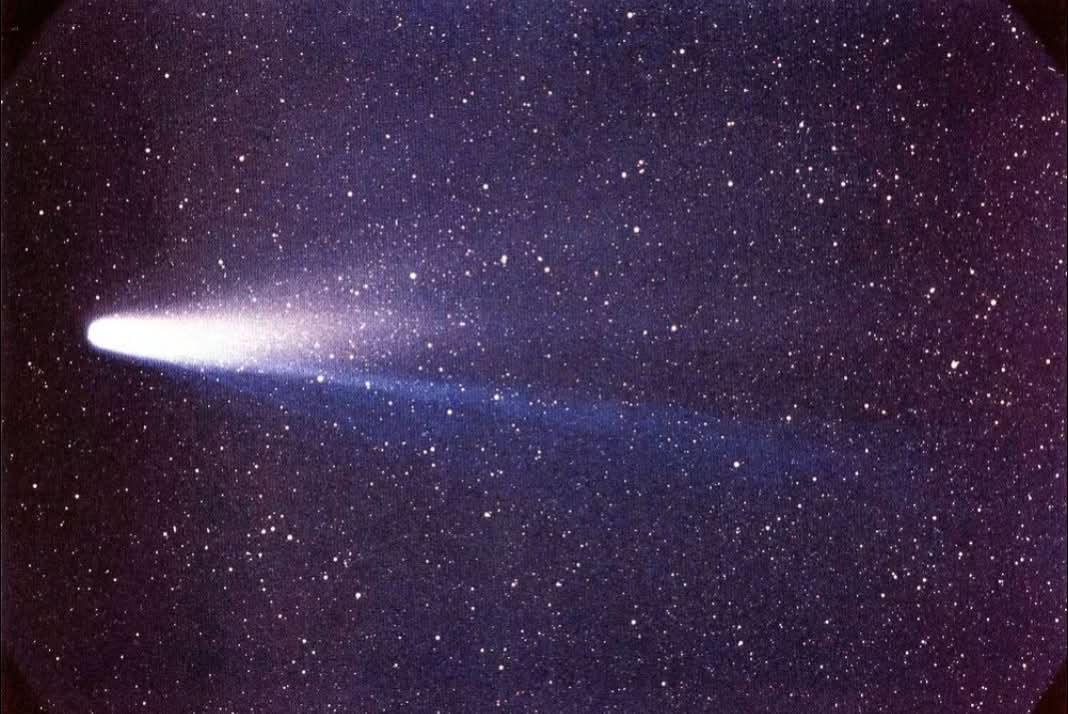
Comets would rarely have brought hydrogen cyanide to Earth in intact form, according to computer simulations run by researchers at the University of Cambridge, in the United Kingdom. The molecule is linked to the chemistry that came before life, and the team tested whether comets could deliver it in large amounts. In most of the scenarios, the amount reaching the surface was not enough for the reactions studied in laboratory experiments.
Richard Anslow, the study’s author and a Cambridge researcher, said the models show that comets generally hit Earth too fast and at very steep angles for their molecules to survive. In his view, the results suggest comets “probably did not play an important role in the origin of life.”
Why hydrogen cyanide matters to the origin of life
Known in chemistry as HCN, hydrogen cyanide can take part in forming sugars, fats and components of DNA and RNA, the core molecules of all living things. Comets carry this compound and other organic substances, and scientists have debated for decades whether impacts billions of years ago supplied raw material for early chemistry. The new work tested one specific mechanism: the arrival of large amounts of intact HCN on the planet’s surface.
How impact speed and angle destroy the molecule
In the simulations, comets usually struck Earth at high speed and at steep angles, conditions that favor the destruction of HCN. According to the researchers, the heat and pressure generated by the impact can break down part of the molecule before it reaches the ground. The authors add that even when HCN survives the shock, water in the environment can dilute it quickly, which shortens the time for useful chemical reactions.
What hydrogen cyanide needed to reach the ground
- Pass through the atmosphere without being destroyed by the comet’s passage.
- Hit Earth at a favorable speed.
- Hit Earth at a favorable angle.
- Withstand the heat and pressure created by the impact.
- Avoid dilution by water after landing.
Most simulations failed to deliver the molecule
Even under conditions chosen to favor the hypothesis, more than half of the simulations recorded no impact able to deliver HCN at the concentration the authors analyzed. Across 100,000 simulations meant to recreate the early bombardment of comets on Earth, the researchers found such delivery exceedingly unlikely. For the team, the rarity of the event is the central point of the study, more than an absolute impossibility.
Comets may have helped in other ways, authors say
The results do not mean comets contributed nothing to the origin of life. The study focuses mainly on the direct, intact delivery of HCN in large concentrations. The authors acknowledge that a particularly favorable impact cannot be completely ruled out. According to one specialized publication’s analysis, other organic molecules carried by comets may also have taken part in prebiotic chemistry.
Spanish scientist cautions against an extreme reading of the results
César Menor Salván, an astrobiologist and professor at the University of Alcalá, in Spain, said the work does not prove that comets had no part in the emergence of life. He said the study indicates that one specific mechanism, the direct delivery of large amounts of intact HCN, would be unlikely. Menor Salván also noted that comets carry several other organic substances, and that impacts themselves can trigger chemical reactions and create environments favorable to processes that preceded life.
Check out: Stephen Hawking framed human limits as the spark for cosmic discovery
Limits of the conclusions, according to a Spanish geologist
Jesús Martínez Frías, a planetary geologist and astrobiologist at the Geosciences Institute of Spain, made a similar assessment. For him, the simulations are rigorous, but their conclusions should not be extended to every possible role comets may have played. He noted that the research focuses on HCN and does not broadly assess other organic compounds or the role of water carried by these bodies.
Mars would have been a more favorable target than Earth
The researchers also found differences between the two planets. In the simulations, Mars would have been a far more favorable target than Earth for intact HCN delivered by comets, mainly because of its thinner atmosphere and slower impacts. The authors, however, state that this does not mean life began on Mars, since the simulations assess only one specific stage of the chemistry that could precede life.
Why comets remain central to the origin-of-life debate
The origin of life is still one of the great open questions in science. The molecules needed for the first chemical reactions may have been produced on Earth or brought from space by comets, asteroids and dust particles, and researchers still debate the weight of each source. For the authors, the intact arrival of large amounts of HCN by comets would have been extremely rare. That does not rule out other possibilities, but it indicates that life’s origin probably cannot be explained by a single type of impact or a single molecule.
Hypothesis dates back to the 20th century
The idea that comets carried molecules relevant to the origin of life has been discussed since the 20th century. One milestone cited is the work of biochemist Joan Oró, who synthesized adenine from HCN in studies from the 1960s. Scientists long believed comets were important to life’s origin because they carried molecules containing carbon and nitrogen.
Study details: journal, institution and author
- Journal: Scientific Reports
- Institution: University of Cambridge, United Kingdom
- Study author: Richard Anslow
- Molecule analyzed: hydrogen cyanide (HCN)
- Publication date: October 28, 2026, 12:00 Brasília time
No follow-up study announced by the Cambridge team
The Cambridge team has not announced new studies to deepen the topic. So far, the results are limited to HCN simulations and to scenarios of direct delivery of the molecule by comets, with no measurements of other organic compounds or other ways of reaching Earth.