

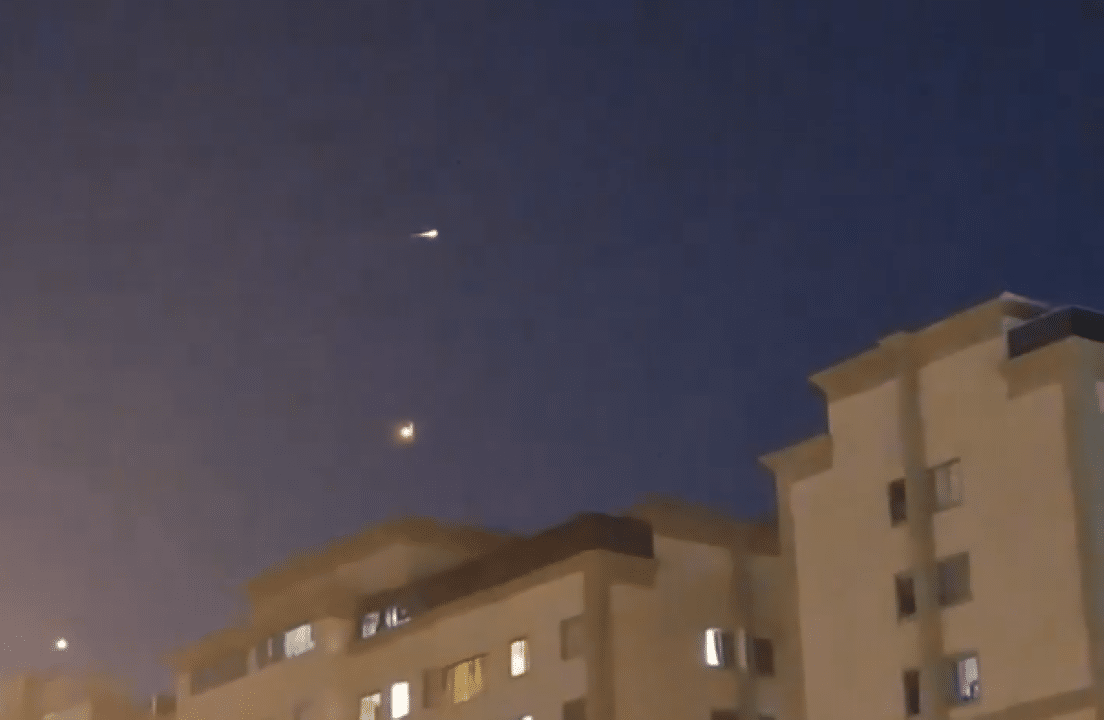
A glowing orb blazed across the sky of the Distrito Federal on the evening of May 14, 2025, captivating residents and igniting widespread curiosity. Around 6:20 p.m., the luminous object, described as a fireball, was spotted in urban and rural areas, prompting a flurry of theories. Videos and photos flooded social media, capturing the fleeting phenomenon that lasted mere seconds but left a lasting impression. Without immediate official statements, discussions about its nature intensified.
Visible in neighborhoods like Taguatinga, Ceilândia, Sobradinho, and Planaltina, the object stood out for its brightness and straight trajectory. Witnesses reported it moving from west to east, vanishing on the horizon. Many described it as a “brilliant flash” trailed by a glowing streak, leading to speculation of a meteor. Others suggested possibilities like space debris or even unidentified aerial phenomena.
Social media erupted with activity, as hashtags such as #MeteorDF and #BrasiliaSky trended rapidly. Users shared footage from various angles, showcasing the radiant sphere against the sunset’s orange glow. Astronomers were called upon to examine the recordings, while residents awaited official clarification.
Several factors point to a meteor, though the lack of confirmation keeps the mystery alive. Potential explanations include:
- A bolide, a brighter type of meteor that may explode in the atmosphere;
- Space debris reentering Earth’s atmosphere;
- An optical phenomenon caused by light reflecting off atmospheric particles;
- Military equipment or drones, though less likely.
Public response unfolds swiftly
Residents of the Distrito Federal reacted with awe and excitement to the luminous object. In Taguatinga, a group of students leaving a private school recorded the event and shared it online instantly. The video, depicting the glowing sphere crossing the sky, garnered thousands of views within hours. In Ceilândia, a family hosting a barbecue paused to watch, describing the sight as “unlike anything before.”
Online platforms buzzed with activity. A Sobradinho resident posted that the object resembled “a giant shooting star,” while another from Planaltina jokingly suggested “Brasília was hosting extraterrestrial guests.” The speed of image sharing underscored the event’s impact on the local community. Many likened the scene to science fiction films, amplifying online discussions.
Conversations also flourished in messaging groups, where residents exchanged theories and observations. Some claimed to hear a thunder-like sound minutes after the object passed, hinting at a sonic boom from a bolide. Others reported no sound, highlighting varied perceptions of the event.
Scientific possibilities explored
The meteor hypothesis gained traction among amateur and professional astronomers. Meteors are space rocks that enter Earth’s atmosphere at high speeds, heating up and emitting bright light. When exceptionally luminous, like the Distrito Federal event, they are classified as bolides. These can leave visible trails and, in rare cases, fragments that reach the ground, known as meteorites.
Another possibility is the reentry of space debris, such as satellite or rocket components. Earth’s orbit hosts thousands of such objects, and their occasional reentry can mimic meteor displays. However, the absence of prior announcements about scheduled reentries makes this less likely, as space agencies typically track such events.
Optical phenomena, like halos or reflections from atmospheric ice crystals, were considered but deemed improbable due to the object’s linear path and intensity. Speculation about drones or military tests surfaced online, but no concrete evidence supports these theories, as such activities are usually confined to restricted zones.
Historical parallels examined
Celestial events like the one in the Distrito Federal are not unprecedented. In 2013, a meteor exploded over Chelyabinsk, Russia, damaging buildings and injuring over a thousand people due to the shockwave. In Brazil, notable cases include a 2016 meteor sighted in São Paulo and Minas Gerais, and a 2020 bolide in Rio Grande do Sul. These incidents highlight the regularity of space debris entering Earth’s atmosphere.
In the Distrito Federal, such sightings are rare but documented. In 1998, Brasília residents reported a bright light later identified as a meteor. Another event in 2007, seen in Goiás and the DF, sparked similar debates. These historical cases show that, while uncommon, celestial sightings consistently captivate public interest.
Comparing past events provides context for the recent phenomenon. Unlike Chelyabinsk, where the meteor caused physical damage, the Distrito Federal event appears harmless, with reports limited to visual observations. The lack of reported impacts suggests the object likely disintegrated in the atmosphere.
Experts mobilize for answers
Astronomers from the National Observatory and the University of Brasília were enlisted to analyze footage of the event. Meteoritics specialists, who study meteors and meteorites, began collecting resident accounts to map the object’s trajectory. This step is critical to determine if fragments reached the ground and where to search for them.
Video analysis is a key focus. Security camera and smartphone recordings offer data on the object’s speed, direction, and brightness. These details help scientists distinguish between a meteor, space debris, or another source. Collaboration with international networks, such as the International Meteor Organization, is underway to cross-reference findings.
Challenges include the limited availability of specialized equipment in the DF. Unlike regions with dedicated observatories, like Chile’s Atacama Desert, Brazil relies heavily on amateur networks and public reports. Nevertheless, the abundance of videos aids initial investigations.
Sightings beyond the capital
The phenomenon extended beyond the Distrito Federal, with reports from nearby Goiás. Residents of towns like Águas Lindas and Valparaíso noted the bright light at the same time, indicating the object covered a wide area. These accounts broaden the event’s significance, suggesting visibility over hundreds of kilometers.
In Goiás, a farmer from Santo Antônio do Descoberto described the object as “a fireball falling slowly.” Another resident, from Luziânia, captured it on a smartphone, showing the glowing sphere against the twilight sky. The consistency of these reports supports the idea of a large-scale event.
The possibility of fragments landing in rural areas has sparked interest. Meteorite hunting groups, comprising enthusiasts and amateur scientists, are planning searches in regions like northern Goiás and eastern DF. These efforts hinge on precise trajectory calculations.
Factors boosting visibility
Several elements made the phenomenon widely observed. The timing, near sunset, created a striking contrast between the orange sky and the object’s bright glow. Clear skies across much of the Distrito Federal enhanced visibility, enabling residents to capture sharp images.
The DF’s dense population also played a role. With millions in urban areas, the event had numerous witnesses. The prevalence of high-resolution smartphone cameras further ensured detailed recordings of the phenomenon.
Additional factors amplifying attention include:
- Rapid spread of videos on social media;
- Public fascination with rare celestial events;
- Lack of immediate official statements, fueling speculation;
- The object’s vivid appearance, described as a “fireball.”
Authorities respond cautiously
The Aerospace Operations Center (COMAE) in Brasília was notified but has not issued official statements. The Air Force, responsible for airspace monitoring, is reviewing radar data to check if the object was human-made, such as a drone or space debris. The absence of prior reentry alerts leans toward a natural origin.
The National Institute for Space Research (INPE) was also engaged to assist. Its sensors, used to track meteors and atmospheric events, may provide further data. Coordination between government agencies and independent researchers is vital to resolving the case.
The lack of official updates drew criticism online, with users demanding greater transparency. Some questioned why no warnings were issued if space debris was involved, while others noted that natural phenomena are hard to predict.
Meteor facts and figures
Meteors are common but not always as visible as the DF event. Earth receives tons of extraterrestrial material daily, mostly tiny particles that burn up in the atmosphere. Events like the one on May 14 involve larger fragments, creating dramatic light shows.
Key meteor facts include:
- Entry speeds can exceed 70 km/s;
- Most meteors disintegrate at altitudes of 80–100 km;
- Bolides, like the potential DF sighting, are visible over vast distances;
- Meteorites, fragments that reach the ground, are rare but scientifically valuable.
Meteor observation carries cultural significance. In many societies, shooting stars are tied to wishes or omens. In the DF, the 2025 event reinforced humanity’s awe of celestial phenomena, blending science and wonder.
Social media amplifies reach
The event’s spread on social media turned it into a viral phenomenon. Platforms like X, Instagram, and TikTok saw thousands of posts with related hashtags. A Taguatinga video, showing the object streaking across the sky, amassed over 500,000 views in hours.
Local influencers boosted visibility. A Ceilândia content creator shared an amateur analysis, comparing the event to meteor sightings globally. Another, from Sobradinho, hosted a live discussion with followers, drawing hundreds of viewers.
Online reactions varied widely. Some users approached the event with humor, while others expressed concern about potential physical impacts. The viral spread highlighted social media’s power to elevate local events to global audiences.
Search for ground fragments
If the object was a meteor, the hunt for meteorites is a priority. These space rock fragments offer clues about the solar system’s origins. In the DF, dense vegetation and urban areas may complicate searches, but rural zones, like northern Goiás, are promising.
Meteorite hunters are organizing efforts. A Planaltina enthusiast plans to use drones to survey potential landing sites. Scientists urge residents to report unusual finds, such as dark rocks with fusion crusts.
Finding meteorites would be a scientific milestone for Brazil, where few have been recovered. The prospect keeps public interest alive.
Community engagement grows
The phenomenon spurred collective action. DF schools launched activities to discuss the event, using it to teach astronomy. In Sobradinho, a physics teacher scheduled a community lecture on meteors, featuring event footage.
Amateur astronomy groups gained traction. The Brasília Astronomy Club announced an event to analyze the phenomenon, inviting residents to share accounts. These efforts aim to channel public curiosity into education, fostering scientific interest.
The event’s impact united diverse groups, from children to seniors, around a natural spectacle, underscoring celestial events’ ability to inspire.