

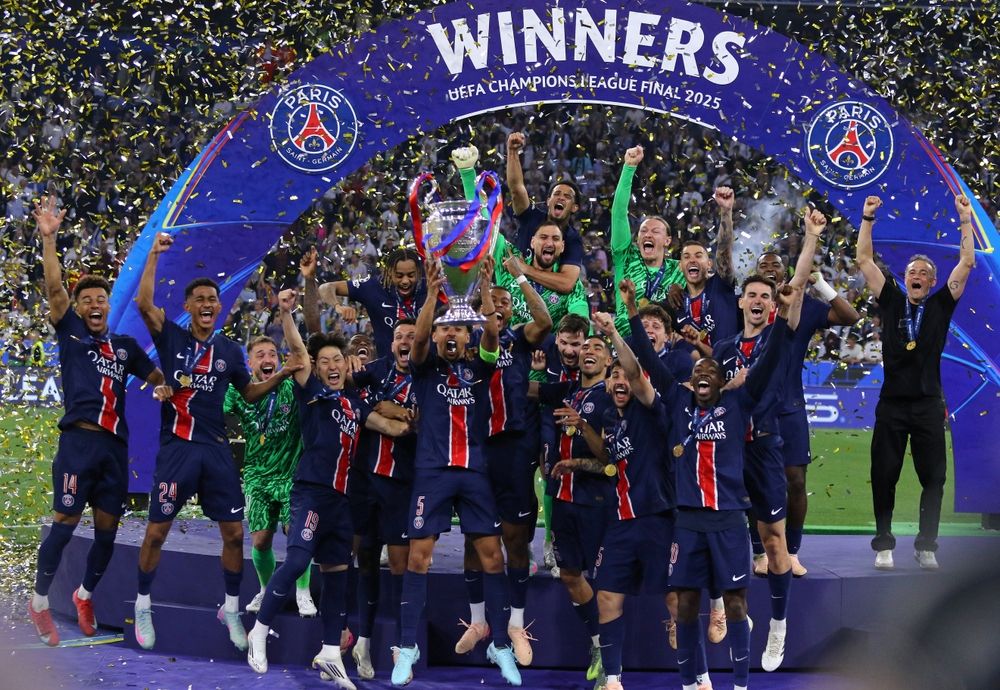
With just 100 days until the 2025 FIFA Club World Cup kicks off, Paris Saint-Germain (PSG) stands out as the top favorite to claim the title, according to the Opta supercomputer, a leading sports analytics firm. Set for June 14 to July 13 in the United States, the tournament features 32 clubs from six confederations in a revamped, expanded format. Boasting an 18.5% chance of victory, PSG, the reigning UEFA Champions League winner, leads the rankings released on June 9. Hosted across 11 U.S. cities, the competition promises fierce battles, though Brazilian clubs like Palmeiras and Flamengo trail with slim odds. Held every four years, this event replaces the old annual model, heightening global anticipation.
PSG’s favoritism is no shock. Fresh off their first Champions League triumph, the French club has dominated 2025, posting a 95.6% win rate in 15 matches, per Sofascore data. Coached by Luis Enrique, PSG faces Atlético de Madrid, Botafogo, and Seattle Sounders in Group B, debuting on June 15 at Atlanta’s Mercedes-Benz Stadium. Opta’s simulations, run over 10,000 times, give PSG a 90%+ chance of reaching the round of 16, cementing their status as a powerhouse.
- Key PSG strengths for the tournament:
- Star-studded roster with Kylian Mbappé and Gianluigi Donnarumma.
- Averaging 3.3 goals per game in 2025, per Sofascore.
- Aggressive tactics under Luis Enrique, with 67.6% possession.
- Proven success in high-stakes competitions, including the Champions League final.
The competition, however, is intense. European giants like Manchester City, Bayern Munich, Inter Milan, and Real Madrid round out the top five in Opta’s rankings, each with strong chances of winning at New Jersey’s MetLife Stadium.
European dominance in focus
European clubs monopolize the top five spots, underscoring UEFA’s global strength. Manchester City, with a 17.8% chance, ranks second, followed by Bayern Munich (12.8%), Inter Milan (12.3%), and Real Madrid (9.8%). This mirrors a 20-year trend: no South American team has won the Club World Cup since 2005. Superior finances, deep squads, and consistent continental success give Europeans an edge, analysts note.
Real Madrid, with 15 Champions League titles, navigates a coaching transition under Xabi Alonso but remains a force. Manchester City, despite Premier League struggles, leans on Pep Guardiola’s brilliance and Erling Haaland’s firepower. Inter Milan banks on tactical discipline, while Bayern aims to reclaim global prominence with Harry Kane leading the line.
Brazilian clubs’ slim chances
Brazilian teams, despite fielding four clubs, face long odds. Palmeiras and Flamengo, each with a 0.3% chance, rank 13th and 14th, respectively, per Opta. Fluminense and Botafogo fare even worse. This gap reflects the technical and financial divide with European clubs, compounded by a two-decade drought against UEFA teams in world championships.
Palmeiras, facing Porto on June 15 at MetLife Stadium, is Brazil’s strongest hope, bolstered by Abel Ferreira’s steady leadership and over $80 million in recent signings. Flamengo, leading Brazil’s Série A, meets Tunisia’s Espérance on June 16 in a favorable group but must overcome inconsistencies. Fluminense, up against Borussia Dortmund, and Botafogo, facing Seattle Sounders, round out Brazil’s first-round matchups.
- Challenges for Brazilian teams:
- Lower investment compared to European clubs.
- 20-year South American losing streak against Europeans in world championships.
- Physical strain from Brazil’s packed football calendar.
- Need to adapt to U.S. climate and logistics.
New tournament format
The 2025 Club World Cup mirrors the old FIFA World Cup structure, with eight groups of four teams. The top two from each group advance to a single-elimination round of 16, culminating in the July 13 final. FIFA expects a global audience, with free DAZN broadcasts in multiple languages. The tournament spans 63 matches across 12 stadiums, including Miami’s Hard Rock Stadium, hosting the opener between Inter Miami, led by Lionel Messi, and Al Ahly.
The format ensures competitive balance and geographic diversity. Group draw pots, based on continental rankings, placed top South American and European clubs in Pot 1, with Asian, African, and other confederations filling out the groups. FIFA enforced strict rules, excluding Mexico’s León due to ownership conflicts with Pachuca.
Favorites’ rigorous preparations
PSG, the top-ranked team, is gearing up intensely. Luis Enrique emphasized maintaining competitive rhythm, scheduling U.S. friendlies before the debut. Since 2011, PSG has spent over $2.4 billion on transfers, building a formidable squad. Enrique called PSG a “model of management and performance” for the tournament.
Other favorites are equally proactive. Manchester City plans a U.S. pre-season for acclimatization, while Bayern targets key attacking signings. Inter Milan, under new management post-Simone Inzaghi, focuses on defensive solidity. Real Madrid, despite coaching changes, relies on veterans like Vinícius Júnior, hailed by FIFA president Gianni Infantino as a tournament star.
Logistical hurdles and high expectations
Hosting the tournament across 11 U.S. cities, from Seattle to Orlando, poses logistical challenges like long travel distances. FIFA assures that venues like MetLife and Mercedes-Benz Stadium, with capacities exceeding 80,000, are ready for teams and fans. A special transfer window from June 1-10 allows all 32 clubs to bolster squads, with registrations due by June 10.
Expectations are sky-high, fueled by global stars. Beyond Mbappé and Haaland, players like Messi and Jude Bellingham will draw eyes. Infantino noted the tournament’s 82 nationalities, boosting its worldwide appeal. It also tests U.S. infrastructure ahead of the 2026 World Cup.
Staggering stats
Opta’s data highlights European dominance. Of 32 teams, 12 are from UEFA, with the biggest budgets and rosters. PSG recorded 265 shots in 15 games in 2025, creating 88 big chances. Manchester City averages 2.5 goals per Premier League match, while Real Madrid boasts 15 continental titles.
Brazilian clubs struggle to keep pace. Palmeiras and Flamengo, each with three Libertadores titles, are Brazil’s best bets, but their budgets pale compared to PSG’s billions. The gap in resources remains a hurdle.
Group stage and opening clashes
Groups were set in a Miami draw after Botafogo’s 2024 Libertadores win. PSG’s Group B, featuring Atlético de Madrid, is highly competitive. Group A, with Palmeiras and Porto, promises fireworks, while Flamengo’s Group F looks manageable. Fluminense faces a tough Borussia Dortmund in Group C.
The group stage, ending June 26, will determine the 16 knockout qualifiers. FIFA set head-to-head results as the primary tiebreaker, followed by goal difference and goals scored. Knockout matches go to extra time and penalties if needed.
Strategic transfer window
The June 1-10 transfer window lets clubs fine-tune rosters. PSG may add depth, while Palmeiras and Flamengo eye targeted signings. FIFA extended the window to all teams from the 20 participating nations, even non-competitors, with a June 10 registration deadline.
Tradition meets ambition
The 2025 Club World Cup pits historic giants like Real Madrid and Bayern against rising stars like PSG. It also spotlights emerging clubs like Inter Miami, boosted by Messi, and Al Ahly, Africa’s most decorated team. The blend of footballing styles and cultures will make this tournament a historic milestone.