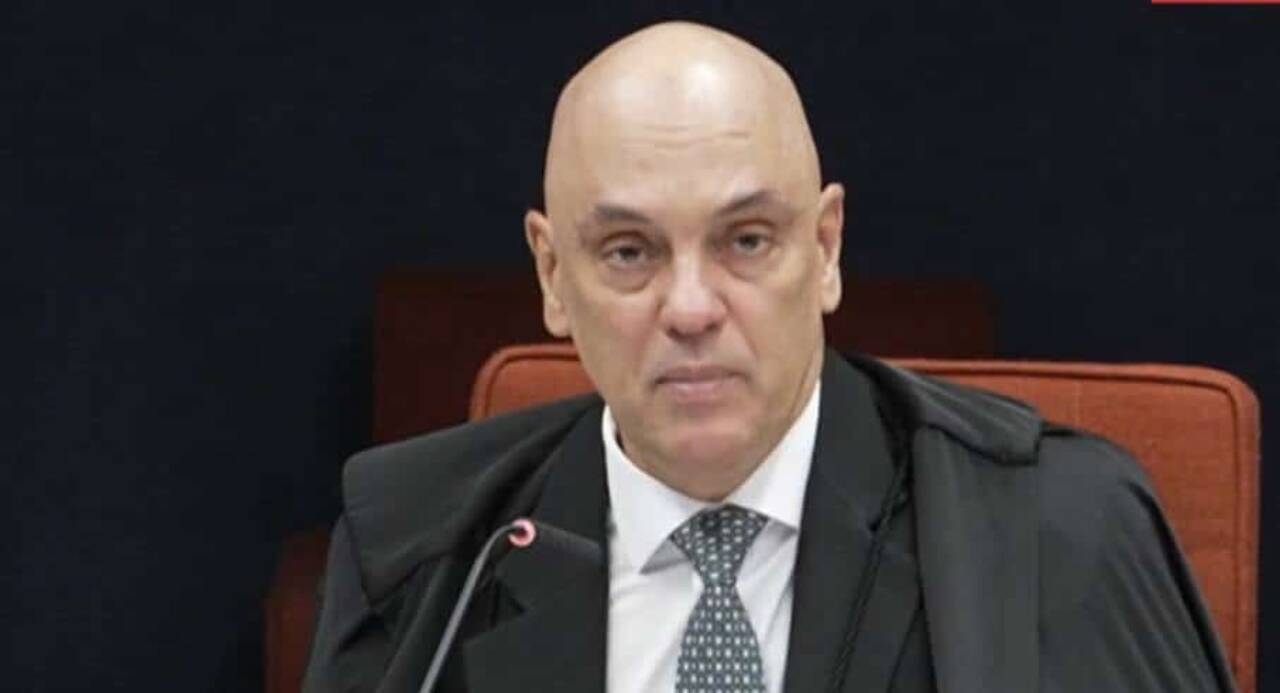
The Supreme Federal Court (STF) resumed, in September 2025, the trial of the criminal action investigating the alleged coup attempt attributed to former president Jair Bolsonaro and allies after the defeat in the 2022 elections. Under the rapporteurship of Justice Alexandre de Moraes, the session examines accusations against Bolsonaro, former ministers such as Augusto Heleno and Walter Braga Netto, and other defendants, charged with conspiring against the democratic order. The Court evaluates evidence, including the plea deal of Mauro Cid, Bolsonaro’s former aide-de-camp, who detailed plans to prevent Luiz Inácio Lula da Silva’s inauguration. The trial, held in Brasília, takes place amid heightened security at the STF and intense media coverage. Moraes’ firm responses to the defenses have sparked heated debates. The case is considered a landmark due to the involvement of high-ranking figures from the previous government.
The current session, continuing with Moraes’ vote, emphasizes the validation of Cid’s plea deal despite challenges from the defenses. The trial occurs in a context of political tension, with criticism of the STF from Bolsonaro’s allies.
- Main defendants: Jair Bolsonaro, Augusto Heleno, Walter Braga Netto, and Valdemar Costa Neto.
- Focus of the accusation: attempt to stage a coup to reverse the 2022 election results.
- Key evidence: Mauro Cid’s plea deal and messages seized by the Federal Police.
Rejection of process nullities
Justice Alexandre de Moraes opened the session by rejecting defense arguments seeking to nullify Mauro Cid’s plea deal. He dismissed claims of nullity based on leaked audios and dialogues, such as those published by Veja magazine, stating they do not compromise the validity of the evidence. Cid’s plea deal, which includes details of meetings with military personnel and politicians to plan actions against Lula’s inauguration, was upheld as a central piece of the case. Moraes emphasized that Cid’s statements are corroborated by other evidence, such as messages and documents seized.
The defenses, including that of General Augusto Heleno, questioned the justice’s conduct, accusing him of acting as an “inquisitor.” In response, Moraes defended his role, stating that a judge should not be a “judicial fern,” a phrase that gained traction. He stressed that the active participation of the magistrate in the case’s instruction is provided for in law and Brazilian jurisprudence. The justice also dismissed preliminary objections regarding the number of questions asked of witnesses, noting that the defenses did not exhaust the limit of eight witnesses per crime.
- Audio leaks: do not affect the plea deal’s validity, per Moraes.
- Judge’s role: Moraes defended his active participation in the process.
- Witnesses: defenses did not use the full number of allowed witnesses.
- Evidence: messages and documents reinforce Cid’s plea deal.
Mauro Cid’s role in the accusation
Mauro Cid’s plea deal is the cornerstone of the accusation against Bolsonaro and allies. Cid, a former aide-de-camp, revealed details of meetings at the Alvorada Palace where plans to prevent Lula’s inauguration were discussed. He provided messages and documents that, according to the Attorney General’s Office (PGR), prove the coup plot. The PGR, led by Paulo Gonet, described the accusation’s scenario as “shocking” and “disturbing,” stating that the coup was already in progress before the 2022 elections.
The defenses tried to discredit Cid, alleging contradictions and claiming he fabricated information for benefits. Bolsonaro’s lawyer, for instance, stated that Cid lied. However, Moraes highlighted that material evidence, such as messages exchanged between defendants, supports the testimony. The STF’s tendency is to uphold the plea deal, with other justices, like Luiz Fux, signaling support for its validity.
- Alvorada meetings: coup discussions occurred before and after the elections.
- Material evidence: messages and screenshots confirm the coup plot.
- PGR: accusation points to prior coup planning.
- Contradictions: defenses question Cid, but STF upholds plea deal.
Defense strategies and STF atmosphere
The defendants’ defenses adopted varied strategies but faced challenges in dismantling the accusations. Augusto Heleno’s lawyer, Matheus Milanez, presented a spreadsheet comparing the number of questions asked by Moraes, the PGR, and the defenses, suggesting the justice overstepped his role. Moraes rejected the criticism, stating that a judge has a duty to seek procedural truth. Walter Braga Netto’s lawyer acknowledged seized messages but claimed they were “disconnected,” an argument also dismissed by the rapporteur.
The atmosphere at the STF was marked by moments of tension and levity. Moraes, known for his firm stance, made ironic remarks, such as responding to a request for a break from Heleno’s lawyer with “lunch is far off.” Justice Cármen Lúcia also stood out by reprimanding defenses for repetitive questioning. The trial, broadcast live, drew the attention of political analysts, who highlight its significance for consolidating democracy.
- Defense strategies: questioning the plea deal and Moraes’ conduct.
- STF responses: Moraes and Cármen Lúcia counter arguments.
- Court atmosphere: tension and moments of irony mark sessions.
Heightened security and political context
The STF reinforced security in Brasília for the trial due to the risk of protests by Bolsonaro supporters. The measure reflects the case’s political impact, occurring amid polarization. Criticism of the STF, led by figures like São Paulo governor Tarcísio de Freitas, has intensified the debate about the Court’s role. Moraes, a target of attacks, reaffirmed the Judiciary’s independence, stating that coercion will not affect the justices.
The trial also unfolds amid international disputes, such as a lawsuit against Moraes in the United States, filed by companies linked to Donald Trump, questioning Brazilian judicial orders. Despite this, the Court’s focus remains on analyzing evidence against Bolsonaro and allies, with expectations that the case will set precedents for holding accountable those who threaten democracy.
- Security: increased police presence at the STF due to protest risks.
- Polarization: trial heightens criticism of the STF.
- International disputes: U.S. lawsuit does not interfere with the case.
- Precedent: case may define punishments for threats to democracy.