Gemini Telescope records Crystal Ball Nebula and allows observing evolution of binary system
A new image shows a dazzling celestial object, a star accompanied by another, in the process of dying, that resembles a crystal ball.
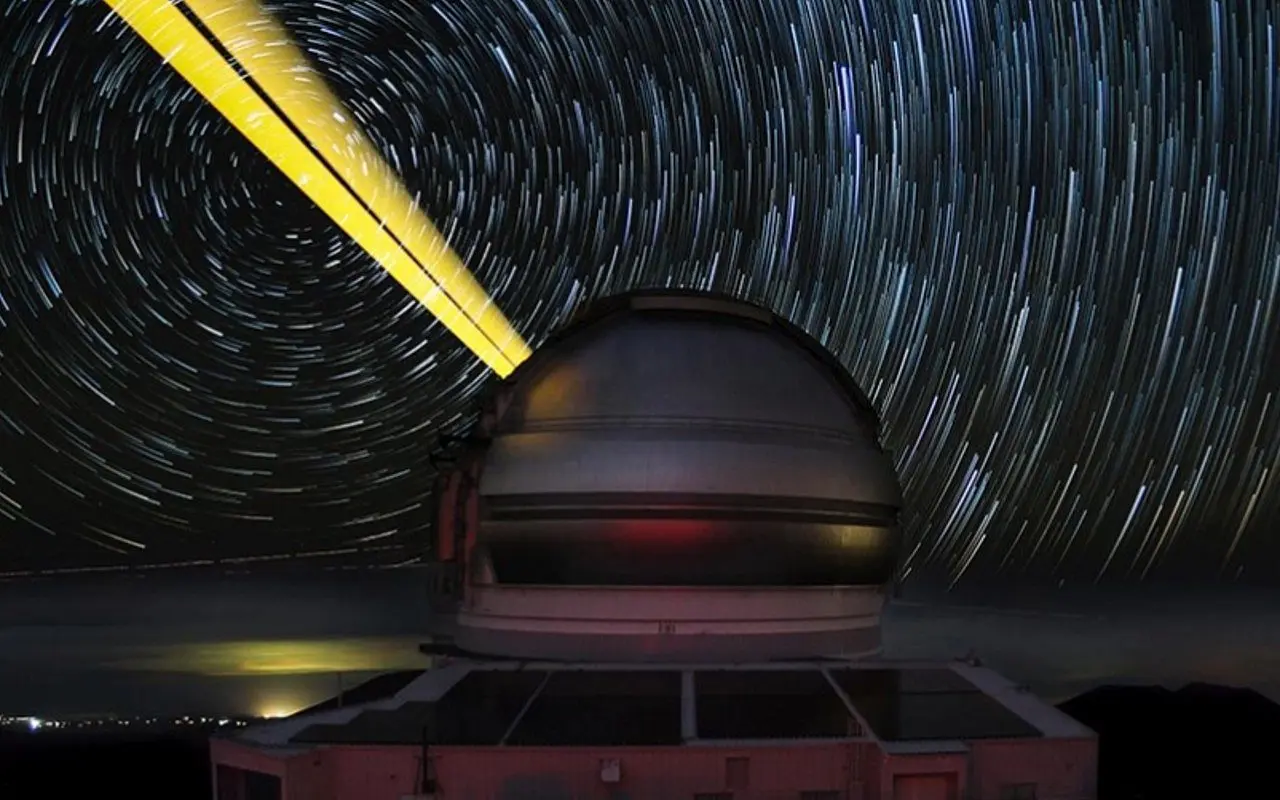
Scientists captured an image of NGC 1514, nicknamed the Crystal Ball Nebula, with the Gemini Multi-Object Spectrograph. The instrument is mounted on the Gemini North telescope, located on Maunakea, a dormant volcano in Hawaii.
Researchers set aside a few hours at night to look at the sky and spot something impressive, said astronomer Travis Rector.
“It’s a way to share with people how incredible our universe is, so the nebula was not a scientific target, but rather one chosen just because it looks really cool,” said Rector, a member of the NOIRLab team that captured the image. NOIRLab is the acronym for the National Science Foundation’s National Optical and Infrared Astronomy Research Laboratory.
More on this story: Gemini North Telescope reveals asymmetric structure of nebula NGC 1514 and binary pair
The image reveals the striking details of the planetary nebula, which is about 1,500 light-years from Earth, in the constellation Taurus. A light year is the distance light travels in one year, equivalent to 5.88 trillion miles (9.46 trillion kilometers), which means the light shown in the photo was emitted approximately 1,500 years ago.
Planetary nebulae get their name because they look like planets when viewed through a small telescope. These celestial objects form when dying stars eject their outer layers. The expulsion creates a region of dust and gas around the star’s core — a white dwarf.
“They have distinct shapes. They are really spectacularly beautiful objects and often have very complex but symmetrical structures,” said Rector, a professor of physics and astronomy at the University of Alaska Anchorage.
See Also

Innovative behavior: dolphins in Australia use shells to hunt fish
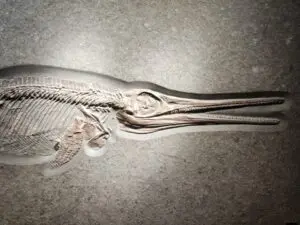
Discovery of new species of ichthyosaur in Germany expands understanding of the Jurassic

Fossil from Argentina rewrites origin of viviparity in mammal ancestors over millions of years
The stunning image allows scientists to observe how a two-star system is affected when one star reaches the end of its life before the other.
Two star system
The Crystal Ball Nebula houses a binary system: two stars that formed close to each other at the same time and orbit around each other. More than half of the stars in our galaxy are part of multiple systems, according to NASA.
Learn more: Dying binary stars carve Crystal Ball Nebula 1,500 light-years away, astronomers reveal
“The first star is shedding its outer layers. The other star, just by orbiting around the first one, kind of intensifies things and creates these beautiful complex shapes,” Rector explained.
The nebula’s colors appear vivid because of a filter in the spectrograph that allows specific wavelengths of light to pass through, corresponding to specific types of gas. The reddish hues come from hot hydrogen and the bright blue comes from hot oxygen, which are typically the most abundant gases produced by planetary nebulae.
German-British astronomer William Herschel, who coined the term “planetary nebula” after noticing the planet-like shape of these objects, first spotted the Crystal Ball Nebula in 1790.