Grave of Iron Age Celtic prince with jewels and cart reveals new data
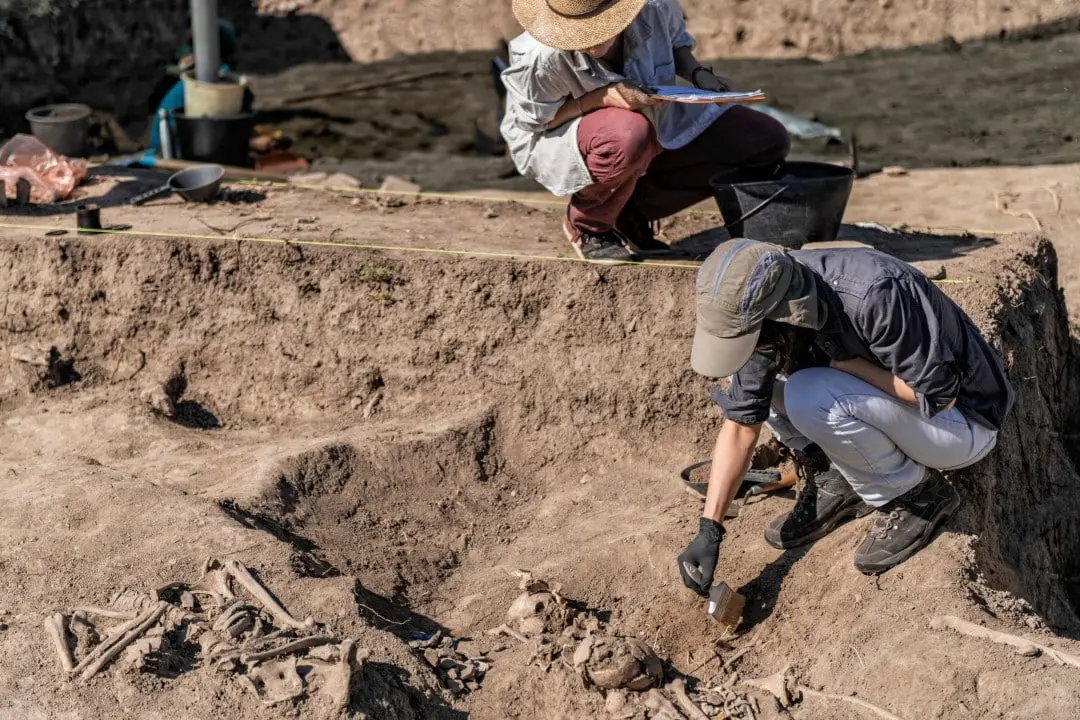
Researchers in Germany have revealed a rare Iron Age princely tomb containing gold jewelry, imported artifacts and a cart. This unprecedented discovery provides new information about the Celtic elite who inhabited the region.
The find, reported at the beginning of June by the Hessian Ministry of Science, Research, Arts and Culture (HWWK), occurred during preliminary excavations for the construction of a solar park. Archaeological teams dedicated two weeks to work on the tomb, ensuring that the project schedule was not compromised.
Objects found indicate individuals of high prestige
Among the items recovered from the burial site, experts found gold jewelry, imported objects — such as an Etruscan jug with a spout — and traces of weapons. This evidence led to the conclusion that the tomb belonged to a person of considerable social status.
“With the princely tomb from the early La Tène period in Bad Camberg, we can now demonstrate the presence of a local Celtic elite that was previously only assumed,” said Professor Udo Recker, archaeologist at the State of Hesse. He added that “the tomb, and the opportunity to investigate it using the latest research methods, is of great importance for Iron Age research in Hesse.”
Rare burials with vehicles enrich historical research
X-ray and computed tomography analyzes of extracted soil blocks revealed the existence of other funerary objects, which await recovery and analysis.
Archaeologists also identified wheel hubs, axle covers and iron parts from tires, confirming that a two-wheeled cart was buried next to the individual.
The evidence found suggests that the burial belonged to a Celtic prince or warrior, whose prominent position was symbolized by the presence of a vehicle, a clear marker of status for the time.
Learn more: Discovery of iron handcuffs reveals Celtic slave trade in France 2,300 years ago
According to the ministry, Celtic cart burials are extremely uncommon in Hesse, and none of the previous examples compare to the tomb discovered near Bad Camberg.
Archaeologists continue to investigate the discovery site
The artifacts are currently under analysis by Hesse Archeology and the Keltenwelt research center located in Glauberg.
“After the geophysical survey of the planned area, we were already speculating about the possible presence of a Celtic elite tomb,” said Doctor Kai Mückenberger, archaeologist from the Limburg-Weilburg district. “The fact that in the end we would find not only a princely tomb but also a cart burial was something no one expected.”
Follow: all about archaeological discoveries
See Also

Petunia wins title of Ugliest Dog in the World in traditional competition in California

Joey Chestnut’s win marks 18th Nathan’s Contest title with 66 hot dogs

August sky: 9 unmissable astronomical events, with solar eclipse and meteor shower
The State Secretary for Culture of the state of Hesse, Christoph Degen, highlighted that this recent discovery elevates the archaeological importance of the region.
“The discovery in Bad Camberg fits into Hesse’s rich Iron Age heritage,” explained Degen.
“Sites like Glauberg have long demonstrated the fundamental role that today’s Hesse region played in the Celtic cultural sphere,” added Degen. He also stated that “this new evidence can expand this picture: it promises new insights into social elites, crafts, supra-regional contacts and burial customs in the late Iron Age.”
On the same topic: 3,600-year-old tomb discovered in Egypt reveals king of lost dynasty
UK find offers new perspective on the Iron Age
The discovery in Germany comes months after UK researchers published a study that suggested one of Europe’s most important Iron Age treasures may have functioned as a memorial to the ancestors of a prominent Celtic leader.
The Melsonby Hoard, found in 2021 by metal detector enthusiast Peter Heads near the ancient royal site of Stanwick in Yorkshire, was excavated in 2022 by archaeologists from Durham University. The dating of the treasure points to the period between 35 BC and 70 AD.
Due to its proximity to Stanwick, which in the first century AD was ruled by Cartimandua, queen of the Celtic Brigantes, researchers believe the treasure may have been part of a funerary display honoring her ancestors.
More than 800 artifacts revealed in British excavation
The British excavation unearthed more than 800 artifacts, including 28 iron wheel rims and U-shaped iron supports. According to researchers, this evidence indicates the use of four-wheeled carts in Britain around 2,000 years ago.
Although these carts were well documented throughout continental Iron Age Europe, spanning France, Denmark and Germany, their presence in Britain had not previously been identified.
Full coverage: Latest News (EN)
Researchers also noticed clear signs that the treasure was intentionally destroyed before burial. According to the study, wagon tires were heated and deformed, and large stones were used to break the metal parts.
The careful way in which the collection was arranged suggests what the researchers described as “noisy, symbolic acts of deliberate destruction.” This indicates that the Melsonby Hoard represented more than just a collection of discarded valuables.