Purple elephant seal in California: experts reveal seaweed as reason for unusual color By Janderson Luiz
3 min read
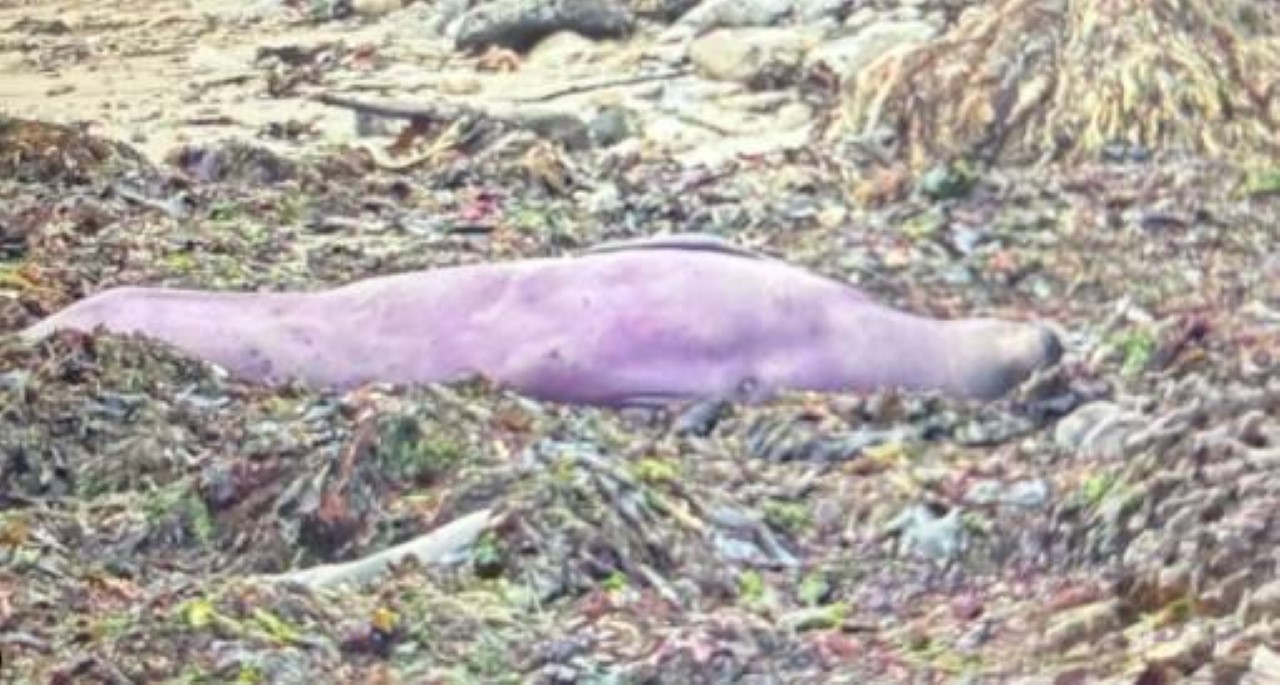 |
Experts at Año Nuevo State Park in California have confirmed that an elephant seal spotted with an intriguing purple coloring on Bight Beach had its unusual hue caused by seaweed. The appearance of the marine mammal looking as if it had “taken a bath in grape juice” generated great curiosity and several theories among observers and park staff. The phenomenon, although visually shocking, does not pose a risk to the animal’s health.
Elephant seal surprises bathers with purple hue on California beach
The presence of an individual northern elephant seal (*Mirounga angustirostris*) sporting a vibrant purple color on the sand of Bight Beach, within Año Nuevo State Park, captured the attention of visitors and the scientific community. Images of the animal quickly circulated, leading to questions about the origin of its new hue. Initially, it was thought that the elephant seal’s diet, which includes purple sea urchins, or even some type of internal bleeding, could be the cause.
Scientists identify algae as the origin of the atypical coloration
After analysis and evaluation by marine life experts, the real reason for the elephant seal’s atypical coloration was clarified: algae. Although the exact species of algae was not detailed in the initial observation, it is known that certain seaweeds have pigments that, when adhering to the skin or fur of animals, can transfer their color. This is a natural phenomenon in marine environments, and the pigments tend to be superficial, fading over time or as the animal sheds its skin. The case highlights how the interaction between wildlife and the marine ecosystem can generate surprising views.
What are elephant seals and what is their natural color?
Northern elephant seals are the largest marine carnivores in the Americas, known for their imposing size and the proboscis (trunk-like nose) of adult males, which gives them their name. These mammals spend much of the year in the deep ocean, hunting fish and squid, and come to dry land mainly to breed, give birth and shed their skin. Their natural coloring typically ranges from silvery gray to light brown, with some individuals having darker or yellowish tones. The seal population was severely hunted in the past, but has recovered remarkably due to conservation efforts, and is now a common sight in areas like Año Nuevo.
Impact of color on animal health and the ecosystem
The presence of algae in the elephant seal’s fur, which resulted in the purple color, is considered a superficial event and does not represent a direct threat to the animal’s health. Algae adhere to the outer layer of skin and hair, not penetrating internal tissues. The coloration is expected to fade over time, naturally, as the elephant seal goes through its molting cycle, a process in which it loses and replaces its outer layer of skin and fur. This type of occurrence highlights the importance of monitoring wildlife, but also reassures about the harmless nature of certain ecological interactions.
Visiting and observing elephant seals in Año Nuevo State Park
Año Nuevo State Park is one of the premier breeding sanctuaries for northern elephant seals and offers visitors a unique opportunity to observe these animals in their natural habitat. Located on the coast of California, the park implements strict protection and access rules to ensure the safety of animals and tourists. During peak breeding season, which generally occurs between December and March, thousands of elephant seals gather on beaches, creating an impressive natural spectacle.
- Size:Adult males can weigh more than 2,000 kg and measure up to 5 meters in length.
- Diet:They feed mainly on squid, octopus and deep-sea fish.
- Dive:They are exceptional divers, capable of reaching depths of more than 1,500 meters and remaining submerged for up to 90 minutes.
- Conservation:After being nearly wiped out in the 19th century by hunting, their populations have recovered significantly and are protected by federal and state laws.
- Changes skin:They carry out a catastrophic annual molt, where they lose large pieces of skin and fur, remaining on land for several weeks.
The purple elephant seal phenomenon adds yet another peculiar story to the rich tapestry of wildlife observations in this important park.