Stealthing: removing condoms without consent and the impacts on victims
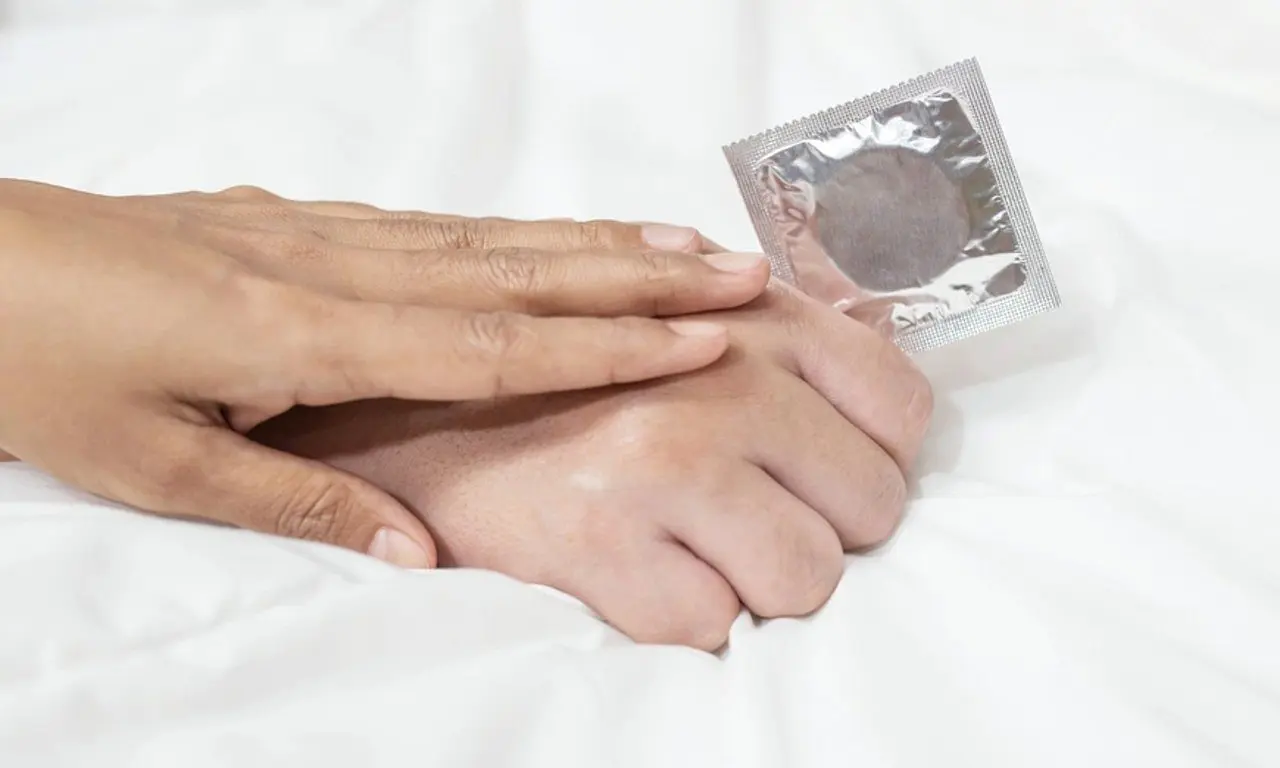
A woman in Rio de Janeiro, identified as Claudia*, recently experienced two traumatic occasions in which her partner removed the condom without her permission during sex.
At the time of the events, she did not recognize the incidents as sexual violence. Feeling disrespected, the woman confronted her partner and used the morning-after pill to prevent an unwanted pregnancy, but did not seek post-exposure prophylaxis (PEP), an essential treatment to reduce the risk of HIV infection.
The intentional practice of removing the condom during sexual intercourse without the partner’s knowledge or consent is more common than one might assume. Internationally, this behavior is called stealthing and has been the focus of several scientific investigations, with impacts addressed in this news.
The subject entered the global academic and legal discussion in 2017, driven by North American lawyer Alexandra Brodsky. Although there is no direct translation into Portuguese, the term ‘stealthing’ has been used before, since 2014, in online forums, especially among the gay men’s community.
This conduct has evolved from a mere discussion about risky sexual behavior to gain significant relevance in debates about consent, sexual violence, public health and legal implications.
Experts on the topic point out strategies to mitigate dangers, collect evidence and improve support for affected people. However, they emphasize that none of these actions can completely eliminate the occurrence of this violence.
The effects of stealthing that go beyond infections and pregnancy
Testimonies from people who have suffered stealthing, collected in various surveys, indicate that the repercussions of the practice include:
- Fear of an unwanted pregnancy or actual pregnancy resulting from the act.
- Diagnosis of sexually transmitted infections (STIs), such as syphilis and HPV.
- Occurrence of abortion.
- Decreased trust in future partners.
- Difficulty identifying the situation as a form of violence.
- Anxiety symptoms.
- Need for psychological and psychiatric support.
- Use of medications such as antidepressants and anxiolytics.
- Reduced self-esteem.
- Psychological anguish that can last for many years.
Studies show that, for most women, the psychological impacts often outweigh the physical consequences of the practice.
The legal study prepared by Alexandra Brodsky, published in the Columbia Journal of Gender and Law, compiles testimonies in which victims report feelings of deprivation of autonomy over their bodies, betrayal of trust, humiliation and disregard for previously established agreements.
Wendell Ferrari, a Brazilian researcher, points out that stealthing does not always involve physical coercion, direct threat or an unknown aggressor. Often, the person responsible is an intimate partner, such as a boyfriend, husband, friend, or someone the victim trusts.
“We still associate sexual violence predominantly with scenarios of explicit physical coercion, which leads to more discreet forms of rape that are often underestimated or seen as a mistake, imprudence or marital conflict. However, agreeing to a sexual relationship using a condom does not imply consenting to an unprotected relationship”, explains the expert.
Ferrari, a clinical psychologist, conducted the first nationwide quantitative-qualitative investigation on the topic in Brazil. He is a researcher at the Faculty of Psychology and Educational Sciences at the University of Porto and also at the Center for Studies on Gender, Sexuality and Health (GENSEX), linked to the Fernandes Figueira Institute, at Fiocruz.
In 2024, Ferrari and his team published in the journal Social Sciences a comprehensive study of 2,275 adult women who faced condom removal without permission. The survey revealed that:
- The age of the women affected at the time of the stealthing ranged from 15 to 58 years.
- Around 76% of victims were up to 29 years old.
- Almost half of the sample (49%) indicated that the aggressor was a “partner in episodic sexual relations”, 41.5% a “dater”, and approximately 10% were victims by a “boyfriend” or “husband”.
- 51.5% had never heard of the term stealthing before.
- The vast majority (77.4%) noticed the removal of the condom at the time of intercourse.
- More than 81% (81.6%) stated that the partner did not show concern about the action.
- 41% had never shared the experience with anyone else.
- 83.6% expressed fear of contracting a sexually transmitted infection or becoming pregnant.
- 77.6% lost faith in future relationships.
- 77.3% reported decreased interest or pleasure in subsequent sexual acts.
- 67.2% did not seek any form of prophylaxis after the incident, including post-exposure prophylaxis (PEP) or the morning-after pill.
- Only 2.4% used emergency contraception and PEP simultaneously.
- 7.3% contracted sexually transmitted infections.
- Nine women became pregnant due to the episode and underwent abortions.
- Only 34 women, equivalent to 1.5%, went to a police station to register the incident.
Measures that can help prevent stealthing
Ferrari emphasizes that there is no infallible tactic to ensure that a woman does not become a victim of stealthing, as the occurrence of this act depends on another person’s conscious choice to deceive her.
Some attitudes can help, but do not eliminate the possibility of violence. They are:
- Discuss in advance about the compulsory use of condoms, recording this condition, if possible, in messages.
- Interrupt the sexual act at the slightest sign of distrust.
The researcher, however, adds that it is not fair to expect a woman to monitor her partner uninterruptedly during sex.
Proof of practice is one of the biggest challenges faced
As stealthing usually takes place in an intimate environment and does not always leave physical marks that prove, in itself, that the removal was intentional and without consent, demonstrating this type of violence is one of the main obstacles, as Ferrari points out.
Even so, proving the incident is not impossible. Among the elements that can compose the evidentiary set, according to the author, are included:
- Messages exchanged previously, in which the use of condoms was agreed.
- Subsequent dialogues with the person who carried out the act.
- Expressions of apologies, admissions, or reports made to friends and family shortly after the event.
- Documentation of medical care.
- Search for emergency contraception methods or post-exposure prophylaxis.
- The victim’s own coherent testimony.
“It is crucial to highlight that, in crimes of a sexual nature, the lack of eyewitnesses is frequent. The victim’s testimony should not be automatically discarded just because the act took place in a private place”, adds Ferrari.
The expert adds that the complexity of obtaining evidence and the lack of a specific criminal classification should not be equated with the lack of violence. These gaps, in fact, indicate that institutions need to improve reception, investigation and accountability methods for this type of violation, according to their analysis.
The Superior Court of Justice (STJ) has already established the understanding that initial consent does not extend for an indefinite period of time and that the victim cannot be compelled to have a physical or vigorous reaction to express their disagreement.
In the Brazilian legal scenario, removing a condom without consent can be considered sexual rape through fraud, as provided for in article 215 of the Penal Code. However, the final classification will depend on the particularities of the case and the assessment of the competent authorities.
The Federal District Court of Justice (TJDF) has already issued guidelines on the topic. Additionally, a specific bill to criminalize stealthing is pending a vote in the Plenary of the Chamber of Deputies, but has not yet been enacted as legislation.
The legal debate about the practice expands globally
Recent research indicates progress in the legal recognition of stealthing internationally.
Specialized publications point out that courts in Switzerland and Germany have already handed down sentences against individuals who removed the condom without permission.
In 2022, the Supreme Court of Canada established that the use of a condom is part of the essential conditions for sexual consent.
In the United States, even without specific federal criminal legislation, some states have recognized the practice in the civil sphere. California, in 2021, led this initiative by authorizing victims to file civil lawsuits against attackers, followed by Maine and Washington.
Alexandra Brodsky’s article, previously released, already argued that the removal of condoms without permission would require a specific legal response, suggesting the creation of a civil action to formalize the recognition of the damages suffered by victims and simplify their access to justice.
Research suggests the problem is more extensive than current statistics reveal
A crucial point highlighted by researchers is that stealthing probably has a high rate of underreporting.
In Ferrari’s qualitative research, which involved 10 women aged between 19 and 58, participants described taking months or even years to understand that they had been victims of violence. Some revealed that they only discovered the name of the practice while participating in the study. According to the researchers, this difficulty in identifying the event directly contributes to the invisibility of the issue.
An article published in 2025 corroborates this perception, indicating that the practice remains largely underreported and surrounded by legal and institutional deficiencies, which supports the need for specific policies for prevention, reception and accountability.
A 2018 Australian investigation revealed data that illustrates the reduced search for formal reporting channels: despite the suffering experienced, only around 1% of individuals who suffered stealthing said they had reported the incident to the police.
Scholars also noted that people who had already experienced the situation were less likely to classify it as sexual assault, compared to participants who had never had this experience.
High demand for emergency contraception and low demand for PEP
The qualitative research conducted by Ferrari highlighted that, upon realizing the occurrence of unprotected sexual intercourse, six of the ten women interviewed stated that they had used emergency contraception, popularly known as the morning-after pill.
Some of the interviewees described adverse reactions after using the drug, including severe pain, cramps, nausea and breast tenderness. Others chose not to take the medication, claiming that their partner had not ejaculated or that they were already in menopause.
See Also



However, a finding that surprised the researchers was the observation that none of the women interviewed sought post-exposure prophylaxis (PEP), an essential treatment to minimize the risk of HIV contamination after a risky sexual exposure, if started within 72 hours.
In quantitative research by the same author, only 2.4% of the 2,275 participating women sought emergency contraception and PEP simultaneously.
Ferrari emphasizes that this was one of the most notable data from his study and that it is not possible to attribute the situation exclusively to a lack of information. However, the result indicates the existence of significant obstacles to access, identification of risk or the very understanding that stealthing constitutes a condition that requires immediate intervention from health services.
One of the assumptions is that many victims do not even identify, at the time, that they were subjected to sexual violence. If the individual interprets the fact simply as an unpleasant episode, a violation of trust or irresponsible conduct on the part of their partner, the likelihood of seeking emergency care decreases, according to the researcher. Another conjecture is the lack of knowledge about the existence of PEP or the limited timeframe for starting treatment, he adds.
The expert also points out that, in Brazil, 65% of PEP prescriptions are intended for men and 35% for women, according to data from the federal government. This information clearly reveals the gender disparity in the demand for this prophylaxis.
“Beyond a simple lack of individual information, this phenomenon signals a public health challenge: expanding access to knowledge and ensuring that women also identify PEP and PrEP as legitimate prevention tools when recommended,” says Ferrari.
The scholar also argues that professionals in primary care, emergency units and services specialized in sexual violence must be trained to recognize stealthing as a potential circumstance of risky sexual exposure, welcoming victims without judgment and offering appropriate guidance on available resources.
Data on the recurrence of the practice revealed by studies
The investigations addressed different population groups, which prevents direct comparison of their results and generalization to the population in a broad sense.
In an Australian survey, which interviewed 2,883 women and 3,439 men who have sex with men at a public sexual health clinic, 32% of women and 19% of men reported having experienced stealthing. Those responsible for the study emphasize that the sample comes from a specialized service and is therefore considered to be more vulnerable.
In turn, a survey carried out in the United States with 626 young men revealed that 9.8% admitted to having removed the condom without their partner’s consent at least once since the age of 14. Among these, more than 40% said they had repeated the behavior three or more times.
On the same topic: Sexual arousal: experts unravel myths about male and female desire
A review of the literature, cited in an article published in 2025 in specialized journals, identified prevalences varying between 7.9% and 43% for women, and from 5% to 19% for men, highlighting the occurrence of the practice in different study scenarios.
Associated factors identified in men who recognize the practice
An American study, released in 2019, also analyzed the characteristics of participants who confessed to removing the condom without permission.
According to the research, these men exhibited a higher incidence of previous STI diagnoses, a greater occurrence of unplanned pregnancies with their partners, a more hostile attitude towards women, and a more serious history of sexual assault. After statistical adjustments, hostility toward women and a history of sexual assault continued to be correlated with this conduct.
The researcher also warns that many victims may not even notice, during the act, that the condom has been removed, which prevents them from seeking immediate preventive interventions, such as emergency contraception or prophylaxis recommended after risk exposure.
The lack of reception is an obstacle
Ferrari’s investigation, carried out in Brazil, highlighted another persistent point: the difficulty in receiving adequate reception in institutions such as hospitals, police stations, health units and legal support services.
The women interviewed reported having dealt with judgments, questions about their stories and even disincentives to report them, due to the complexity of proving them. The researchers characterize these testimonies as manifestations of institutional violence and advocate greater qualification of health professionals and the judicial system.
Scholars suggest that universities develop specific policies to recognize stealthing, implement accessible reporting channels, promote continuous campaigns on consent and offer medical, psychological and legal support to those affected.
The conditioned nature of sexual consent
One of the major consensuses observed in research is that the permission granted for a sexual relationship is not unlimited.
Researchers characterize stealthing as the intentional removal of a condom or failure to use it, even with prior agreement, without the other party knowing or consenting. According to this perspective, agreed sexual intercourse would be with a condom. By changing this condition during the act, one of the parties unilaterally modifies the terms of the original consent.
In Ferrari’s qualitative research, carried out by Fiocruz and the University of Porto, 10 women reported that the relationship began with condoms and that there was consensus about its use. For the authors, consenting to a protected sexual act “does not translate into consenting to an unprotected relationship”, which means that the unauthorized removal of the condom breaks this understanding and constitutes sexual violence.
The same reading is found in a legal article published in the Columbia Journal of Gender and Law. The lawyer argues that consent to sexual contact with a condom differs from consent to direct contact without it. From this perspective, removing the condom changes the nature of the sexual act and would require new consent.
An article published in 2025 in specialized journals, in turn, reinforces that consent to a relationship with a condom “cannot be seen as permission for an unprotected relationship”, synthesizing an understanding that has gained ground in several nations.
Stealth breeding: the practice when the victims are gay men
Ferrari also released a quantitative study with 601 cisgender gay men, from all regions of Brazil, who had faced the removal of condoms without permission, a practice called stealth breeding in this scenario.
In this group, the data revealed:
- Of this total, 421 sought post-exposure prophylaxis (PEP).
- 180 did not seek treatment.
- More than half of the participants reported contracting a sexually transmitted infection following the incident.
The survey indicated that 70% of the gay men studied sought PEP.
This last data reveals a significant contrast with the information regarding women, as only 2.4% of them reported having accessed PEP after this form of violence.
Expert recommendations for tackling stealthing
Despite the methodological distinctions, the studies converge in several aspects.
Full coverage: Latest News (EN)
Researchers advocate recognizing stealthing as a transgression of sexual consent; suggest that health professionals address the topic in their care; call for greater public awareness so that victims can identify the practice; and defend the improvement of institutional and legal policies to strengthen prevention, reception and accountability.
According to Ferrari, the participants’ testimonies show that the biggest challenge lies not only in identifying stealthing as a form of sexual violence, but in ensuring that this recognition extends to the institutions in charge of hosting.
“When professionals in the health, public safety or justice system are not aware of this practice, there is a high risk that the victim will be discredited, held responsible for the incident or that their demands for care will be ignored”, he states.
Within the scope of the Justice system, scholars propose the intensification of training for police officers, delegates, experts, prosecutors and magistrates on the concept of sexual consent. This is due to the fact that many victims reported that they were not taken seriously, as legal operators argued about the existence of prior consent to the sexual act.
In summary, research shows that removing condoms without consent goes beyond a simple change in the method of protection. For researchers, this action modifies the conditions that underpinned consent and generates repercussions that can affect sexual, reproductive and mental health, as well as the autonomy of victims.
“The responsibility lies with whoever broke the agreement and removed the condom without consent. The victim should not be forced to monitor, anticipate or avoid a decision deliberately made by another person. If an internal feeling indicates that your boundaries have been violated, this perception must be seriously considered. You have the right to information, care, support and protection”, concludes Ferrari.