New observations from NASA’s James Webb explain how black holes feed
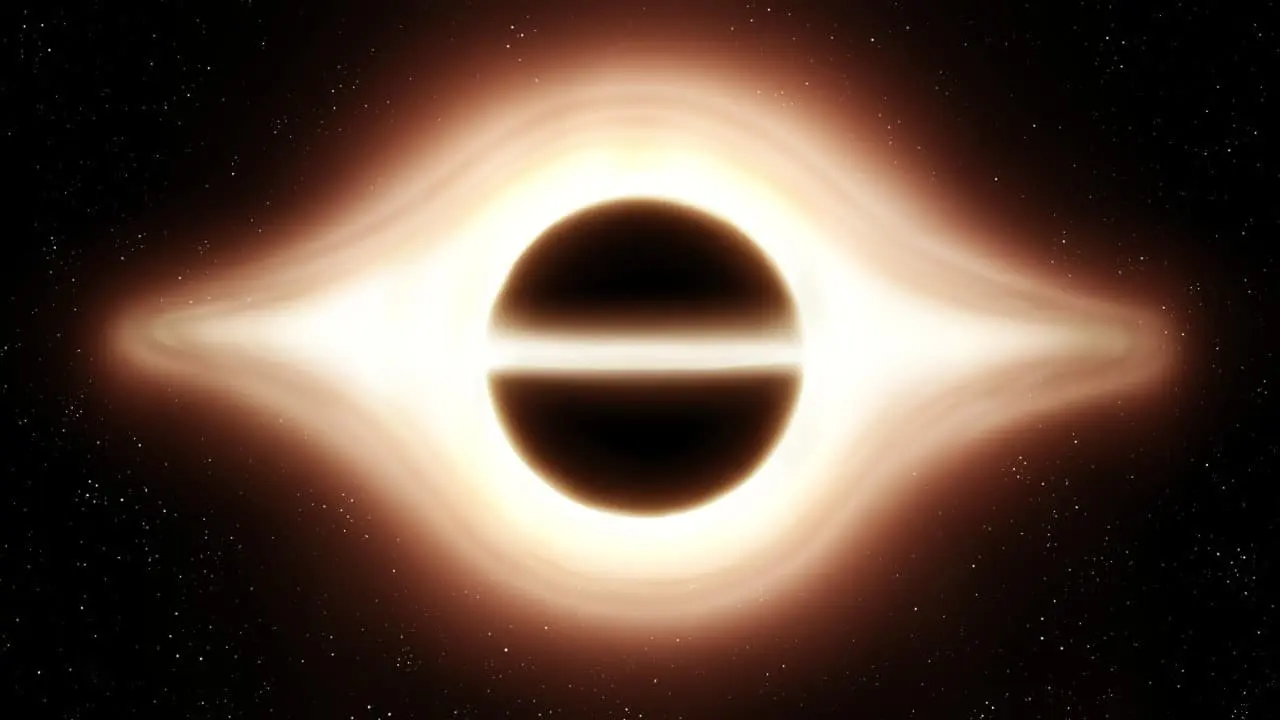
Recent analyzes carried out by NASA’s James Webb Space Telescope (JWST) may have finally revealed one of astronomy’s biggest enigmas: how supermassive black holes get their sustenance. The discoveries, datedJuly 14, 2026, position astronomers one step closer to understanding the dynamics of these cosmic giants.
An international team, led by researchers from the University of Montreal, Canada, published the results of their new research in The Astrophysical Journal. The study presents the clearest images ever obtained of gaseous filaments, structures that connect the atmosphere of a galaxy to the rotating disk that serves as food for the central supermassive black hole.
In-depth analysis of this data opens a fundamental path to understanding how black holes consume matter, a phenomenon that has intrigued the scientific community for many decades.
Understanding the intriguing feeding process of black holes
Research co-author Megan Donahue, professor of physics and astronomy at Michigan State University (MSU), highlighted that JWST observations are providing an immense volume of new information and measurements, a real challenge to fully assimilate. According to her, everyone is collaborating to solve the astrophysical questions about how these black holes obtain their fuel and how they interact with their respective host galaxies.
Supermassive black holes are the pillars of most galaxies in the universe, with masses that can vary from millions to billions of times that of the Sun. In active galactic nuclei (AGN), these central black holes consume vast amounts of surrounding material and expel powerful jets that influence the formation of surrounding galaxies.
Learn more: Roman space observatory will search for star-eating black holes at the dawn of the universe
This intense activity has generated a long-standing enigma for scientists. The expectation was that the jets from an active galactic nucleus, by heating the surrounding gas, should cut off the black hole’s fuel supply. This raised the question of how these objects continued to steadily accumulate matter.
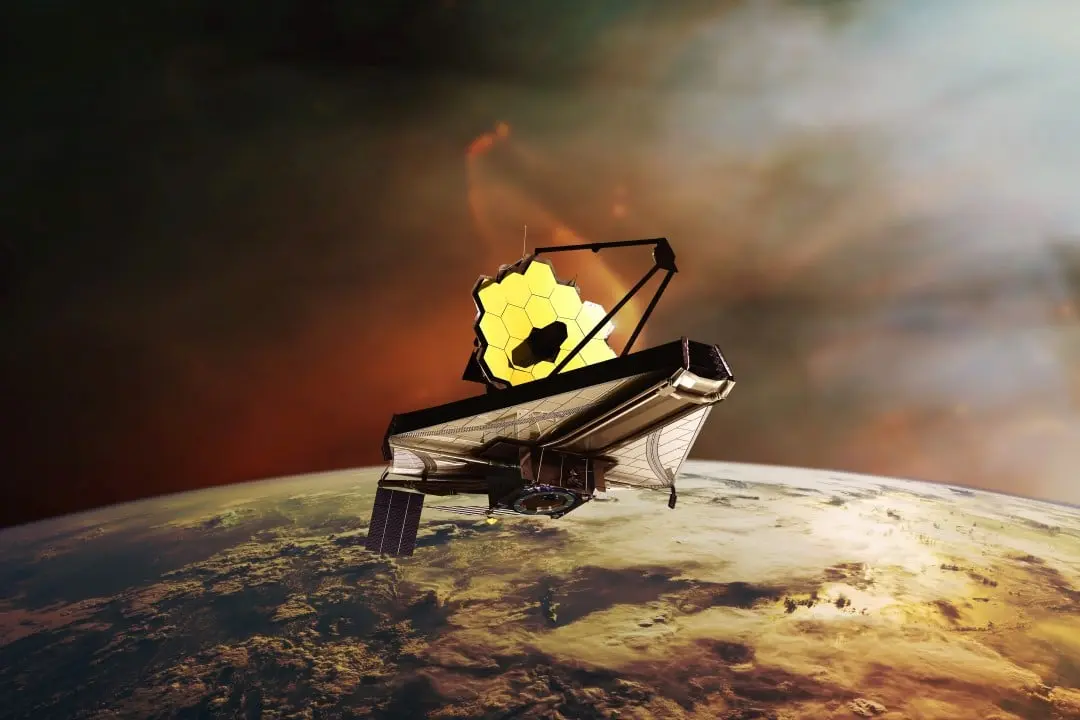
Researchers test hypothesis about galactic fuel
To deepen the investigation, scientists tested the main theory that sought to explain the phenomenon: that heated gas, over time, cools, condenses into long filaments and returns towards the center of the galaxy, thus replenishing the black hole.
With the aim of validating this hypothesis, the JWST was directed to one of the natural environments most conducive to the study of AGNs: the galaxy NGC 4696. Located in the heart of the Centauri Cluster, approximately 145 million light-years from Earth, this galaxy is an ideal laboratory for such observations.
See Also



Using JWST’s NIRSpec instrument, the team performed eight hours of observations. During this period, they mapped the movement of gas in the deepest regions of the galaxy – the area where the black hole’s gravitational pull exerts its greatest influence – with an impressive resolution of around 30 light-years.
The data collected revealed a disk of gas 800 light-years in diameter, rotating around the supermassive black hole at an approximate speed of 600 kilometers per second. Connected to this rapidly rotating disk, a large falling filament has been identified, which directs gas inward and feeds the active galactic nucleus.
On the same topic: NASA’s New Roman Telescope Sets to Uncover Billions of Galaxies and Dark Energy
Details of the black hole support mechanism
This crucial discovery fills a fundamental gap in understanding how supermassive black holes maintain themselves. The researchers propose that after the black hole injects energy into the surrounding gas, heating it, that material eventually loses heat and condenses into narrow filaments that stretch hundreds of thousands of light years. Guided by magnetic fields, these filaments fall toward the center of the galaxy, where they are incorporated into the rotating accretion disk.
The team also ran a series of computer simulations based on this proposed model, and the results indicated that the predicted behavior corresponded very closely to the observations made by JWST. Although further observations are needed for definitive confirmation, the findings offer robust support for the filament feeding hypothesis.
Mark Voit, co-author and professor of Physics and Astronomy at MSU, expressed his pleasure in being part of this project. He added that his group’s calculations at Michigan State University predicted that magnetic fields should be essential for funneling cold gas toward the universe’s largest black holes, and that it is surprising to see this prediction come to fruition in the JWST images.
More on this story: Supermassive stars may have originated black holes in the early universe
The full scientific paper, titled “JWST Reveals How Black Holes Are Powered: Kiloparsec-Scale Multiphase Filaments Power Sub-kiloparsec Circumnuclear Disks,” was published in The Astrophysical Journal Letters.