Battery failure forces BYD to recall almost 90,000 units of the Qin Plus sedan in China
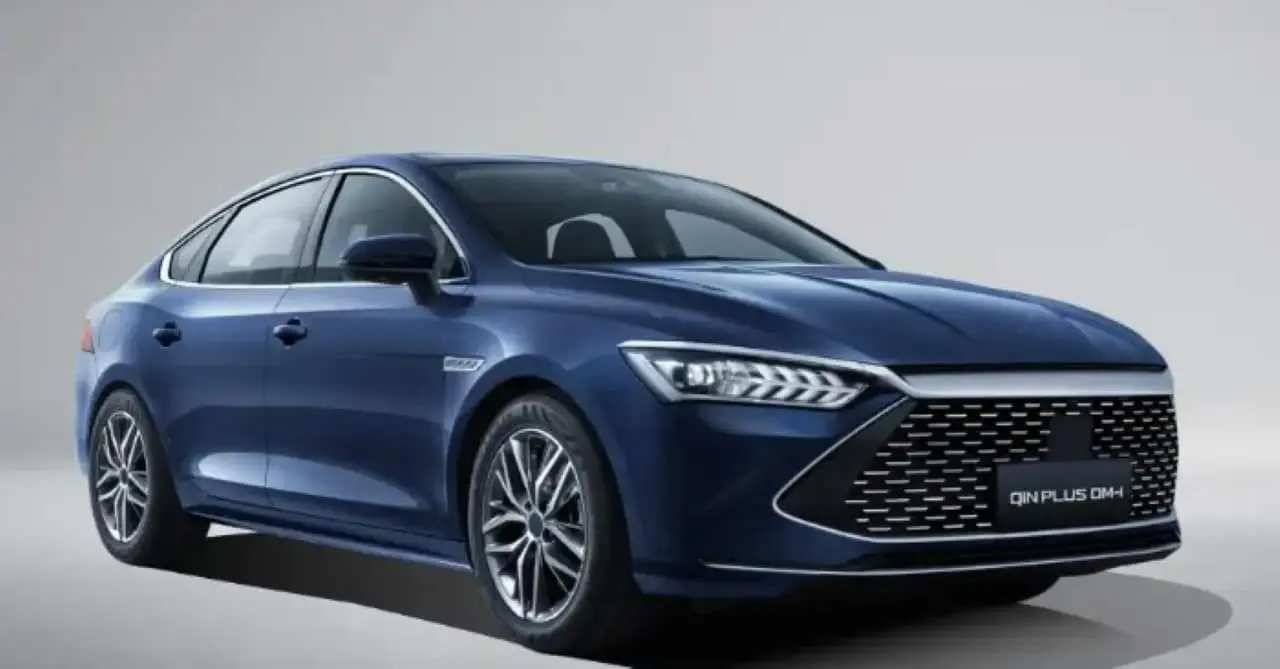
Automotive giant BYD has confirmed the recall of 89,811 copies of the Qin Plus DM-i plug-in hybrid sedan in the Chinese market. The drastic measure was motivated by a serious flaw identified in the lithium battery pack assembly line, a situation that could put the physical integrity of the car’s occupants at risk.
The cars affected by this safety campaign left the factories between January 2021 and September 2023. The official statement was formalized with the State Administration for Market Regulation (SAMR), the main supervisory body in China, highlighting the urgency and severity of the technical defect mapped by the Asian automaker.
On the same topic: Risk of electrical failure leads BYD to recall 89,000 cars in China
This emergency call adds to other recent episodes faced by the brand, generating debates about the challenges of quality control in the midst of an aggressive production expansion. As BYD surpassed 3 million electrified vehicles sold globally in the last year alone, the pressure to deliver volume without sacrificing component reliability has become the company’s biggest hurdle.
Understand the technical details of the defect and the dangers for drivers
Documents released by the manufacturer indicate that the origin of the problem lies in inconsistencies during the manufacturing of the high-voltage set. This assembly error causes fundamental internal parts to become misaligned, creating the ideal scenario for short circuits to occur within the power compartment.
A short circuit in lithium-ion cells represents a maximum alert in automotive engineering, as it drastically increases the chances of thermal runaway. This phenomenon triggers an uncontrollable chain reaction, where the temperature and internal pressure skyrocket, resulting in the release of flammable gases and, in the worst case scenario, the vehicle’s complete fire.
The company’s management made a point of highlighting that, although the statistical probability of the incident is small, the risk to consumers’ lives makes mechanical intervention urgent. The biggest aggravating factor is that the fault can manifest itself suddenly, without any prior warning on the dashboard, both with the car moving on the streets or parked in the garage.
The Battery Management System (BMS), designed precisely to stop overheating, may fail to detect this specific anomaly in time to prevent collapse. Because of this electronic limitation, the repair strategy requires a combination of software updates and thorough physical inspection to ensure that cars are back on the road safely.
Repair strategy involves remote upgrades and parts exchange
To resolve the vulnerability and neutralize any threat, the automaker structured a free contingency plan for all owners of the sedans involved. The repair operation was divided into complementary steps, starting with a remote digital intervention, known in the industry as Over-The-Air (OTA).
More on this story: Serious battery failure forces BYD to recall almost 90,000 cars
The correction process will follow a strict protocol to ensure the integrity of the electrical system and protect drivers from any critical failures:
See Also

Electrical discharge knocks man off roof in Jaguaruana after contact with power lines

Global auction raises US$11.9 million and Brazil’s historic currency reaches record value

Former fighter Prichard Colón dies at age 33 after decade in a vegetative state
- Firstly, the software receives a new algorithm that increases the sensitivity of voltage and temperature monitoring, issuing early warnings and activating safety modes if a short circuit is imminent.
- Next, the customer must take the car to an authorized dealership so that mechanics can carry out a detailed physical scan of the power package.
- If technicians identify any misalignment or structural damage during the analysis, the entire battery pack will be replaced with a new one, at no additional cost to the owner.
Recent history shows that the manufacturer has faced similar problems
The call involving the Qin Plus DM-i is far from being an isolated event in the recent trajectory of the Chinese brand. The corporation, which dominates the registrations of hybrid and pure battery models, has been dealing with recurring setbacks related to the standardization of quality of its energy accumulators, which are produced internally.
In October last year, the same automaker had to recall more than 115 thousand units of the Tang DM-i and Yuan Pro sports utility vehicles. The reason for that campaign was practically identical: flaws in the manufacturing process that opened up gaps for short circuits and fires, depending on the conditions of use and the recharging method used by drivers.
Learn more: Fire risk causes BYD to recall nearly 90,000 hybrid vehicles in China
Months earlier, at the beginning of that same year, another major mobilization affected around 97 thousand copies of the Dolphin and Yuan Plus lines. On that occasion, the villain was the cell cooling system, which had defects capable of generating overheating and compromising drivability. This sequence of failures highlights the enormous pressure that the company’s assembly lines are currently under.
Pressure from regulatory authorities transforms the Chinese automotive landscape
The significant increase in the number of summonses in the Chinese electricity market is a direct reflection of the siege closed by the inspection authorities. SAMR has adopted a relentless stance, forcing manufacturers to initiate mass repairs as soon as any investigation points to risks. In line with the Chinese government’s project to consolidate the country as the most reliable hub for the production of clean vehicles, battery safety has become the central pillar of the industry. Under this strict surveillance, giant brands are forced to inject more resources into durability tests and act with complete transparency before the public, a fundamental step towards maturing the sector and protecting those who buy these cars on a large scale.
Find out how owners will be notified about the appointment
In the coming days, BYD’s relationship team will begin issuing official communications to the owners of defective vehicles, using physical correspondence, email messages and telephone calls. The brand’s management publicly apologized for the inconvenience caused and assured that it will provide all necessary support to guide consumers through the repair process.
Learn more: Lithium battery failure causes BYD to recall nearly 90,000 cars for repair in China
To facilitate checking, the company also made an online consultation tool available on its official portal, where simply enter the Vehicle Identification Number (chassis) to find out if the car is part of the risk batch. As soon as the notification is received, the express recommendation is that the driver schedules the inspection at the nearest workshop as soon as possible, respecting the parts replacement schedule.
The challenge of balancing sales volume with manufacturing excellence
The obstacle that the automaker is trying to overcome with this gigantic recall exposes a classic dilemma of the new automotive market: the difficulty of maintaining a standard of excellence while production is rampant. Driven by the global electric car craze, factories are operating at never-before-seen paces, which inevitably strains the supply chain and loosens quality inspection barriers.
For corporations that adopt extreme verticalization, manufacturing everything from the screw to the energy cells themselves, having absolute control of each manufacturing stage is a matter of survival. Any microscopic slip in the assembly generates a domino effect capable of putting hundreds of thousands of drivers in danger. The way the company handles this crisis will be decisive in shielding consumer confidence and proving that its commitment to security is as great as its ambition to lead the global market.