New hunting tactic: Orcas make sunfish explode into thousands of pieces in the Gulf of California By Janderson Luiz
3 min read
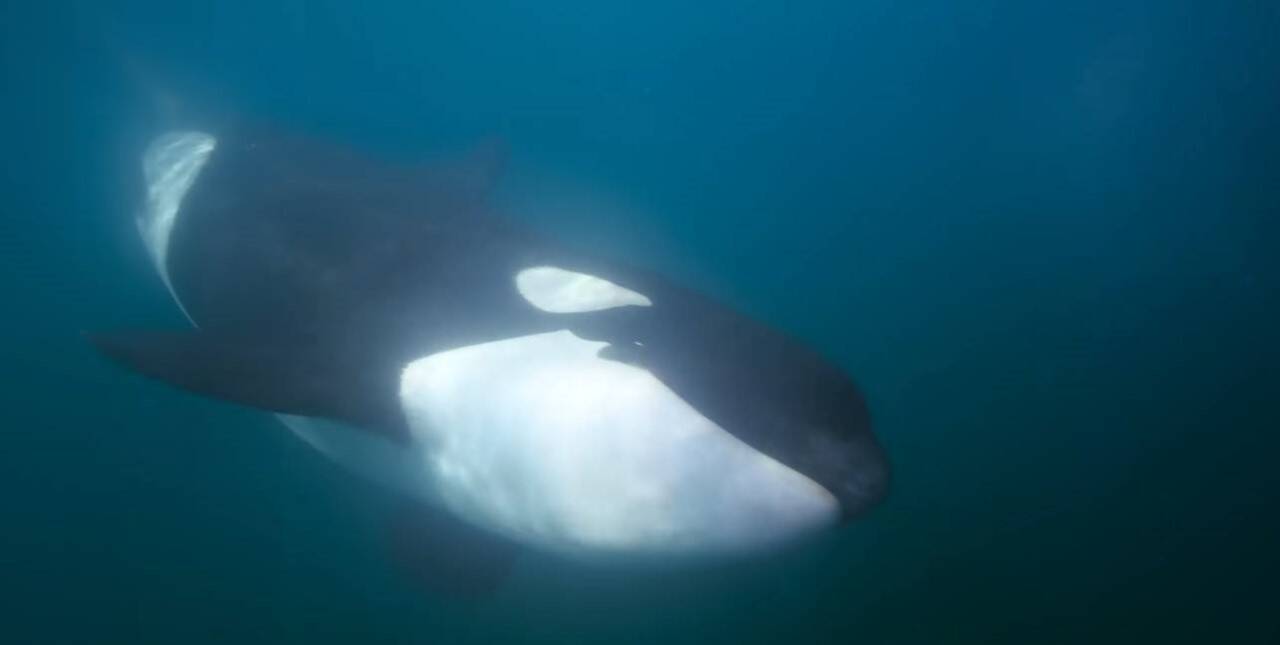 |
A stunning new hunting strategy has been revealed in the behavior of orcas in the Gulf of California, where the marine animals have been observed colliding with sunfish so violently that they fragment them into countless pieces. This method, still new to science, highlights the complexity and brutality of the predatory tactics of these marine mammals.
Shocking discovery reveals unprecedented hunting strategy
The surprising behavior, dubbed by researchers “fragmentation throwing,” has been recorded twice in the Gulf of California. The action involves a female orca holding a sunfish of the speciesMasturus lanceolatus, known as lanceolate sunfish, and releasing it at the exact moment an adult male hits it at high speed. The collision is so powerful that the sunfish disintegrates into “thousands of pieces”, scattering its flesh across the water.
How researchers recorded the stunning event
Visual recording of this hunting tactic was made possible by divers who witnessed the events, whose footage was analyzed by scientists. The first reaction of those observing was shock, given the extreme and unexpected nature of the interaction. The scene of sunfish fragments falling like “meat confetti” over the marine environment highlights the strength and precision required for such a feat, adding a new layer to the knowledge about the intelligence and power of orcas.
Understand the peculiar diet and size of the sunfish
Sunfish are the heaviest bony fish in the world, with some species reaching up to 2.3 tons and more than 3 meters in length. Despite their considerable mass and size, their diet consists mainly of jellyfish and other gelatinous invertebrates, making them relatively slow, passive-swimming creatures. The ability of orcas to turn an animal of this size into pieces demonstrates exceptional predatory adaptation and a level of strength that goes beyond the most common hunting strategies.
Hypotheses for the violent behavior of marine mammals
Scientists investigate possible reasons behind “throw-to-shred” behavior. One theory suggests that this technique could make feeding easier for younger orcas, who would have easier access to smaller pieces of sunfish. Another hypothesis, no less intriguing, is that the act was carried out simply for fun. Orcas are known for their intelligence and for exhibiting complex behaviors that, in many cases, transcend the mere need for survival, including elaborate games.
Details about the orca and sunfish
- Orcas:Considered the largest predators in the ocean, they are extremely intelligent marine mammals, with complex social structures and varied hunting techniques, which range from group coordination to innovative individual methods.
- Sunfish (Masturus lanceolatus):Characterized by its flat body and unique shape, it is a large fish, but typically slow and has no natural predators other than great white sharks and, now, orcas with this new technique.
- Location of events:Both records occurred in the Gulf of California, a region rich in marine biodiversity.
- Frequency:The behavior has been documented twice, but it is not yet known whether it involved the same orca individuals.
- Implications:The discovery enriches understanding of the ecology and predatory behavior of orcas, suggesting new lines of research into their adaptability and interaction with large prey.
Research continues to understand the frequency and breadth of this phenomenon. The revelation of this new hunting method reinforces the perception of orcas as highly adaptable and ingenious predators, whose behavior still holds many secrets to be revealed by marine science.