Humanoid robots will compete in new disciplines at the Beijing World Games
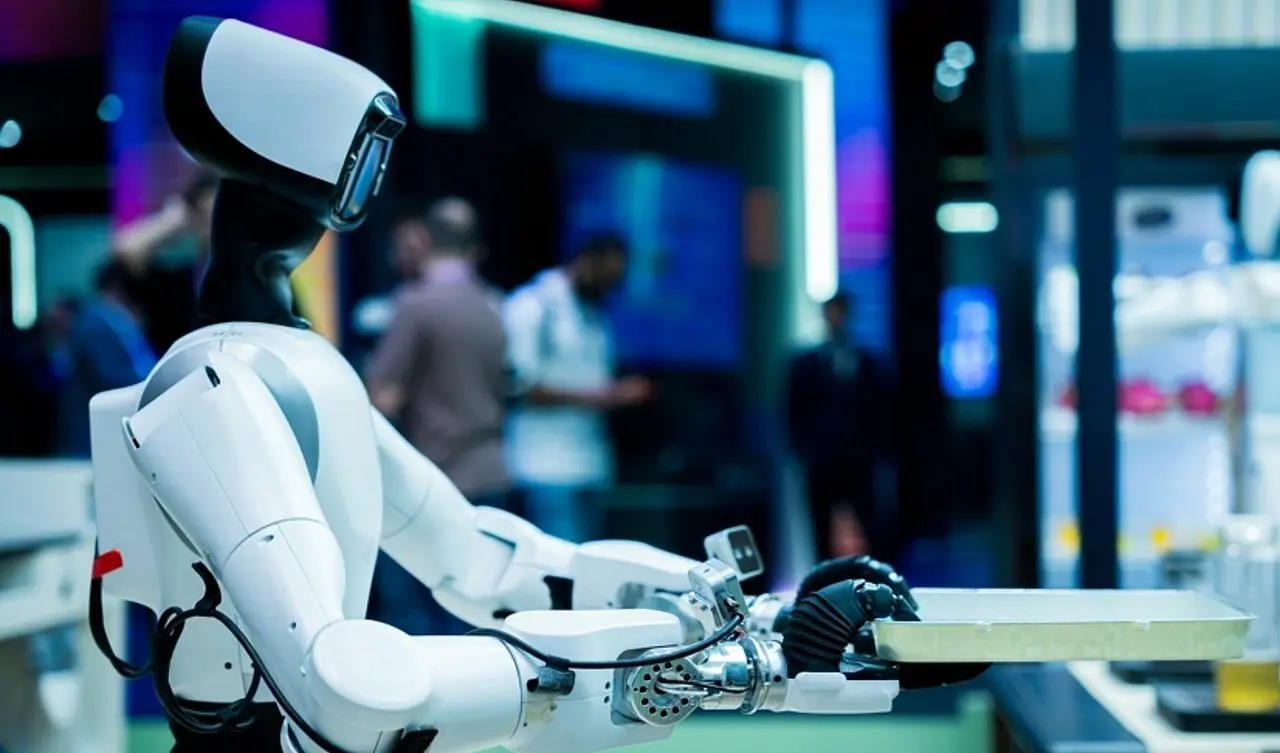
Beijing will host the second edition of the World Humanoid Robot Games between August 22 and 26, according to the organizers’ announcement at a press conference. The event, a joint initiative by the Beijing municipal government and China Media Group, will take place at the National Speed Skating Stadium.
The competition will include two main categories and 32 events, divided between competitions and simulation activities.
The competitive category will have nine disciplines and 26 events, including athletics, football, gymnastics, weightlifting, martial arts, street dance, sports dance, tug of war and pitch-pot. The simulation category will involve six events in scenarios such as homes, hotels, industries, emergency response, hospitals and commercial establishments.
Unprecedented challenges and modalities in robot games
In addition to classic competitive events, such as the 100-meter dash, football and martial arts, the Games will introduce new disciplines. Among them are tug of war, which demands coordination and maximum strength between teams of robots; the pitch-pot, a traditional Chinese ritual that will assess accuracy and perception; and weight lifting, which will test the carrying capacity of the upper body of the humanoids. These additions highlight the accelerating advancement of humanoid robots’ capabilities, said Jiang Guangzhi, director of the Beijing Municipal Bureau of Economics and Information Technology.
More on this story: US government bars Chinese humanoid robots due to ‘unacceptable risk’ to national security
Jiang also stated that this edition’s football robots will be able to dribble on the move and make impressive saves. The expectation is that these players’ level of competition will evolve from a “preschool” stage to a “youth” level.
Events that simulate real-life scenarios will be held in authentic environments, evaluating the “brain, eyes and hands” coordination of humanoid robots in space perception, decision-making and precise manipulation.
The purpose of these activities is to develop “worker” robots capable of performing functions such as workshop operators, domestic helpers and firefighters. The goal is to create a new paradigm that unites competition with industry, with the strategy of “winning medals first and securing orders”, as Jiang explains.
Learn more: Controlling humanoid robots with virtual reality: New profession advances in China
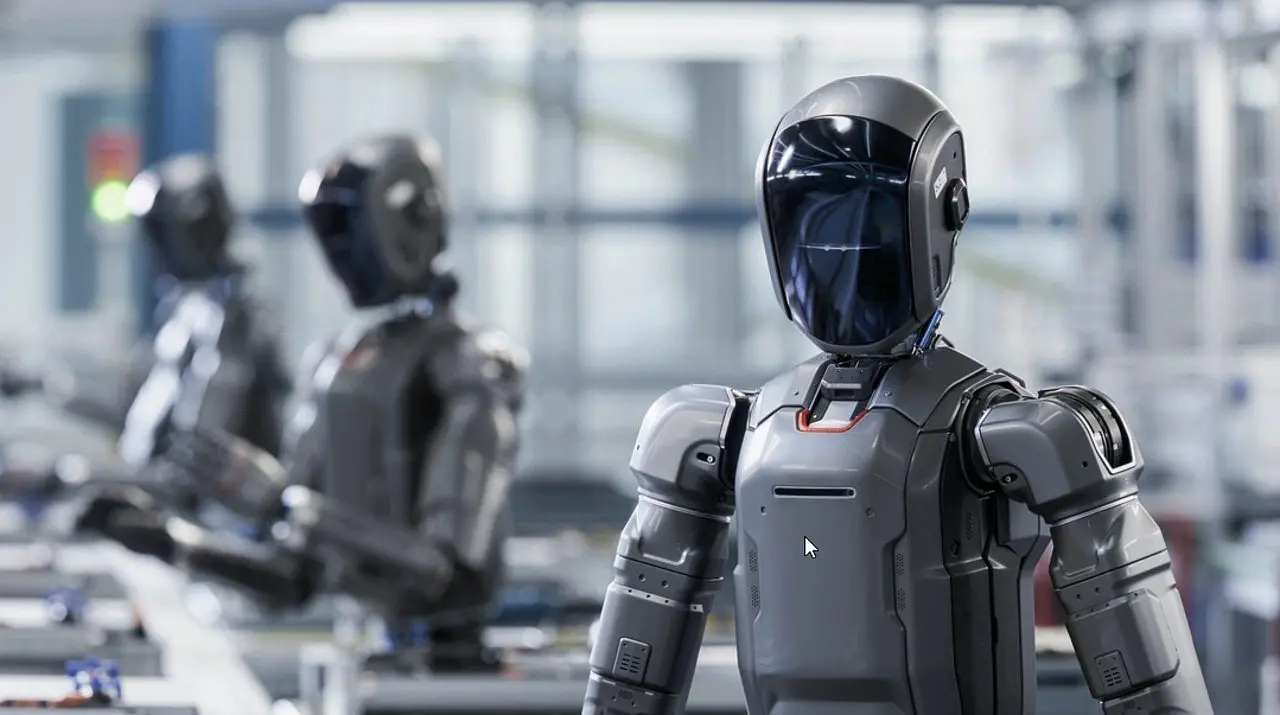
Progress expected for artificial intelligence of robots
Jiang commented that the accelerated evolution of robotics has raised expectations for the Games. He expects robot athletes to demonstrate even more remarkable performances on three main fronts.
The first area is improved autonomy. The degree of intelligence embedded in robots has greatly improved, leading to the transformation of the 100-meter race into a completely autonomous event. The standards now encourage teams in scenario-based competitions to use autonomous approaches to positioning, reconnaissance, and operation.
Second is increased dexterity. This year’s events include more tasks that require delicate handling, such as organizing laundry in domestic environments, fighting fires in emergency situations, and preparing food in retail settings.
See Also

UK scientists advance nuclear fusion with stable high plasma pressure

3,600-year-old tomb discovered in Egypt reveals king of lost dynasty

Virginia Fonseca leaves Grande Rio to focus on new businesses: ‘Ready for one more’
Finally, high practicality. Scenario-based events now take place in real environments such as factories, hotels, and model homes instead of simulated locations. This allows robots to perform long-term tasks autonomously and continuously in complex contexts, transitioning from mere “demonstration tools” to “practical productivity”.
Beijing initiatives to strengthen the robotics sector
In addition to hosting the competitions, the Chinese capital has instituted supportive policies such as “first-use trials” for robots and a “challenge-based bidding” system aimed at key components.
On the same topic: Chinese humanoid robots are banned in the United States due to security flaws
The city also boosts the Beijing Humanoid Robot Innovation Center, aiming to create four comprehensive platforms: technology research and development, integrated intelligence data, pilot testing and validation, and public industrial services. Several robotics industrial parks and pilot-scale testing bases are under development in the Beijing-Tianjin-Hebei region, with a government investment fund of 100 billion yuan (approximately US$14 billion) to support the growth of Beijing’s humanoid robotics sector.
Consequently, Beijing’s robotics sector is experiencing a new phase of innovation, moving from technological leadership to practical application. The city’s innovative ecosystem is continually improving, with advancements in motion control, embedded artificial intelligence (AI) models and biomimetic interaction, placing Beijing among the national leaders in innovation density, according to Jiang.
Expert Perspectives on Robotic Advancement
The World Robotics Games evaluate mobility, joint flexibility and heat dissipation, among other capabilities. Ma Jihua, an experienced professional in the technology sector, said that this year’s results are much higher than last year’s. He notes that this reflects substantial progress in research, development and manufacturing by Chinese companies, capturing public interest and strengthening the supply chain.
Ma Jihua added that robots are evolving from mere “exhibits” to practical “use.” Performance gains result from advances in software and hardware that extend beyond sports applications. Transparent competition exposes strengths and weaknesses, encouraging collaborative learning. These robots with great agility should find several practical applications in everyday life and in the workplace, and could even enable innovations that were considered impossible for humanity.
More on this story: AGIBOT celebrates the milestone of 15 thousand robots and consolidates its leadership in embedded artificial intelligence
Chen Jing, vice president of the Technology and Strategy Research Institute, said the competitive approach, from the half marathon to the World Humanoid Robot Games, has transformed. It went from “physical fitness” testing to a joint “fitness and intelligence” analysis. With more than 30 events, surpassing a single long-distance race, the 100-meter race is now fully autonomous, eliminating the need for remote control to evaluate the built-in intelligence and decision-making capacity in real time. This represents a shift from the question “can you run?” to “how do you run and decide?”.
This year’s event incorporates traditional Chinese sports such as pitch-pot, introduced after martial arts to test precision and postural control. Most crucially, the “win medals first, then orders” model defines trials based on real demands from factories and hospitals. Robots need to perform long-term tasks autonomously, converting them from simple demonstration tools into effective productivity instruments.
Chen also mentioned that the “deft hand”, already present in some robots, represents a fundamental obstacle to commercialization and the next phase of competition. Those that exhibit agile, stable, and precise manipulation of complex challenges will be more likely to secure contracts in industry, making robots authentic “workers” or trustworthy “assistants.”