Volkswagen announces ID details. Electric upgrade priced at R$120,000 in Europe By Maria
6 min read
 |
The Volkswagen ID. Up, the electric successor to the subcompact Up!, begins to take shape as the brand’s future entry-level car in Europe. The model, which is scheduled to launch in 2027, aims to revive the proposal of a popular and affordable vehicle on the continent. With a 95 horsepower front engine, Volkswagen projects a minimum range of 250 kilometers and a target price of around 20,000 euros, which is equivalent to approximately R$120,000 in direct conversion into Brazilian currency, without considering taxes or import costs.
Still without official confirmation from the automaker, the European press has suggested that the commercial name of the new hatch will be Volkswagen ID. Up. This strategic choice seeks to create a direct link with the success of the subcompact Up! original, which was sold between 2011 and 2023, including in the Brazilian market, maintaining familiarity with the public looking for a compact and efficient urban car.
MEB+ platform defines the design of the new Volkswagen ID. Electric up
One of the main innovations of the Volkswagen ID. Up is built on the MEB+ platform, an architecture developed specifically for electric vehicles. Unlike the old e-Up!, which was an adaptation of a model originally designed for combustion engines, the new car will have an engine installed on the front axle. This solution not only contributes to reducing production costs, making the vehicle more competitive, but also optimizes the use of internal space, allowing for a more efficient design and a more spacious cabin for passengers.
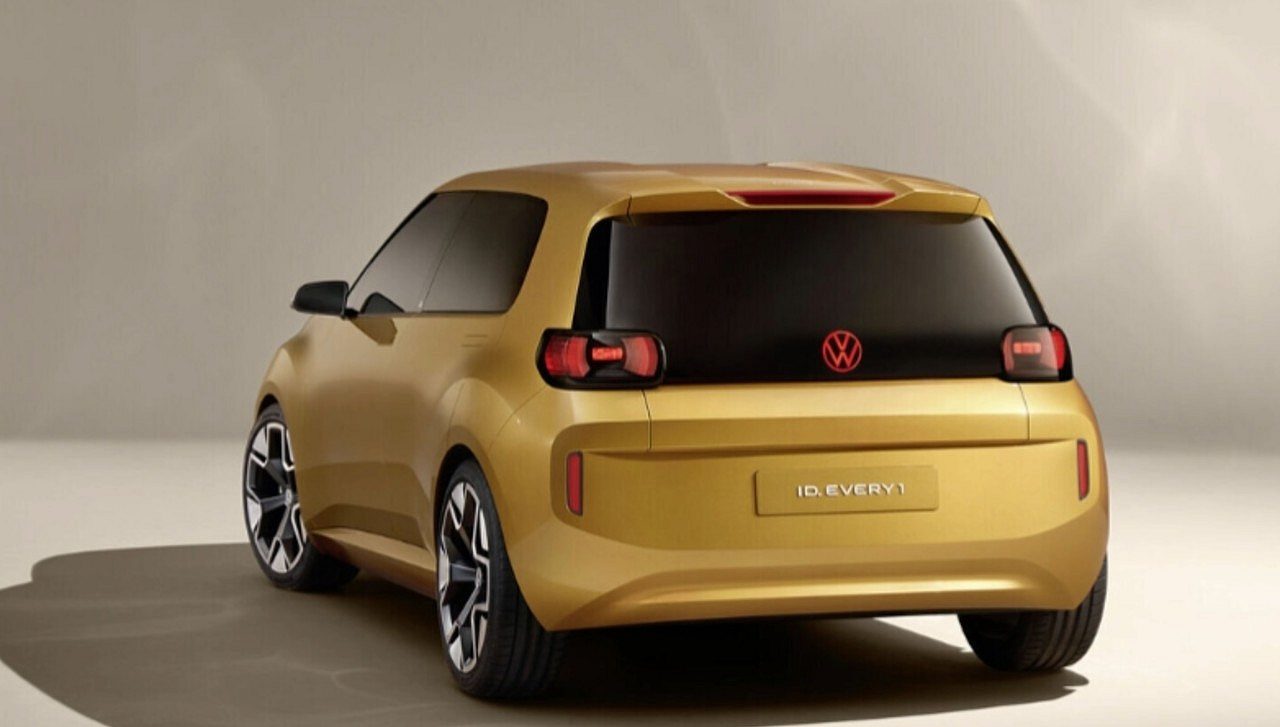
The ID concept. EVERY1, which anticipates the ID lines. Up, already indicates a 70 kW propellant, equivalent to 95 horsepower. The maximum speed will be electronically limited to 130 km/h, which reinforces the vehicle’s focus on predominantly urban and metropolitan journeys. These numbers suggest that the priority of the Volkswagen ID. Up is not about competing in performance with other more powerful electric hatches, but rather offering a practical and economical solution for daily use in the city, with optimized energy consumption.
The range announced for the vehicle is at least 250 kilometers, measured by the WLTP cycle. However, important details such as the exact battery capacity, energy consumption and maximum recharging power have not yet been released by Volkswagen. This information is crucial for estimating the time required for a full charge and for confirming the actual range of the ID. Up in production will correspond exactly to this initial estimate, which may vary depending on the conditions of use.
Rivian technology enhances electronics and facilitates upgrades
Another relevant distinguishing feature of the Volkswagen ID. Up is the new electronic architecture, the result of a partnership between Volkswagen and Rivian. This system was designed to reduce the number of control modules and simplify the vehicle’s internal wiring, an advancement that aims to improve communication between components. In practice, this innovation will allow the car to receive software updates remotely, adding new functions or correcting any faults without the need for frequent visits to the dealership, a significant advance for the maintenance and customization capacity of the vehicle over time.
New Volkswagen ID. Up features larger dimensions than the previous model
With a length of 3.88 meters, the future Volkswagen ID. Up will be significantly larger than its combustion predecessor, which measured approximately 3.60 meters – a difference of 28 centimeters. The concept also features a width of 1.82 meters and the capacity to comfortably accommodate four passengers. Even with the increase in dimensions, the body remains compact, an essential attribute to facilitate maneuvering and parking in urban environments, maintaining the practicality characteristic of the Up! name.
The trunk of the ID. Up will have a capacity of 305 liters, a remarkable volume for a subcompact. This data is especially relevant because it surpasses the offer of many combustion vehicles in the same category and positions the electric vehicle close to larger hatchbacks, offering more versatility. Such use of internal space demonstrates the efficiency of the MEB+ platform in optimizing not only battery installation, but also ergonomics and functionality for occupants, without compromising comfort.
Like the price of the Volkswagen ID. Up challenges the electric market
In the European market, the Volkswagen ID. Up will face stiff competition from already established models such as the Renault Twingo E-Tech, Citroën ë-C3, Dacia Spring and Leapmotor T03. The competitiveness of this segment will not only be defined by battery autonomy, but by a set of factors that include the final price at dealerships, recharge speed, battery warranty, the equipment package offered and insurance costs, which can strongly influence the purchasing decision of consumers looking for an entry-level electric vehicle.
The 20 thousand euros mentioned by Volkswagen represent an initial target price for Europe. The conversion to approximately R$120 thousand serves only as an exchange rate reference and should not be interpreted as a guaranteed price for Brazil. Factors such as import taxes, logistical costs, approval according to local standards and the commercial positioning of the brand in the national market prevent this value from being directly replicated. The final value in the country would necessarily be higher, due to the entire cost chain involved.
If it were offered in the range of R$ 120 thousand in the Brazilian market, the Volkswagen ID. Up would enter a highly competitive segment, competing for space with models such as the BYD Dolphin Mini and the Renault Kwid E-Tech. The Volkswagen hatch would stand out for its larger size compared to the old Up! and the capillarity of the brand’s dealership network in Brazil, which could be an advantage in after-sales assistance. However, to be competitive, it would need to have a range approved by Inmetro, efficient recharging options and a set of equipment compatible with what rivals already offer.
The uncertainty surrounding the arrival of the Volkswagen ID. Up to the Brazilian market
Despite the attractive potential of the Volkswagen ID. Up to Brazil, his arrival in the country is still uncertain. Volkswagen do Brasil’s current strategy has focused on electrification through mild hybrid and full hybrid models, which represent the main sales volume in the electrified segment. The brand’s fully electric vehicles, in turn, are imported and are positioned in higher price ranges, aimed at a different audience. To date, there is no official announcement from Volkswagen regarding national production, import or launch of the ID. Up in the Brazilian market.
The Volkswagen ID project. Up represents an important global strategic shift for the brand, designing an electric vehicle from its inception to be affordable, serving as a conceptual heir to the formerly popular city car. However, until 2027, Volkswagen still needs to confirm crucial details such as the exact battery capacity, recharging options, standard equipment, the definitive name and, fundamentally, which markets will be served with this new proposal. Without these settings, the Volkswagen ID. Up remains a relevant promise for the compact electric car category, but without a guaranteed passport for the streets of Brazil.