Fishtail Air and Air Dynasty helicopters collide near Mount Everest, Nepal By Luís Henrique Costa
3 min read
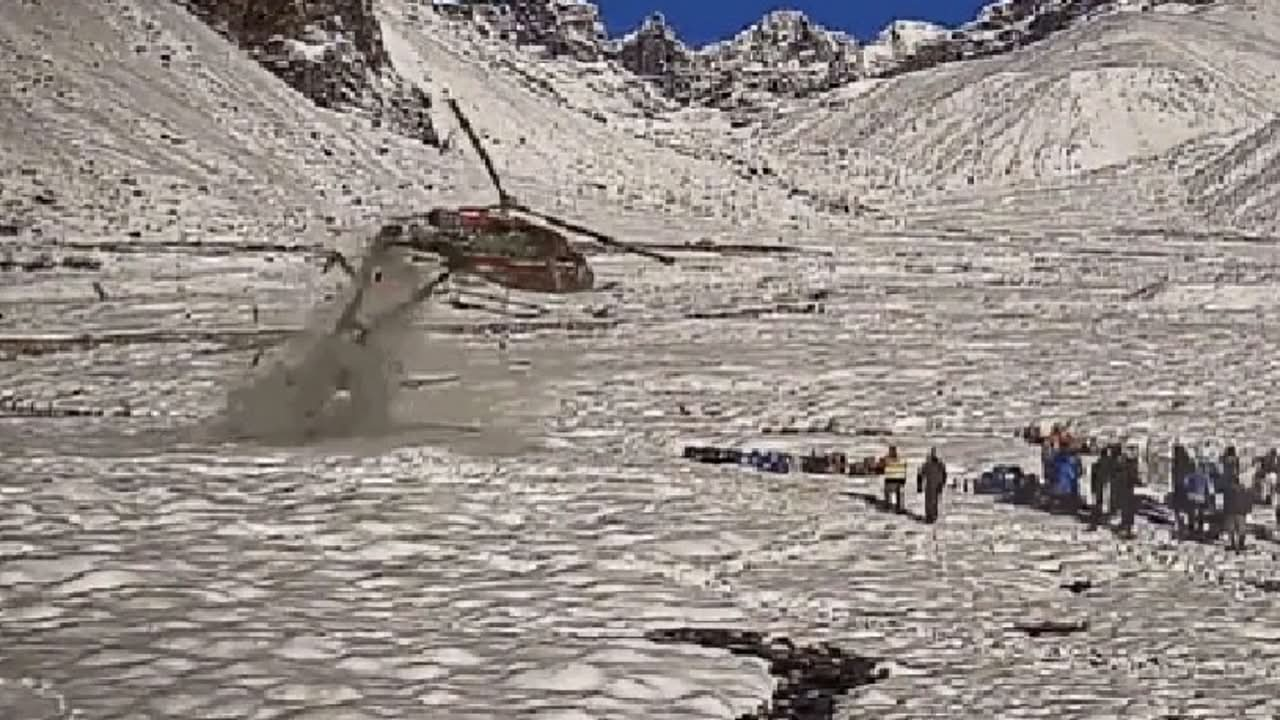 |
Two helicopters collided in the air near Mount Everest on Tuesday, 3 November 2026, killing an Indian tourist and injuring a passenger from New Zealand. The aircraft were trying to land at the same time, close to the ground, when their rotor blades struck each other.
Security cameras installed at the landing perimeter recorded the impact. The helicopters were supporting expeditions that cross the Himalayas.
Both aircraft belonged to separate private companies that run charter flights and aeromedical rescues in the mountain range. The AS350 Écureuil, registration 9N-AJR and operated by Fishtail Air, was carrying passengers rescued from higher points on the mountain. The second helicopter, operated by Air Dynasty and registered 9N-AOD, was flying a transfer carrying only heavy cargo for the camps.
Both pilots survived the impact and received immediate care at the site. The New Zealand passenger, Shailesh Krishna Patel, 49, was aboard the Fishtail Air helicopter. Local emergency teams pulled him from the wreckage and sent him to specialized hospital care.
The body of the Indian passenger, Vasanth Kumar Balaramudu, 47, was removed after the initial containment work at the site ended. Police and the aviation authority say he was from Chennai, in the Indian state of Tamil Nadu.
See also: US midterm elections 2026: voters decide all 435 House seats and 35 Senate seats
Where, when and which aircraft were involved
- Place: Khumbu region of Solukhumbu district, Nepal. Police and CAAN place the collision at the Pheriche helipad, while the Fishtail Air flight took off from Gorakshep.
- Time: about 8:11 to 8:12 a.m. local time.
- Aircraft: two AS350 helicopters, 9N-AJR (Fishtail Air) and 9N-AOD (Air Dynasty).
- Victims: one Indian passenger killed, one New Zealand passenger injured, and two pilots who survived.
- Investigation: Civil Aviation Authority of Nepal (CAAN).
The accident happened at the peak of the trekking and climbing season in Nepal, when many adventurers from around the world travel to the region. Because there are few roads in the area, helicopters are the fastest way to move people and supplies. They also carry out medical evacuations between Kathmandu, Lukla and the remote villages at the foot of the world’s highest mountain.
Thin air and tight coordination near the Everest trail
Flying above 5,000 metres requires constant technical precision because of the thin air. Preliminary reports say the helipad is outside the coverage of the control tower at Lukla airport, so pilots must coordinate with each other directly.
Check out: Tenerife vs Andorra match abandoned after Jesús de Miguel cardiac arrest
Mukesh Dangol, director general of CAAN, said preliminary reports point to miscommunication between the pilots. The exact cause of the collision has not been established.
Technicians and representatives of both companies began preliminary surveys to check whether local wind gusts, poor visibility or coordination failures caused the crash at low altitude. The aviation authority is following the work at the site and will issue official findings. CAAN has not announced a timetable for the investigation.