Police dismantle Comando Vermelho’s mototaxi app generating R$1 million monthly profit Por Luís Henrique Costa
7 min de leitura
 |
The Rio de Janeiro Civil Police launched Operation Shadow Route on Friday morning (8), aiming to dismantle an illegal transport scheme operated by the Comando Vermelho faction in the Vila Kennedy community, West Zone of the capital. The operation, coordinated by the 34th Police Station (Bangu), revealed that over 300 mototaxi drivers were coerced into using the Rotax Mobili app, created by the faction to monopolize local transport and fund drug trafficking. With estimated monthly profits of R$1 million, the system banned platforms like Uber and 99, forcing residents to rely on the criminal service. So far, five people have been arrested, and authorities seized R$300,000 in cash and a bulletproof BMW. The operation is executing seven temporary arrest warrants and 12 search and seizure warrants in addresses across the West Zone, Niterói, and the state’s interior.
The investigation, conducted over three months, identified the sophistication of the scheme, which used front companies to give an appearance of legality to financial operations. The app, featuring its own slogan—“The only car and motorcycle travel app that passes through barricades and drops you at your doorstep”—was a central tool for the faction’s territorial and economic control in the region.
Siga o Mix Vale no Google e veja nossas notícias primeiro
- Scheme structure: two criminal groups managed the operation.
- Driver coercion: mototaxi drivers faced threats and extortion to join the app.
- Financial impact: profits reached up to R$1 million monthly.
Criminal structure behind Rotax Mobili
The Rotax Mobili app, developed by Comando Vermelho, functioned as an urban mobility platform but with illicit purposes. Investigations revealed that the faction structured two distinct groups to manage the scheme. The first group was responsible for coercing mototaxi drivers, forcing them to register and operate exclusively through the app. Drivers who resisted faced threats of violence or physical aggression.
The second group managed the profits, which were fully transferred to the local drug trafficking leader. Over 300 mototaxi drivers were estimated to be registered, generating a financial flow of up to R$1 million per month. To disguise the illicit origin of the money, the faction used front companies, lending an appearance of legitimacy to the scheme.
- Territorial control: banning apps like Uber and 99 reinforced Rotax Mobili’s monopoly.
- Front companies: used to launder money collected by the app.
- Constant threats: drivers were intimidated to ensure adherence to the system.
The Civil Police discovered that the app, despite its professional appearance, offered no benefits to drivers, who were economically exploited. All revenue from rides was directed to the trafficking operation, with no significant share for the workers.
Police action and seizures
Operation Shadow Route mobilized agents from various Civil Police units, including the Special Resources Coordination (Core) and the General Departments of Specialized Police (DGPE), Baixada (DGPB), and Interior (DGPI). The operation resulted in the arrest of five suspects so far, with searches conducted at front businesses and residences in the West Zone, Niterói, and other regions of the state.
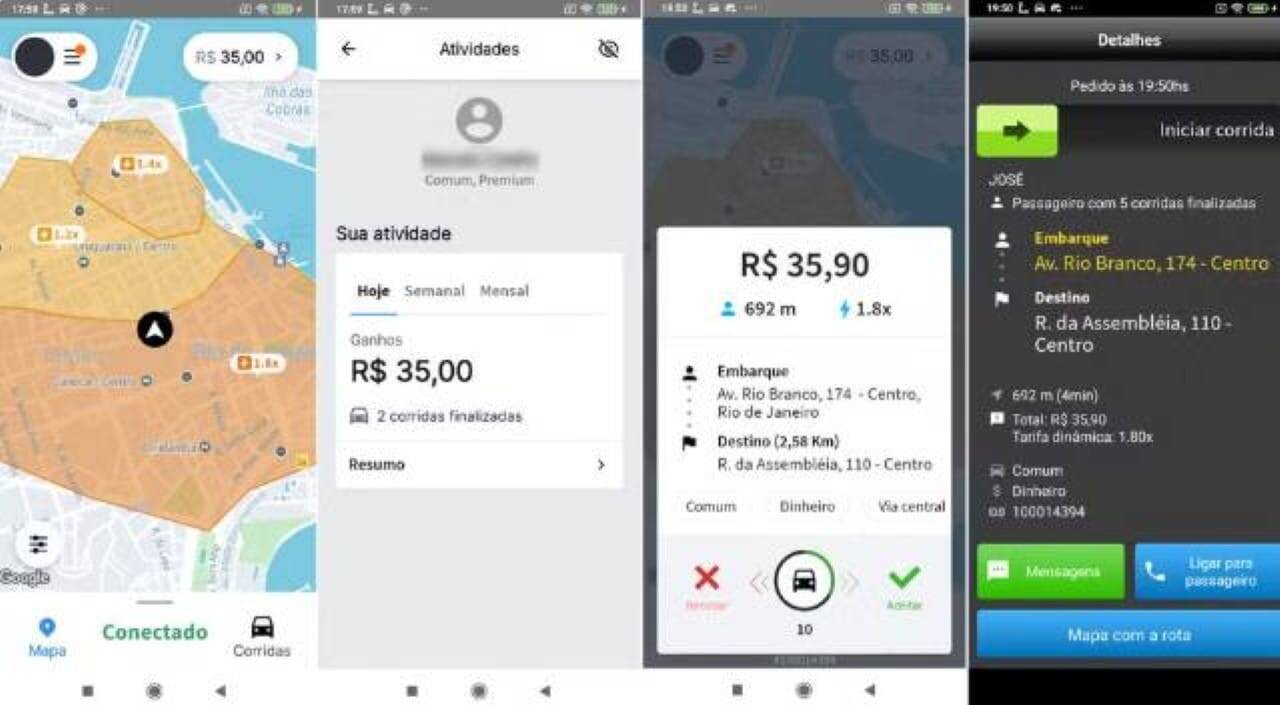
Among the seized items were R$300,000 in cash and a bulletproof BMW belonging to one of the targets. The police also collected digital evidence, such as app screenshots, which displayed a proprietary logo and an interface similar to legitimate transport platforms.
- Judicial warrants: seven for temporary arrests and 12 for search and seizure.
- Areas of operation: West Zone, Niterói, and Rio de Janeiro’s interior.
- Initial results: five arrests and seizure of high-value assets.
The operation was planned based on intelligence information that mapped the scheme’s logistical and financial structure. The 34th Police Station (Bangu) led the investigations, which began after reports from coerced drivers.
Territorial control and community impact
Vila Kennedy, located in Bangu, is an area marked by Comando Vermelho’s dominance, which uses strategies like Rotax Mobili to reinforce its territorial control. Banning platforms like Uber and 99 left residents without alternatives, forcing them to use the faction’s app. This generated not only profit but also power over local urban mobility.
Residents faced daily challenges to move around, especially in areas with faction-controlled barricades. Rotax Mobili, with its promise of unrestricted access, became the only viable option, albeit under coercion.
- Forced monopoly: residents had no access to other transport services.
- Economic exploitation: all ride profits went to the trafficking operation.
- Social impact: increased community dependence on criminal services.
- Police response: the operation aims to restore residents’ freedom of choice.
The operation also revealed the extent of the faction’s control over the community, which goes beyond drug trafficking and includes exploiting essential services. The Civil Police emphasized that dismantling the scheme is a crucial step in weakening Comando Vermelho’s influence in the region.
Technology in service of organized crime
Comando Vermelho’s use of technology demonstrates an evolution in organized crime tactics. Rotax Mobili had a professional interface, complete with a logo and slogan, mimicking legitimate apps. This level of sophistication concerns authorities, as it shows the faction’s ability to adapt digital tools to expand its illicit businesses.
The investigation revealed that the app was developed within the last three months, but its implementation was rapid and efficient, reaching over 300 drivers in a short time. The police are now analyzing the app’s data to identify other individuals involved in the scheme.
- Professional interface: the app mimicked platforms like Uber and 99.
- Rapid development: implemented in just three months.
- Potential expansion: indications of plans for other communities.
- Technological response: police use digital forensics to track the creators.
Authorities are also investigating possible connections with software developers who may have collaborated with the faction, either under coercion or for financial gain. The sophistication of Rotax Mobili suggests the involvement of professionals with advanced technical knowledge.
Next steps in the investigation
Operation Shadow Route marks the beginning of a broader offensive against the use of technology by organized crime. The Civil Police plan to intensify the analysis of seized devices to identify those responsible for creating and maintaining the app. Additionally, the front companies used to launder money are under scrutiny, with the goal of dismantling the entire financial network of the scheme.
The five arrested suspects are being interrogated, and the police hope their statements will lead to other faction members. The operation also seeks to identify drivers who may have voluntarily collaborated with Comando Vermelho, although most were victims of coercion.
- Digital analysis: focus on tracking the app’s creators.
- Financial investigations: front companies under scrutiny.
- Interrogations: suspects may reveal further details of the scheme.
- Driver protection: measures to support coercion victims.
The Civil Police reiterated their commitment to combating the economic exploitation of workers and residents by criminal factions, aiming to restore safety and freedom in Vila Kennedy and other affected communities.