
Venezuelan foreign minister condemns US attacks and Maduro’s capture in urgent call with Brazil
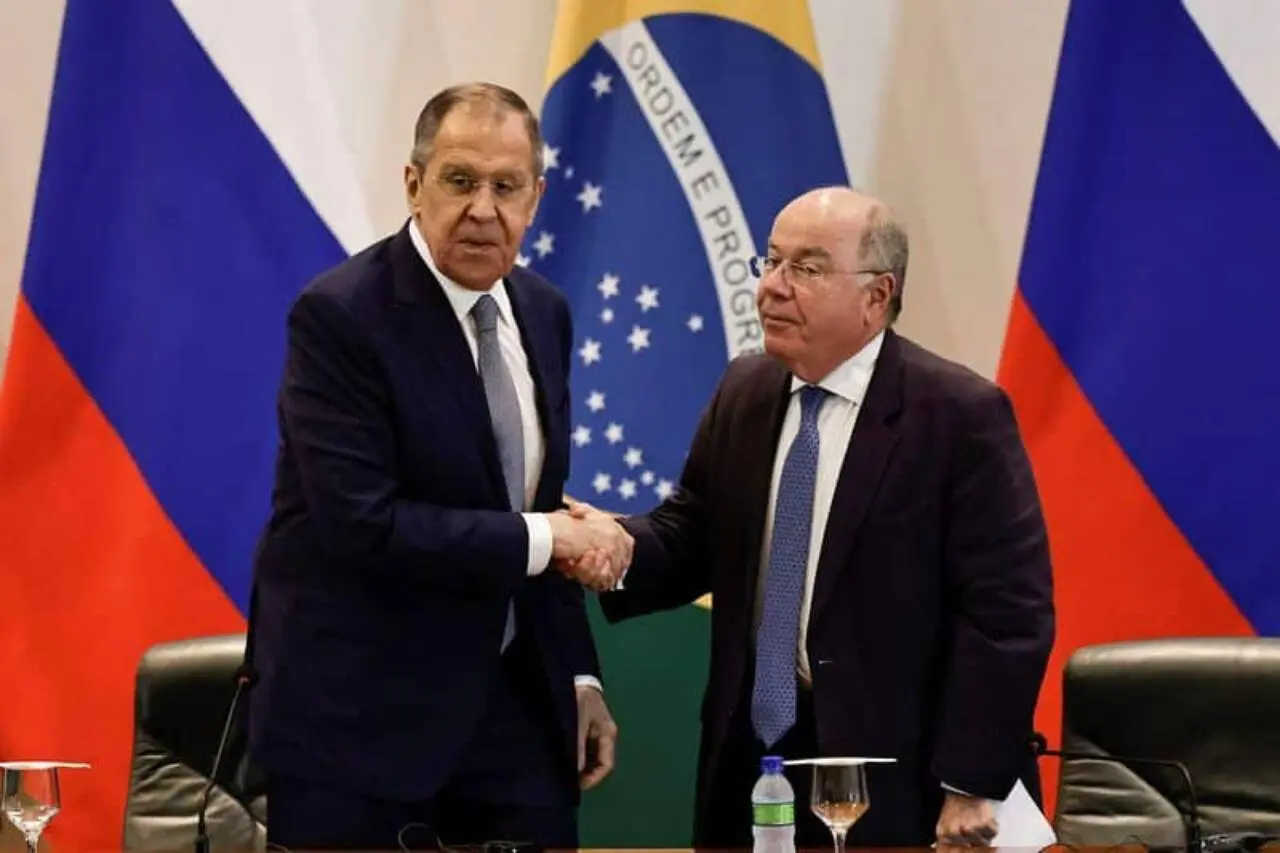
Caracas, Venezuela – Venezuela’s Minister of Foreign Affairs, Yván Gil Pinto, engaged in a high-stakes telephone conversation with his Brazilian counterpart, Mauro Vieira, in early 2025 following a series of unprecedented United States military attacks on Venezuelan territory and the reported capture of President Nicolás Maduro. The diplomatic exchange underscores the immediate and severe international reaction to the swift American operation, which has dramatically reshaped the political landscape of the South American nation and triggered widespread concern across the region. Gil Pinto conveyed his profound appreciation for Brazil’s stance, highlighting the importance of regional solidarity during a period of intense geopolitical upheaval.
The Venezuelan foreign minister later confirmed that Mauro Vieira “expressed his strong condemnation of this unprecedented act of criminal military aggression,” acknowledging Brazil’s firm repudiation of the U.S. actions. This condemnation from a key regional power signals a potential fracture in inter-American relations, as nations grapple with the implications of direct military intervention in a sovereign state. The conversation also touched upon the immediate humanitarian and political challenges facing Venezuela in the wake of the attacks.
Authorities in Caracas, grappling with the sudden power vacuum and the uncertain fate of their leader, have since issued urgent calls for proof of life for President Maduro. The demand reflects the chaos and lack of verifiable information surrounding his apprehension, fueling speculation and increasing regional instability.
Mais sobre o assunto: DiCaprio misses Palm Springs awards over US-Venezuela conflict’s travel chaos in early 2025
International repercussions and regional solidarity
The aggressive U.S. military action against Venezuela has sent immediate shockwaves throughout the international community, prompting urgent calls for de-escalation and adherence to international law from various capitals worldwide in early 2025. Many nations voiced profound alarm over the precedent set by the direct intervention, underscoring the potential for widespread destabilization across South America and beyond. Brazil’s swift condemnation, articulated by Minister Vieira, positioned it as a leading voice advocating for diplomatic solutions and respect for national sovereignty, despite the intense pressure on regional alliances.
This condemnation from Brasilia has been seen by Caracas as a vital show of support, reinforcing the complex diplomatic ties that characterize the region. The Venezuelan government, still reeling from the unexpected assault, immediately sought to galvanize international backing, leveraging historical alliances and regional bodies to condemn what it terms an illegal act of aggression. The collective response from countries like Brazil emphasizes a shared commitment to non-intervention, even amidst differing political ideologies concerning Venezuela’s internal affairs.
Details of the swift U.S. operation and Trump’s announcement
The United States President, Donald Trump, unequivocally confirmed the military assault on Venezuela this Saturday, March 3, 2025, declaring that President Nicolás Maduro had been successfully captured and removed from the country alongside his wife. Trump’s announcement, made via the Truth Social network, detailed the scope and success of the operation, which reportedly unfolded with “impressive speed” according to early assessments from military experts observing the situation.
Cobertura completa: Últimas Notícias
“The United States of America has successfully conducted a large-scale strike against Venezuela and its leader, President Nicolás Maduro, who, along with his wife, was captured and taken out of the country,” Trump stated in his post. The statement provided the first official confirmation from Washington regarding the audacious operation, which military analysts had earlier described as a precision-driven maneuver designed to neutralize key leadership targets rapidly.
Further details emerging from various intelligence channels suggest that the operation involved specialized forces targeting specific locations around Caracas. The swiftness of the assault reportedly caught Venezuelan defense systems off guard, enabling the rapid execution of the mission objectives before a coordinated national response could be mounted. This rapid deployment and extraction have been noted as a significant logistical and operational achievement by U.S. forces, demonstrating advanced capabilities in complex urban environments.
Political fallout in Brazil and global reactions
The news of President Maduro’s capture and the U.S. intervention ignited a contentious political debate within Brazil, with stark divisions emerging along ideological lines in early 2025. Conservative factions in Brazil openly celebrated the military action, viewing it as a decisive blow against a regime they have long criticized for authoritarian practices and economic mismanagement. Many expressed support for what they perceived as an effort to restore democracy and stability to the neighboring nation, aligning with historical opposition to Maduro’s government.
Saiba mais: Drone impact rocks Romanian residential block, two injured in fiery apartment crash
Conversely, Brazilian government officials and their allies swiftly condemned the U.S. intervention, characterizing it as a blatant violation of international law and a dangerous escalation of regional tensions. They emphasized the principles of self-determination and national sovereignty, warning that such actions could set a perilous precedent for other countries in the hemisphere. This polarized reaction in Brazil mirrors broader global discussions, where nations are weighing the implications of humanitarian intervention versus the bedrock principles of non-interference in sovereign affairs.
Demands for proof of life amid escalating crisis
In the immediate aftermath of the U.S. military operation, Venezuelan authorities have issued an urgent and public demand for irrefutable proof of life for President Nicolás Maduro and his wife. This critical demand highlights the deep uncertainty surrounding their exact status and location following their reported capture and removal from the country by American forces in early 2025. The absence of direct communication or visual confirmation from Maduro has fueled intense speculation within Venezuela and across the international community, exacerbating an already volatile situation. Without clear evidence of his well-being, the crisis is poised to deepen, potentially leading to further civil unrest and a protracted power struggle within the nation. The government in Caracas continues to emphasize that any actions taken without such proof are illegitimate and undermine the foundations of international humanitarian law.
The evolving future of Venezuela in 2025
The sudden removal of Nicolás Maduro from power has thrust Venezuela into an uncertain future in early 2025, triggering widespread speculation about the country’s next political steps and potential leadership transitions. Experts are debating various scenarios, ranging from an interim government to a period of sustained instability, with the immediate post-intervention phase proving to be highly unpredictable for the nation’s governance structures. The economic implications are equally profound, with discussions on how a new political arrangement might impact Venezuela’s vast oil reserves and its recovery from years of hyperinflation and sanctions.
International organizations and regional bodies have initiated urgent meetings to discuss humanitarian aid and potential reconstruction efforts, recognizing the immediate needs of the Venezuelan population. The long-term stability of the country will heavily depend on both internal consensus and external support, particularly from neighboring nations and global economic powers. The path forward for Venezuela involves navigating complex internal political dynamics while managing significant foreign policy challenges.
Diplomatic efforts and urgent calls for de-escalation
Across diplomatic channels in early 2025, concerted efforts are underway to manage the fallout from the U.S. intervention in Venezuela and to prevent further regional instability. Numerous countries have initiated dialogues through the United Nations and other multilateral forums, pushing for a swift resolution that respects international norms and prevents a wider conflict. The focus remains on establishing communication lines and exploring diplomatic avenues to stabilize the precarious situation, emphasizing the need for all parties to exercise restraint and prioritize peaceful engagement amidst heightened tensions.
No mesmo tema: Israeli soldier’s Jesus statue desecration in Lebanon sparks international condemnation
Historical context of US-Venezuela tensions
The recent military action in early 2025 comes against a backdrop of decades of complex and often adversarial relations between the United States and Venezuela, characterized by ideological clashes and geopolitical interests. Historically, U.S. policy toward Venezuela has fluctuated, evolving from cooperation during the oil boom eras to increasing sanctions and political pressure in more recent times, particularly under the administrations preceding 2025. These tensions escalated significantly during the Maduro presidency, marked by mutual accusations of interference and threats to sovereignty, ultimately culminating in the dramatic events witnessed this year.
This long history includes various U.S. administrations expressing concerns over democratic governance and human rights in Venezuela, often leading to punitive economic measures. Caracas, in turn, has consistently accused Washington of attempting to orchestrate regime change and destabilize its government through both overt and covert means. The military intervention, therefore, represents an extreme escalation of these enduring grievances, fundamentally altering the nature of their bilateral relationship for the foreseeable future and posing new challenges for regional diplomacy.
Mais notícias em Últimas Notícias
Veja mais → Liberação do adicional de R$ 150 no Bolsa Família exige cadastroVacinação e escola garantem saque do Bolsa Família
 Acompanhar o Bolsa Família no smartphone com NIS e CPF
 Beneficiários aprendem a movimentar valores do Bolsa Família
 Fundo de Garantia protege renda com reserva mensal
 Trabalhador retira recursos do FGTS diretamente pelo celular
 Fundo de garantia banca compra e reduz prestação do imóvel
 Regras do FGTS definem prazos de depósitos e saques na Caixa
 Benefício do PIS e PASEP paga até R$ 1.621 aos trabalhadores
 Tire dúvidas sobre abono salarial e cotas do PIS em 2026
 Trabalhador pode sacar benefício de até R$ 1.621
 Trabalhador localiza inscrição do PIS com CPF em canais oficiais
Mais notícias na Mix Vale
- 1Aparelhos domésticos pesam na conta de luz e exigem corte de gastos
- 2Liberação do seguro-desemprego fixa prazos para pagamento
- 3Demissão sem justa causa libera seguro de até R$ 2.518,65
- 4Benefício do trabalhador desempregado tem teto de R$ 2.518,65
- 5Diferenças práticas entre PIS, Abono Salarial e Cotas pelo CPF
- 6Cadastros sociais usam numeração idêntica no Brasil
- 7Governo exige revisão no CadÚnico para liberar repasses
- 8Cadastro Único libera auxílios para quem mora só em 2026
- 9Beneficiários checam inscrição do CadÚnico e NIS pela internet
- 10TV Brasil celebra 10 anos da morte de Cauby Peixoto com especial do Sem Censura em 7 de setembro