PT faction questions Andrei Rodrigues’ suitability for 2025 ministerial post amidst internal government reshuffle Por Luís Pereira
6 min de leitura
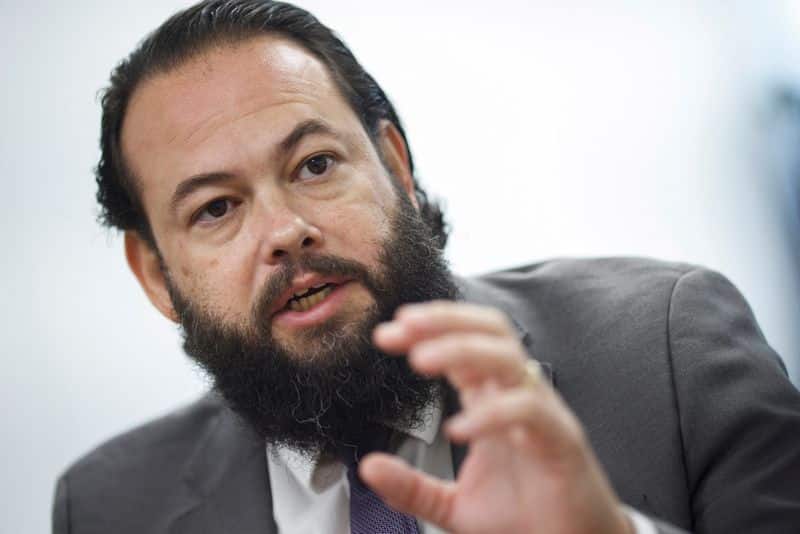 |
A significant faction within Brazil’s Workers’ Party (PT) is actively resisting the potential nomination of Andrei Rodrigues, the current director-general of the Federal Police (PF), to a ministerial position in the 2025 government. Rodrigues is widely considered for roles such as the Minister of Justice or, should it be established, the Minister of Public Security. This internal opposition highlights a complex power struggle and differing views on governmental checks and balances.
This resistance is not a new development, with concerns escalating as discussions progress regarding a potential cabinet restructuring slated for the upcoming year. The internal debate intensified particularly with the prospect of new ministerial portfolios opening, prompting the PT to advocate for its own established figures to fill these crucial roles. The party’s hierarchy is navigating a delicate balance between political expediency and perceived institutional integrity.
Siga o Mix Vale no Google e veja nossas notícias primeiro
Deepening internal division over justice portfolio
The primary criticism articulated by PT members opposing Rodrigues’s potential appointment centers on maintaining the system of checks and balances vital for the Ministry of Justice or Public Security. Insiders suggest that these ministries are tasked with overseeing and, if necessary, containing potential excesses by law enforcement agencies, including the Federal Police. Elevating the current head of the PF to such a position, critics argue, could fundamentally compromise this essential oversight function, creating a conflict of interest.
This concern is rooted in the very structure of democratic governance, where distinct branches and institutions are designed to monitor each other. Placing the former leader of an investigated body in charge of its regulatory ministry raises fundamental questions about impartiality and the integrity of justice administration. The party’s internal deliberations reflect a deep apprehension about the institutional implications of such a move.
Concerns regarding federal police independence
Historically, the PT has championed the independence of the Federal Police as a hallmark of its administrations, distinguishing its approach from previous political interference. However, critics of Rodrigues’s nomination within the party now point to several recent incidents as examples of perceived excesses that necessitate stricter ministerial control. These episodes, they contend, underscore the need for an external, impartial check on the PF’s operations.
Among the cited events is the inclusion of Fábio Luís da Silva, President Lula’s son, in an investigation concerning alleged fraud within the National Institute of Social Security (INSS). This particular case, according to dissenting PT voices, exemplifies situations where a robust, independent ministerial oversight is paramount to ensure fairness and prevent any appearance of political influence, either for or against the executive. The incident has fueled arguments that the individual heading the Justice portfolio must be distinctly separate from the operational command of the federal police.
Ministerial oversight and accountability at stake
The role of the Justice Ministry extends beyond mere administrative duties; it involves a crucial responsibility in safeguarding civil liberties and ensuring due process. It acts as a critical institutional barrier against potential overreach by federal law enforcement bodies. The argument against Rodrigues’s move is that his direct past leadership of the PF could blur the lines between an executive agency and its oversight body.
This potential erosion of functional separation is a significant point of contention. Party members emphasize that the credibility of the justice system hinges on the public’s perception of its impartiality and its capacity for self-correction. Appointing a former police chief to oversee the very institution he led, in their view, could damage public trust and weaken the ministry’s authority to hold law enforcement accountable.
PT’s internal nominations and power dynamics
The internal dispute over Andrei Rodrigues’s potential ministry is also intrinsically linked to broader power dynamics within the PT and the government’s future composition. As the possibility of creating new ministerial spaces gains traction, various factions within the party are strategically positioning their own candidates for these influential roles. This intensifies the competition for cabinet appointments, with Rodrigues’s nomination viewed by some as an external imposition that bypasses internal party preferences.
The emergence of new portfolios typically offers opportunities for political expansion and the consolidation of support bases. Therefore, the resistance to Rodrigues can be seen as an effort by PT stalwarts to protect these opportunities for party loyalists and experienced political figures who align more closely with the party’s traditional ideological and operational lines. This underscores the perpetual interplay between individual merit, political loyalty, and strategic positioning in government formations.
Potential candidates for justice and security roles
Amidst the ongoing discussions, several prominent figures are being considered as alternatives for leading the Ministry of Justice or the potential Ministry of Public Security. These individuals represent a diverse range of experience and political affiliations, indicating the broad scope of candidates available for such critical positions.
Among the names frequently mentioned are:
* Tarso Genro, who previously served as Minister of Justice between 2007 and 2010, bringing a track record of experience in the portfolio.
* Vinicius Carvalho, currently serving as the Minister of the Comptroller General of the Union (CGU), known for his expertise in transparency and public administration.
* Marco Aurélio Carvalho, a prominent member of the Grupo Prerrogativas, a legal and political group often vocal on issues of justice and democracy.
* Rodrigo Pacheco, the esteemed Senator from Minas Gerais and current President of the Federal Senate, whose name adds significant political weight to any potential cabinet.
These names reflect a blend of seasoned politicians, legal experts, and governmental administrators, offering President Lula a variety of profiles to consider for the challenging task of leading the nation’s justice and security apparatus in 2025. The final selection will undoubtedly shape the government’s approach to law enforcement and institutional oversight.