Ceará records 134 meteors at a monitoring station; next rains in August
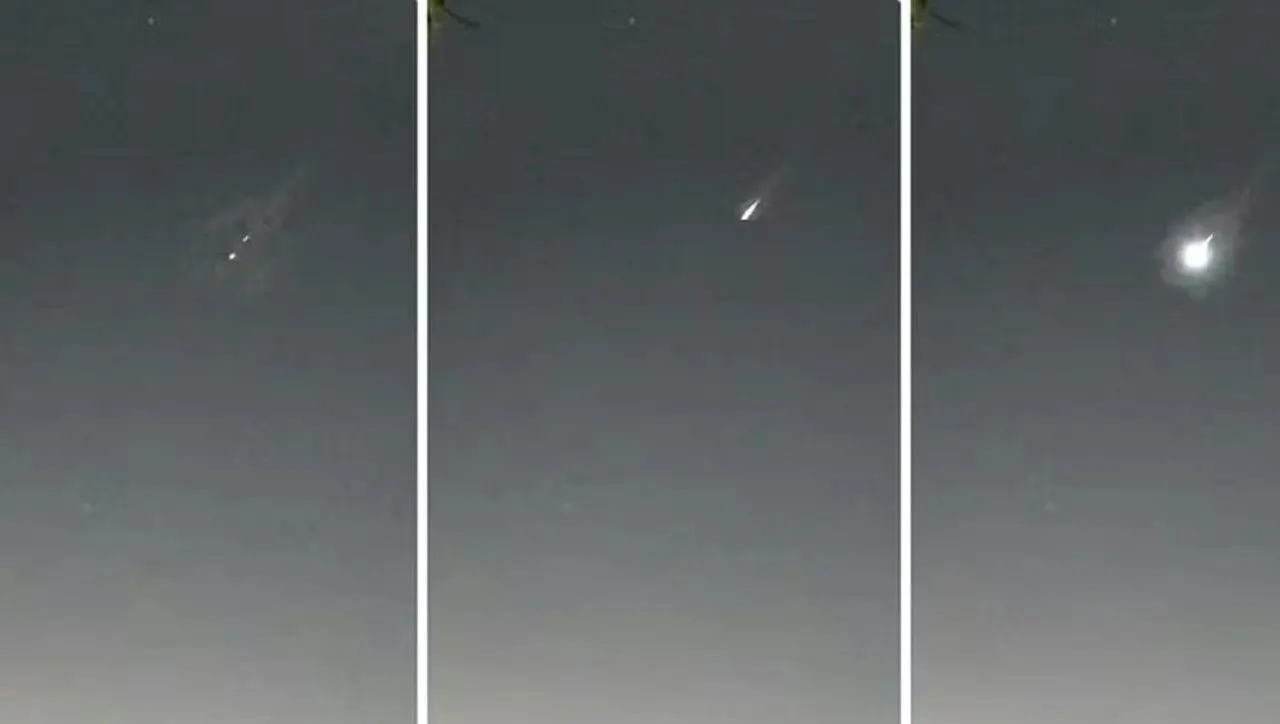
A meteor monitoring station located in Carnaubal, Ceará, detected a total of 134 meteors in the early hours of July 31st. The information was confirmed by astronomer Marcelo De Cicco, who is a member of the Brazilian Astronomy Society and coordinator of the Exoss community project. In another record, in the early hours of July 29th to 30th, the same station had already captured 196 meteors.
Several visual records of the phenomenon were captured by Exoss stations, including those in Florianópolis, in Santa Catarina, which observed an intensely bright meteor during the 30th and 31st of July. These observations highlight the intense activity in the period.
Marcelo De Cicco had anticipated that the peak of the meteor shower was scheduled to occur at this time of year.
Despite the prediction that the full Moon could make it difficult to see less luminous meteors, the celestial spectacle was clearly perceived with the naked eye in different regions of Brazil, without the need for equipment such as telescopes or binoculars.
More on this story: Station in the interior of Ceará captures more than a hundred meteors in a single dawn
Annual meteor shower phenomena
Popularly known as “shooting stars”, meteor showers are annual events. They happen when the Earth passes through areas of space full of tiny fragments left by comets and, on some occasions, asteroids.
In the Southern Hemisphere, the Southern Aquáridas Delta stands out as the main meteor shower to be observed during this period.
Next chance to see meteors will be on August 12th
The population will have a great new chance to observe a meteor shower on August 12th. On this date, it will be the peak of the Perseids, with better visibility for the North and Northeast regions of Brazil.
On the same topic: August sky: 9 unmissable astronomical events, with solar eclipse and meteor shower
On the same occasion, a total solar eclipse is predicted, but it will only be visible in some parts of Europe.
See Also

Michigan serial killings result in six deaths, including US suspect

7.7 magnitude earthquake destroys buildings in Indonesia and triggers tsunami warning
Videos of the 7.7 earthquake in Indonesia reveal damage and panic in Asia
At the end of October, Brazil will have another significant opportunity to observe meteors with the Orionids shower.
For those who want to photograph these phenomena, the astronomer advises positioning the camera away from the Moon’s brightness and using long exposures, of approximately 10 seconds, with a high ISO.
The impressive speed of meteors
Meteors penetrate the Earth’s atmosphere at speeds that can vary between 40,000 km/h and 260,000 km/h, which corresponds to 11 to 72 kilometers per second. The exact speed depends directly on its trajectory in relation to our planet.
Learn more: Last meteor shower of 2025: Ursids reaches peak with up to 10 shooting stars per hour
It is precisely this extreme speed that causes the intense heating of particles, many of them the size of a grain of sand, as they pass through the atmosphere, creating the luminous trail that is visible from the Earth’s surface.
When a meteor’s brightness is more intense than that of the planet Venus, it is classified as a bolide.
Generally, a meteor’s brightness lasts for a fraction of a second, between 0.2 and 1 second. However, exceptionally luminous meteors, such as bolides, or those that enter the atmosphere at a shallower angle, can be observed for several seconds.