Silent Hill: Townfall developers detail Scottish setting, technology and combat
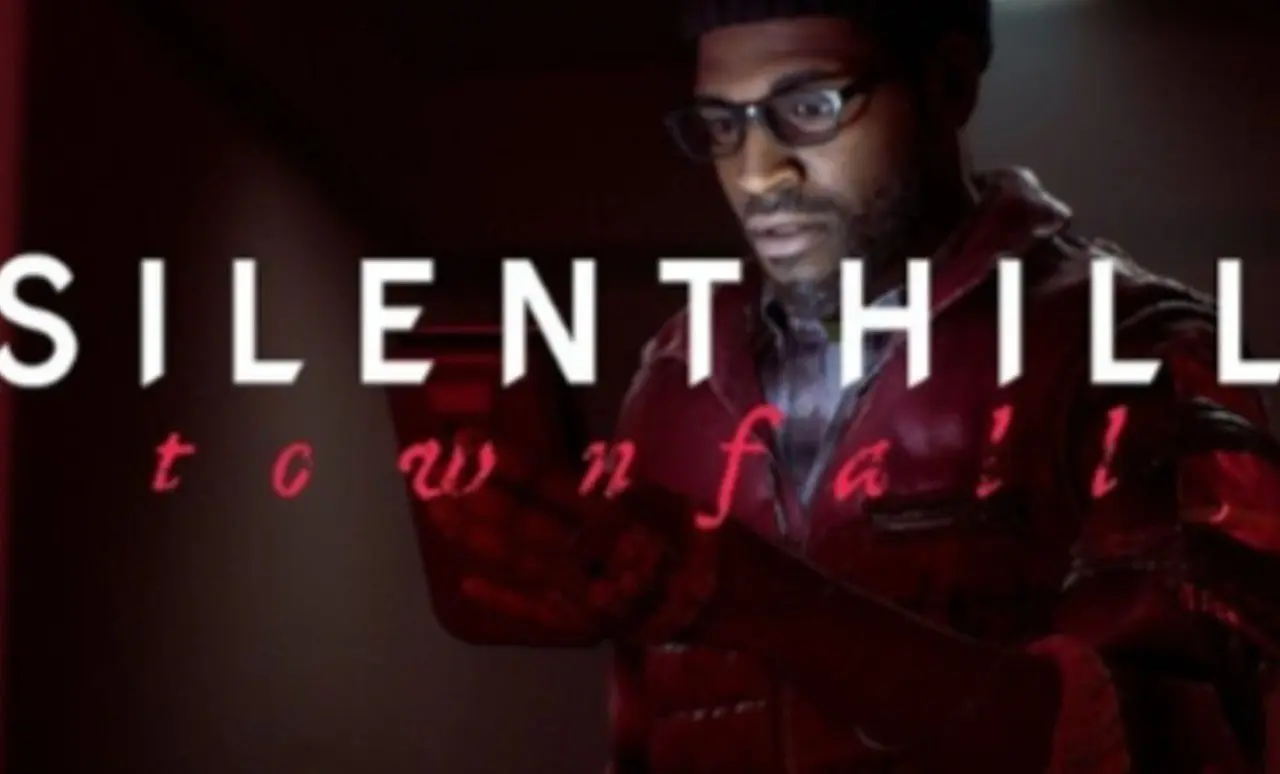
The long-awaited release of Silent Hill: Townfall, scheduled for September 24th on PlayStation 5, brought new information in an interview with its creators, held on July 30th, 2026. The new title in the renowned psychological horror franchise had details revealed by Motoi Okamoto, series producer at Konami, and Jon McKellan, writer and director at Screen Burn Interactive, a Scottish development company. The conversation delved into aspects such as the game’s setting, the use of retro technology and combat options, promising an experience that seeks to innovate, but maintains the classic atmosphere of the series.
Choosing Screen Burn for development
Motoi Okamoto explained that Screen Burn was recommended by Annapurna Interactive, co-publisher of the game. According to Okamoto, Annapurna has a history of success with independent games that stand out for their narrative and art direction. The Konami producer stated that he had already played Screen Burn’s previous titles, such as Stories Untold and Observation, and found both to be fantastic, which gave him the confidence to hand over the project to the team.
Narrative creation for Silent Hill
Okamoto informed that, although Konami has internal guidelines for the franchise’s history, the most important part is that the developers and screenwriters themselves carry out an in-depth analysis of the Silent Hill series and create their own references. He commented that providing a very detailed manual from Konami would not have the desired effect, so partner teams are encouraged to go through this process of personal discovery.
On the same topic: Horror game Tormented Souls 2 debuts on Nintendo Switch 2 on October 15
Decision to set the game in Scotland
Jon McKellan explained that choosing Scotland as the setting was natural, as it is the most familiar environment for the development team. He said that to create a detailed and believable setting, it was essential to build a world they knew deeply. McKellan also highlighted that Scotland is a region with a lot of fog, a characteristic that aligns perfectly with the atmosphere of Silent Hill. He reported that there were times when, when photographing the location, the team felt like they were “literally in Silent Hill”.
Okamoto added that the Silent Hill franchise usually collaborates with development studios from different parts of the world. These partnerships allow us to combine different cultures and regional visions, resulting in horror experiences that prove to be innovative and unique.
Learn more: Horror phenomenon Buckshot Roulette debuts on XBOX Game Pass with brutal gameplay
Adopting a first-person perspective
Okamoto clarified that, as the developers were different and production schedules did not overlap, there was no direct exchange of technical information between the projects. He reported that the decision for Silent Hill: Townfall and Silent Hill: The Short Message to both be first-person was a coincidence.
McKellan commented that, due to the lack of overlapping versions, the Screen Burn team was able to experience Silent Hill: The Short Message with a new vision. He said that for Silent Hill: Townfall, the first-person perspective was crucial to integrating gameplay into the CRTV device, as without it, CRTV functionality would not be possible. Even with the changes that the first-person view represents for the series, McKellan ensured that maximum care was taken to preserve the atmosphere and presentation characteristic of Silent Hill.
Evolution from radio to CRTV device
McKellan revealed that replacing radio with CRTV was an early idea in the game’s development. The team challenged themselves to transform radio from a passive tool into something active. By converting the device into a visual that allows the display of video and audio signals, the possibilities have expanded considerably, impacting the narrative and gameplay, including stealth mode. The director stated that Screen Burn has expertise in manipulating older analogue technologies, something notable in its previous work.
Scenes that depend exclusively on CRTV
McKellan explained that much of the presentation and gameplay was designed based on the existence of CRTV. He detailed that rather than questioning which scenes wouldn’t be possible without the device, the approach during development was to maximize its potential at every point in the game.
See Also

Michigan serial killings result in six deaths, including US suspect

7.7 magnitude earthquake destroys buildings in Indonesia and triggers tsunami warning
Videos of the 7.7 earthquake in Indonesia reveal damage and panic in Asia
More on this story: New Hellraiser: Revival game reveals release date and never-before-seen scenes
Recreation of retro devices and environments
McKellan expressed the team’s appreciation for vintage analog technology and devices, which it considers elements to be nostalgic and familiar to gamers around the world. He said the game creates moments that contrast with this nostalgia, as in today’s climate, analog technology can feel unstable or unreliable. The objective was to put players in a situation where they need to depend on these devices to survive, even if this creates insecurity. Regarding environmental design, McKellan stated that the dedication is almost obsessive, as making players believe in the existence of a place is essential for them to care about it.
Red and black color palette
McKellan indicated that the prominent use of the colors red and black is due, in part, to their striking nature. However, as players progress through Silent Hill: Townfall, they will discover that these two hues hold vital, symbolic meaning for the protagonist, Simon.
Creature difficulty and combat styles
McKellan stated that the game offers several alternatives for players to face encounters with creatures. The intention is not to force a single style of play, but rather to encourage experimentation so that everyone discovers the most effective or appropriate approach for each survival scenario.
Multiple endings approach
McKellan explained that the outcomes of Silent Hill: Townfall are not defined by a single final choice, but rather by the set of actions carried out by the player throughout the journey. Freedom of choice is designed to make the ending feel like an authentic achievement, based on each player’s individual experience.
Okamoto detailed that the three main endings are accessible the first time the game is completed. A secret ending, however, is unlocked after finishing the game once. He compared the structure to titles such as the original Silent Hill and Silent Hill 2, indicating that players will not need to replay the game several times just to see the main outcomes.
Learn more: Psychological horror gains an unusual setting with Black Lake, which arrives on PC and consoles
PlayStation 5 Gameplay Enhancements
McKellan explained that the DualSense wireless controller’s adaptive triggers will allow players to feel the weight of weapons and the haptic feedback of approaching creature footsteps. He mentioned that movement control, via gyroscope, allows for intuitive aiming. Initially skeptical, McKellan said that after implementation, motion controls felt so natural that they became indispensable. With these controls, it will also be possible to manipulate the map as if you were holding it in your hands. Additionally, some puzzles will require the player to physically tilt the CRTV, simulating searching for a signal on a phone, which adds another way to integrate the feature.
Haptic feedback and adaptive triggers: the producer’s view
Okamoto expressed his view that the Silent Hill franchise has always been recognized for its visual and sound aspects. With PlayStation 5, the ability to integrate the sense of touch into the horror experience represents a significant advancement for the series.
Impact of 3D Audio on Immersion and Horror
McKellan concluded by explaining that, as Silent Hill: Townfall is a first-person game, the player’s field of vision is naturally limited, which makes audio an even more fundamental element. The team has deliberately created situations where players must rely on subtle noises and sonic cues to detect threats that may be beyond the range of vision.