Discovery in Thailand reveals new species of dinosaur with a long neck and 20 meters
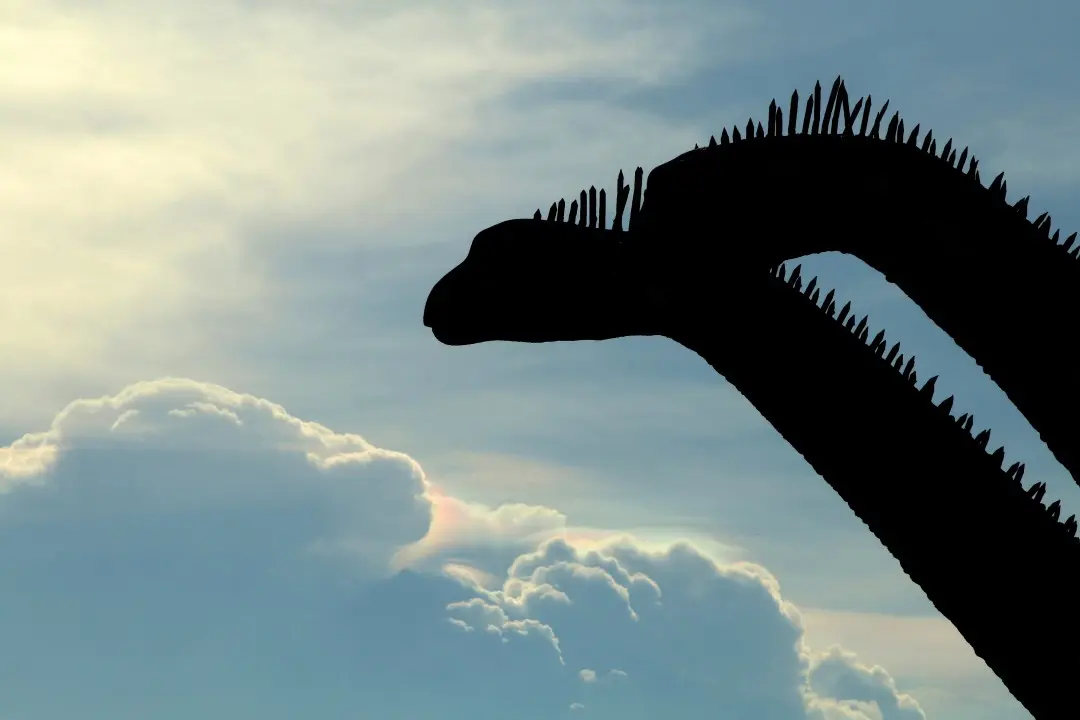
Researchers in Thailand announced the identification of a new species of dinosaur, based on fossils unearthed in the province of Kalasin, located in the northeast of the territory.
The herbivorous animal, named Uragasaurus kalasinensis, would have inhabited the Earth approximately 150 million years ago, according to scientists’ estimates.
Characterized by a remarkably long neck, the dinosaur reached around 20 meters in length, the size of a cricket pitch.
On the same topic: Discovery reveals ancient bees that used mammal bones as nests 20,000 years ago
Dr. Apirut Nilpanapan, from Mahasarakham University, leader of the study, said that the newly described specimen was part of a vast collection of prehistoric remains. The archaeological site was initially discovered in 2008, after a resident found fragments that resembled snake scales.
The Phu Noi site, where the discovery took place, revealed a wide diversity of fossils belonging to the Late Jurassic period. Impressively, more than 90% of the materials excavated from the site were dinosaur parts.
During explorations at the site, the research team also unearthed other remains, including fossilized dinosaur teeth and bones.
However, the crucial element for identifying the new species was a dorsal vertebra, a bone in the upper or middle part of the back, which exhibited unique characteristics.
A computed tomography analysis indicated that Uragasaurus kalasinensis belonged to the Mamenchisauridae family of sauropod dinosaurs, known for their disproportionately long necks. This characteristic was essential for them to reach foliage at varying elevations.
See Also

Electrical discharge knocks man off roof in Jaguaruana after contact with power lines
Global auction raises US$11.9 million and Brazil’s historic currency reaches record value

Former fighter Prichard Colón dies at age 33 after decade in a vegetative state
More on this story: Researchers uncover beetles from the age of dinosaurs in discoveries in the Northeast
Although most of the fossils of this family Mamenchisauridae have been documented in China, the discovery of Uragasaurus kalasinensis in Thailand marks the first occurrence of this type of dinosaur in the country, giving it significant regional importance for Asian paleontology.
The same detailed examination showed structural particularities, such as the “Y”-shaped arrangement of supporting bones, called laminae, which are distinctive to the species.
Nilpanapan explained that such features, especially a unique air cavity structure, were “unlike any other dinosaur in the world… That’s what sets it apart,” according to his statement.
The researcher revealed that he had damaged the computer when he discovered the discovery, describing his state as one of “exaltation and relief” at the revelation.
The complete study was released last week, with publications in the renowned scientific journals Springer Nature and Nature Scientific Reports.
Learn more: T. rex auction at Sotheby’s raises debate about the future of science and valuable fossils
This announcement follows another important discovery made in May, when remains also unearthed in Thailand led to the identification of Nagatitan, a distinctive long-necked herbivorous dinosaur, highlighting the region’s rich fossil biodiversity.
Nagatitan holds the title of the largest dinosaur ever discovered in Southeast Asia, with an estimated weight of 27 tons, the equivalent of nine adult Asian elephants, and an impressive length of 27 meters.