Apple launches iPhone 17 Air with 5.5 mm and system that makes stolen parts unusable
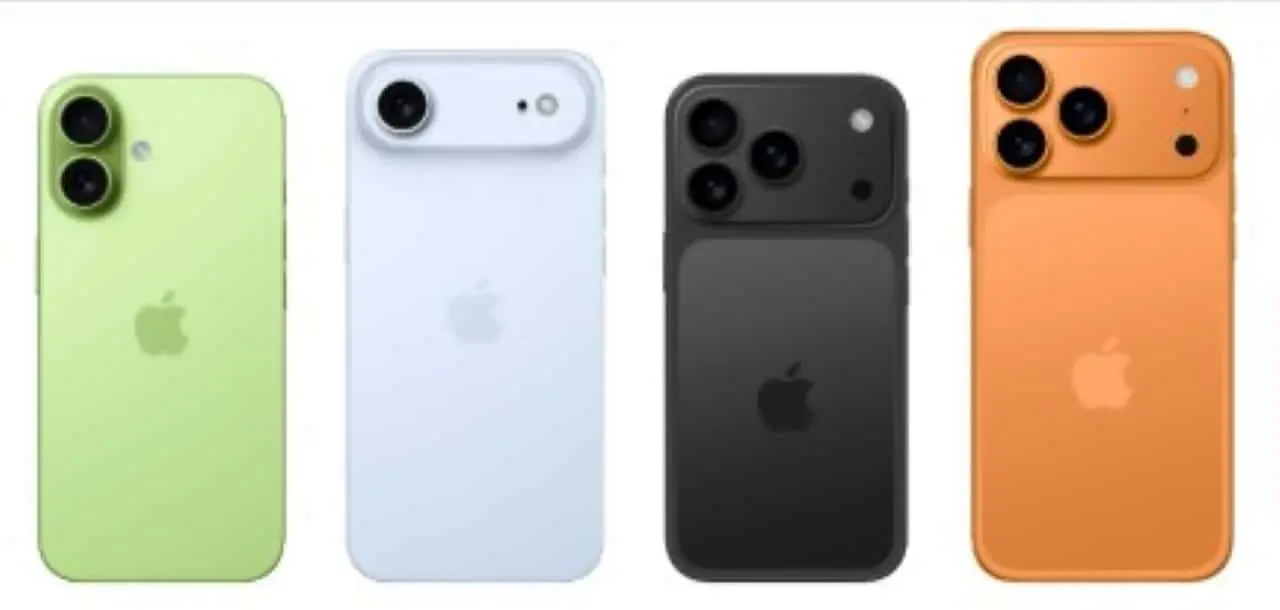
The Cupertino manufacturer established a new paradigm for the mobile device market by revealing its latest hardware offering, breaking with the cycle of discreet visual updates of the last decade. During the presentation that attracted the attention of investors and consumers on a global scale, the company detailed a smartphone that tests the frontiers of modern engineering, merging an extremely thin profile with an unprecedented software language.
Analysts in the technology sector already classify the novelty as the brand’s most aggressive transition since the adoption of borderless screens, highlighting the fusion between the physical structure and the digital environment. The focus of the project lies on the tactile and visual experience, using state-of-the-art panels to dissolve the perception of boundaries between whoever holds the device and the content displayed.
The new equipment arrives on the market supported by specific technical pillars:
More on this story: New iPhone 18 line brings 200 MP lens and debuts long-awaited foldable cell phone from Apple
- Thickness reduced to exactly 5.5 millimeters, ensuring the thinnest cell phone in the premium segment.
- Implementation of the Liquid Glass visual environment, designed to simulate the physics of fluids during navigation.
- Security mechanism called Total Invalidation, programmed to render physical components unusable after theft.
- Exclusive neural processing focused on optimizing energy expenditure and compensating for reduced battery size.
Experts in consumer trends point out that the strategy meets an old desire for aesthetic renewal, while at the same time positioning the manufacturer at the forefront of invisible integration, a concept where the machine loses visual prominence to prioritize function.
Profound changes to the user interface with the arrival of the Liquid Glass system
The concept called Liquid Glass marks the most drastic graphical change to the company’s operating system in many years, replacing the rigidity of traditional icons with elements that react organically to the touch and tilt of the device. The technology applies complex rendering algorithms to generate a sense of depth and viscosity, creating the illusion that menus float just below the glass.
Programmers who have tested the authoring tools early report that the new visual identity allows them to extend these physical properties to third-party applications, ensuring aesthetic cohesion across the ecosystem. To reinforce this visual fluidity, the internal vibration motors have been recalibrated, delivering tactile responses that mimic the surface tension of water.
The central proposal is to transform routine use into a rich sensory experience, treating notifications and shortcuts as digital objects with mass and realistic physical behavior. Preliminary tests indicate that the approach reduces eye strain and makes the learning curve almost zero for new buyers.
The engineering challenges of building a chassis measuring just 5.5 millimeters
Reaching the 5.5 millimeter mark required a complete restructuring of the internal layout of parts, forcing engineers to create new metal alloys and new ways of stacking circuit boards. The skeleton of the iPhone 17 Air combines heat-treated aerospace-grade aluminum with a titanium composite, ensuring that the phone does not suffer from structural twists — a historic problem that has affected the industry in the past during the race for thin devices, as occurred with the iPhone 6 generation.
Temperature control required the invention of a passive dissipation system that transforms the housing and the screen into heat exchange areas, discarding the old and thick graphite blankets. The battery, although it takes up less physical space, adopts a chemical composition based on a silicon anode to deliver greater energy density, keeping the time of use away from the socket equivalent to that of thicker devices and breaking the rule that capacity requires volume.
See Also

Sony changes tactics in Japan and now includes a free disc player on the digital PS5
IOS 26.2.1 update destroys battery and blocks Face ID on iPhones

Chinese probe Tianwen-1 records unprecedented images of interstellar comet on Mars
Learn more: Apple surprises and releases security-focused betas for iOS 26.6.1 and macOS 26.6.2
Permanent hardware blockade tries to stop the clandestine parts market
The global escalation of electronic thefts in large cities led to the creation of the Total Invalidation protocol, a protection barrier that goes beyond known software blocks. When the smartphone identifies atypical movement patterns associated with a snatch or experiences a forced disconnection from the owner’s network, the system triggers a physical command that cuts battery power and encrypts the display and lens controllers.
The action turns the device into an irreversible electronic paperweight without the original owner’s cryptographic key, preventing dismantling and sale of parts on the parallel market. The tactic seeks to eliminate the financial value of the stolen product, as not even the screen or proximity sensors will work if they are transplanted to another cell phone.
Authorities linked to public security evaluated the measure positively, considering the destruction of hardware the most powerful weapon against the component reception network. The arrival of this technology sets a new level of demand for the sector, putting competitors under pressure to develop similar physical locks.
Owners will have the freedom to adjust the sensitivity of this security trigger, using advanced biometric readers to confirm ownership in real time and prevent the cell phone from being blocked by mistake during a run or sudden movement in everyday life.
Intelligent processing acts as the real brains behind the hardware
The presence of artificial intelligence in the iPhone 17 Air goes far beyond a common voice assistant, taking on the role of a conductor who manages everything from power distribution to photo processing in fractions of a second. The neural chip designed for this generation monitors the owner’s habits to load applications in advance and regulate the screen’s refresh rate, releasing maximum processing power only when strictly necessary to save components. This cognitive capacity makes the operating system adapt to the routine, anticipating actions and saving screen touches. In photography, AI reconstructs textures and corrects lighting by querying a global database, enabling compact lenses to deliver professional results that previously relied on massive optical sensors.
On the same topic: Apple’s new line of cell phones features a 200 MP lens and long-awaited debut in the foldable market
Initial store search indicates a shift in electronics design
Retail chains and telephone operators are already recording an atypical volume of reservations, showing that the visual stagnation of recent years has generated pent-up demand that is now boosting sales. The union of a futuristic format with robust guarantees against theft found the exact balance to attract customers looking for status and practical utility in the same package.
Rival manufacturers have already begun restructuring their research departments to respond to the trend toward ultra-thin profiles, signaling the start of an industrial race to shrink dimensions without sacrificing performance. The iPhone 17 Air, therefore, goes beyond the condition of a mere commercial launch to consolidate itself as the starting point of a new phase in the design of consumer electronics.