Defendant confesses to crime against UnitedHealthcare president in New York court
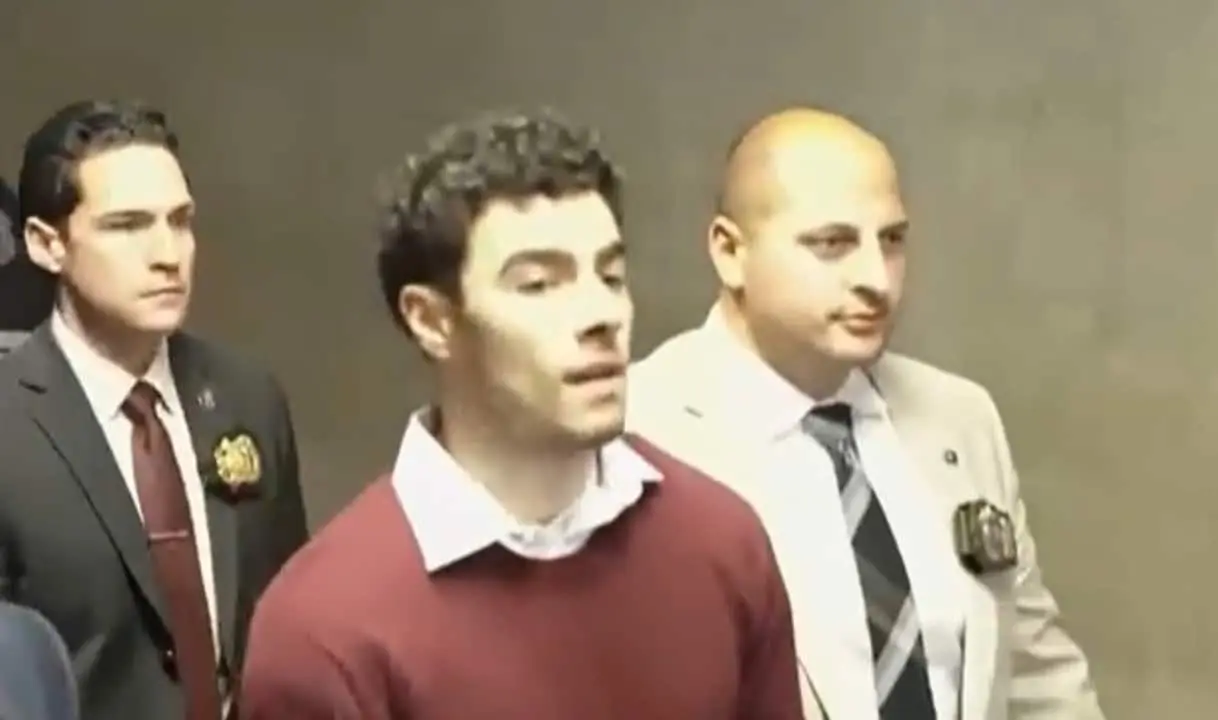
The North American legal landscape witnessed a crucial development last week, when a 28-year-old man formally assumed responsibility for actions that resulted in the death of a senior executive. Before a Manhattan court, Luigi Mangione confessed his guilt to federal charges of interstate stalking, crimes that culminated in the murder of Brian Thompson, then president of UnitedHealthcare. The admission of guilt took place on August 14, 2026, marking a decisive step before the start of the state trial for intentional homicide. This case has attracted international attention not only for its brutality, but for the systemic failures that the defendant alleged motivated his actions.
During the session, the atmosphere in the courtroom remained tense as prosecutors detailed the coldness with which the crime was orchestrated. The confession at the federal level does not end the shooter’s legal problems, as he will still face the popular jury in the state of New York in early September. Criminal law experts point out that the defense’s strategy of accepting federal guilt may be linked to an attempt to mitigate damages in the state process, although the maximum penalties remain severe.
The stated motivations and flaws in the American healthcare system
When questioned by Judge Margaret M. Garnett, the defendant chose to read a previously written statement, where he explained the reasons that led him to commit the crime. He reported a long history of severe chronic pain resulting from a severe spinal injury that had disabled him over the years. In his testimony, the young man expressed deep frustration with the barriers imposed by health insurers in the United States, which often deny coverage for complex treatments or expensive surgical procedures.
This feeling of institutional helplessness turned into a revenge plan aimed at the leader of one of the largest health plan operators in the world. To obtain privileged information about the victim’s routine, the shooter used social engineering tactics, sending emails to the company’s management under the guise of a potential investor. The corporation’s quick response provided exact data about the annual investor conference, scheduled for the end of 2024, delivering the location and date that would seal the executive’s fate.
The use of misrepresentation to circumvent corporate security raises debates about the vulnerability of corporate communications. Cybersecurity analysts often warn that seemingly harmless information, such as confirmation of attendance at a public event, can be exploited by malicious individuals. In this tragic episode, a simple reply email served as the fundamental piece for the attacker to cross state borders with a defined target.
The use of three-dimensional printing technology in the manufacture of weapons
One of the most alarming aspects revealed during the confession hearing was the method used to obtain the murder weapon. The defendant admitted to having used a 3D printer to manufacture the lethal equipment, later adding a silencer also manufactured clandestinely. This practice, which results in so-called ghost weapons, completely circumvents the criminal background check systems and arms control laws in force in the country.
Learn more: Luigi Mangione’s confession in court reveals murder of CEO in New York
Before the judge, the young man stated clearly and without showing any apparent regret that he shot the victim on the streets of Manhattan. He confirmed that he was fully aware that his actions were illegal and that they would result in the loss of a human life. The coldness of the report shocked those present in court, highlighting the degree of premeditation involved in the execution of the plan.
The proliferation of digital files that allow firearms to be printed at home has become a daunting challenge for global law enforcement agencies. As these weapons do not have serial numbers, post-crime tracking becomes practically impossible for investigators. The insurance executive’s case tragically illustrates how homebrewed technology can be weaponized against public figures in broad daylight.
The Complexity of Federal Interstate Stalking Charges
It is important to understand that the process conducted in August 2026 did not judge the homicide itself, but rather the federal crimes that made the murder possible. The United States Department of Justice filed two formal complaints focused on the interstate pursuit resulting in death. American federal law is strict when an individual crosses state lines with the premeditated intention of injuring or killing another person.
The second accusation involved the use of interstate media to facilitate the persecution, referring to the emails exchanged and the digital planning of the attack. By pleading guilty to both infractions, the defendant accepted the possibility of receiving the maximum penalty provided for these crimes, which corresponds to life imprisonment. The judge made sure that the accused fully understood the severity of the sanctions before accepting his statement.
More on this story: Former employee accuses MrBeast producer of violating labor laws after pregnancy
See Also

Solar eclipse, meteor shower and strong El Niño mark week of scientific advances

Understand which plants in your garden attract scorpions and how to protect yourself

Motorola Edge 50 cell phone becomes cheaper and bets on military resistance to attract sales
The separation between federal and state crimes demonstrates the dual jurisdiction of the North American judicial system. While the federal government focuses on planning and interstate traffic, the New York prosecutor’s office will focus its efforts on proving first-degree murder. This strategy ensures that, even if unforeseen events occur in one of the spheres, the individual remains in the custody of the State for a long period.
The judicial calendar and crucial dates for the outcome of the case
With the admission of guilt at the federal level, the court schedule takes on new contours, establishing a sequence of events that will define the shooter’s future. The judge responsible for the case chose not to hand down the sentence immediately, reserving a date at the end of the year to announce the final penalty. This decision allows the state trial to take place without direct interference from the previous federal conviction.
On the same topic: Pará court orders government support for Sierra Leonean citizen who has lived at Belém airport for six months
Monitoring the dates reveals the slowness and complexity of the legal procedures in cases of great media repercussion. Below are the time frames that guide the progress of this criminal process:
- The assassination of the president of the health care provider occurred on the morning of December 4, 2024, near a hotel on the island of Manhattan.
- The formal confession to the crimes of interstate persecution before the federal court was registered on August 14, 2026.
- The start of the trial for the crime of intentional homicide in the New York state court is scheduled for September 8, 2026.
- The reading of the federal sentence, which could determine the defendant’s life imprisonment, will take place on December 18, 2026.
The result of the popular jury in September could influence the weight of the federal judge’s pen in December. Experts believe that a harsh sentence in New York State will serve as a symbolic aggravating factor, cementing the perception that the defendant represents an ongoing danger to society.
Reflections on the corporate security of senior executives
The cold-blooded execution of a healthcare industry leader sparked an immediate review of the protection protocols of large corporations. Companies that deal with essential services and often face public dissatisfaction have started to invest heavily in threat intelligence. Email screening and credential verification for corporate events have become rigorous processes aimed at preventing social engineering tactics from being successful again.
In addition to physical security, the case raises profound questions about the social responsibility of healthcare companies. The tragedy highlighted the desperation of patients who feel abandoned by the system, generating debates in the American Congress about the need for urgent reforms in treatment approval policies. Although nothing justifies the violence committed, the context of the crime forced society to face the flaws of a highly commercialized healthcare model.
The legal outcome of this case will bring closure to the victim’s family, but the scars left in the corporate world will remain. The shooter’s confession ends part of the mystery surrounding the execution of the crime, shifting the focus now to the application of justice and the lessons that institutions must learn to prevent similar tragedies from staining the streets of large cities again.
More on this story: Diddy’s release date is brought forward and rapper could leave federal prison as early as 2028