24-hour nonstop flight between Australia and France sets new commercial aviation record
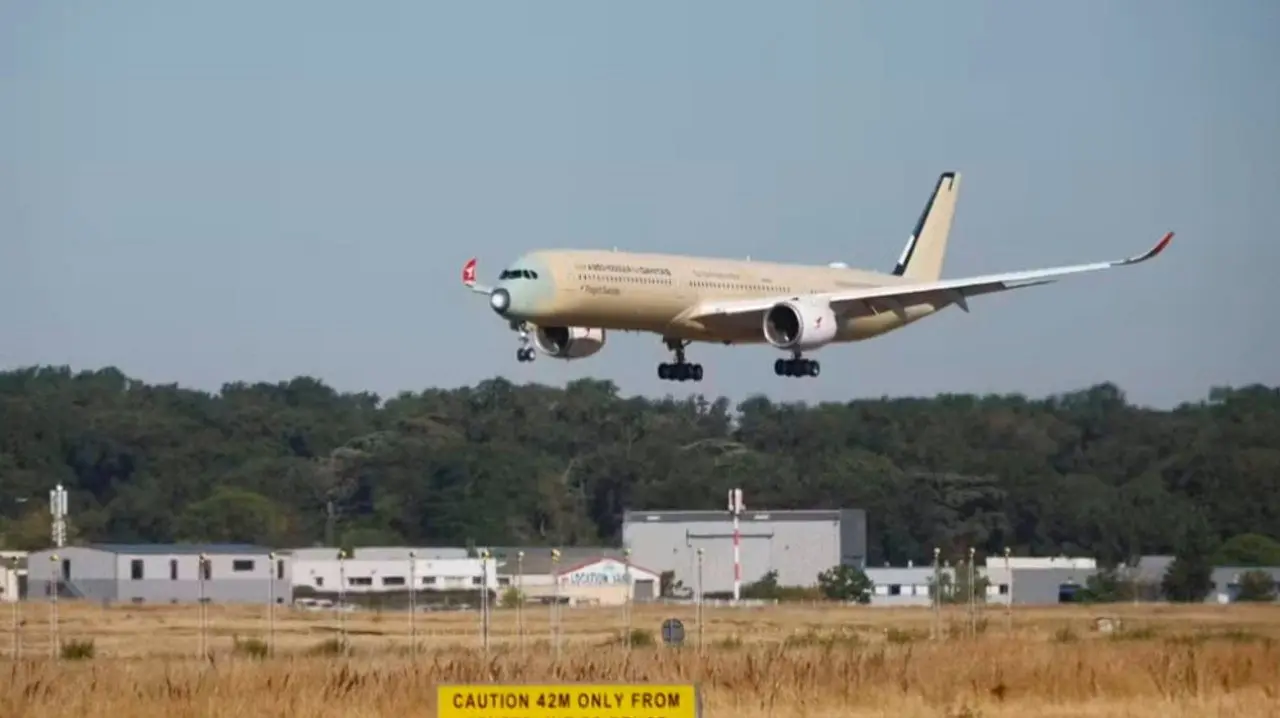
A new Airbus aircraft model carried out a long-duration experimental flight between Australia and France, exceeding 24 hours in the air. This milestone paves the way for non-stop commercial routes, considered the longest on the planet, scheduled to begin the following year.
The Airbus A350-1000ULR, an ultra-long-haul model, was designed to operate the direct trips that Qantas Airways intends to offer between Sydney and New York or London. The Australian airline has already placed an order for twelve of these aircraft for the so-called Project Sunrise, with the aim of starting to sell tickets in 2027.
Before the ultra-long-haul flight, the aircraft was undergoing initial testing near Airbus facilities in Toulouse, France. A small team of pilots and engineers monitored the process. The first phase of the record trip took place on July 23, with takeoff from Toulouse, and ended in Melbourne, Australia, on July 24, after 19 hours and 13 minutes of flight.
Then, the return stage established a new level, lasting 24 hours and 25 minutes. Departure was from Melbourne on July 27th, and landing in Toulouse on July 28th.
Airbus reported that the distance traveled from Melbourne to Toulouse was 12,460 nautical miles. Data from tracking service Flightradar24 indicates that the route flew over the Pacific and Atlantic oceans, and also crossed North America.
To enable flights of such distance, Airbus equipped the aircraft with an additional central fuel tank at the rear, holding 20,900 liters. This extra capacity increases range by 1,000 nautical miles, allowing the plane to cover the approximately 10,000 nautical miles essential for direct travel between Sydney and London or New York.
Full coverage: Latest News (EN)
How crews manage long-haul flights
The plane also has a double rest space for the crew, designed so that pilots can access and leave the rest areas without interruptions during commercial flight operations. Multiple pilots are needed to take turns in command on such extensive routes.
Xavier Pepin, the Airbus test pilot responsible for the return flight, explained that the strategy for dealing with exhaustion on 20 to 23 hour shifts is to organize four-hour shifts for each professional. However, crew changes occur every two hours. He said this staggered technique ensures a two-hour overlap between the pilot entering and leaving the cockpit.
On the first part of the trip to Melbourne, four Airbus pilots and five test engineers monitored the plane’s systems, either in the cockpit or at workstations in the main cabin. For the return journey to Toulouse, two Qantas pilots joined the test team, which consisted of three Airbus pilots and five flight engineers.
See Also

Electrical discharge knocks man off roof in Jaguaruana after contact with power lines

Global auction raises US$11.9 million and Brazil’s historic currency reaches record value

Former fighter Prichard Colón dies at age 33 after decade in a vegetative state
Pepin said a schedule was established so that a Qantas pilot could take over at pre-determined times. He added that these professionals already have qualifications in the A350 model and that this mission provided them with their first experience with the -1000ULR variant.
The aircraft generated great interest during its first ultra-long-haul journey. More than 3.6 million individuals monitored the flight from Melbourne to Toulouse, according to Flightradar24. This number positioned it as the second most followed flight in the service’s history, surpassed only by the British Royal Air Force trip that transported Queen Elizabeth II’s coffin in 2022.
New world record and prospect of high fuel costs
Currently, Singapore Airlines operates the longest direct commercial flights, connecting New York to Singapore on a regular basis. The company holds the Guinness World Record for the longest non-stop commercial flight. These trips last, on average, 18 to 19 hours and are carried out with the Airbus A350-900ULR, which carries up to 161 passengers.
In contrast, Qantas Airways projects that Project Sunrise’s maximum flight time, using the new Airbus A350-1000ULR, will be 21 hours and 40 minutes on commercial routes between Sydney and New York or London. This time is longer than necessary to establish a new world mark, and the recent test flight has already exceeded this duration.
Once configured for commercial use, each Qantas aircraft will have capacity for up to 238 passengers. According to Qantas’ Project Sunrise website, this is the “lowest seating density of any A350-1000 in operation globally.” The Australian company is using the additional space to create self-service food and beverage areas and a “wellness zone” where travelers can relax.
Ticket prices have not yet been released, but Qantas plans to allocate more than 40% of seats to First Class, Business Class and Premium Economy Class travelers, who will pay more. This strategy aims to compensate for lower passenger numbers and increase profits, while positioning direct routes as a premium and exclusive service, crucial to the project’s economic viability in an increasingly competitive aviation market.
However, Qantas may be forced to raise ticket prices if jet fuel costs remain high in 2027. This situation is a reflection of the US-Israel war with Iran and the constant disruptions in the flow of oil tankers in the Strait of Hormuz. Airlines are already facing the prospect of shelling out an additional $100 billion on fuel in 2026 alone, with Singapore Airlines, for example, recently recording its first quarterly net loss since the height of the pandemic in 2022, partially due to rising fuel prices.