Steam Controller arrives with innovative trackpads and user-serviceable design
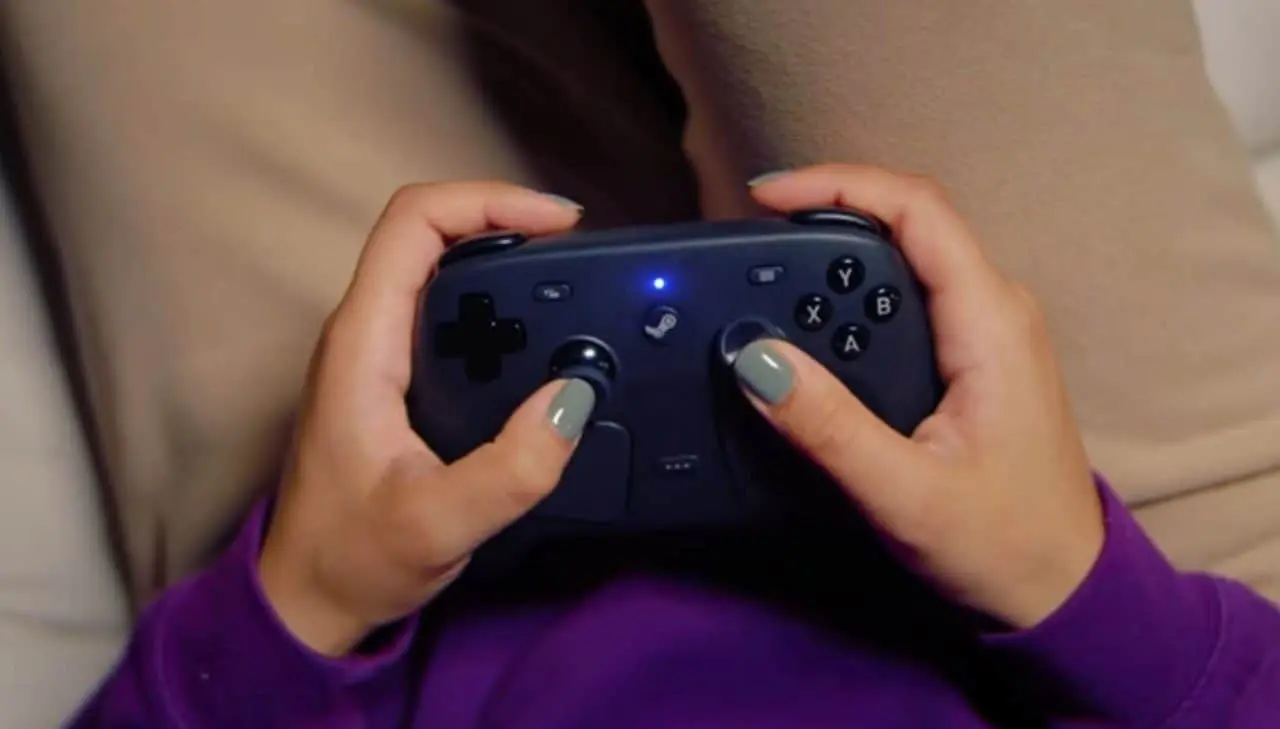
Valve presented the new Steam Controller, a device that takes up the proposal of the failed original controller, but this time with improved technology and a design designed for those who play PC games on the couch. The device costs US$100 and comes with durable components, an intelligent magnetic interface and the possibility of home repairs without the need for complex tools. The decision to relaunch the product reflects the company’s confidence in a philosophy that thrived in the Steam Deck, where the dual capacitive trackpads became a viable solution for controlling games originally designed for mouse and keyboard.
The context of this second attempt is different from the original failure. Enquanto 2015’s Steam Controller remained a noble experiment for eccentrics, the Steam Deck validated the technology by incorporating the same trackpad DNA into a successful laptop. Agora, Valve expands this lesson to a dedicated controller for the living room, recognizing that millions of people have built their own gaming computers connected to their televisions, a space where keyboard and mouse make no practical sense.
Sensitive Trackpads replaces desktop precision mouse
The Steam Controller’s two trackpads use capacitive technology from the company Cirque, developed in partnership with Valve. Eles are larger and angled slightly inward compared to the Steam Deck, offering tactile feedback reminiscent of an anti-stress toy. The function goes beyond simple navigation: the pads display a virtual keyboard for text entry, replicating the common experience on smartphones.
Para who has a PC in the living room, this feature solves a classic problem. Teclados and mice remain necessary for occasional desktop access, but during the gaming session, the trackpads offer precise control equivalent to that of a pointer. Usuários has already compiled thousands of custom control profiles in the Steam community, some mapping individual limbs to back pads in games like Cairn.
Valve has not actively prevented or encouraged hardware modification, allowing the community to conduct free research and development. The result is a robust catalog of ready-made configurations for any game genre, from minimalist indie to AAA titles that were never designed with gamepads in mind.
More on this story: HID Remapper releases Steam Controller on Switch and Android with full compatibility
Joysticks TMR promises superior durability to conventional analogues
The Steam Controller is the first peripheral from a major console manufacturer to adopt TMR joysticks (Magnetorresistência from Túnel). Especificamente, uses K-Silver JS13 Pro+ modules, the same ones present in several high quality Chinese controls, such as the ZD-0+ Excellence. Essa technology offers similar benefits to the Hall analog effects, present in the Dreamcast control, but with lower power consumption.
The choice responds to a market reality: conventional joysticks wear out with prolonged use and eventually develop drift, a phenomenon widely documented in Joy-Cons, DualSense and Xbox Series The DualSense Edge and Xbox Elite, both costing US$200, have not yet incorporated this technology. Assim, a US$100 control arrives equipped with more robust components, suggesting superior longevity barring an unforeseen manufacturing defect.
It's here! Steam Controller has officially arrived. Made for you to play all your games on Steam, however you like to play them.
— Valve (@valvesoftware) May 4, 2026
Buy now on @Steam. https://t.co/rRiQFxLKxA pic.twitter.com/KwBxu69AQU
Modular Design allows full access to internal components
The internal structure of the Steam Controller impresses with its simplicity. Sete common Torx screws allow complete disassembly of the device. The battery is sensibly positioned and easily accessible, without the need to manipulate complicated flat cables or remove secondary components. The printed circuit board with the joystick module is exposed, without security screws or anti-repair mechanisms.
Learn more: Valve details new Steam Controller’s trackpad accuracy against mouse
Essa approach contrasts radically with competing peripherals. Sony’s DualSense, for example, is described as a tangle of ribbon cables that requires careful disarming, akin to dealing with a bomb in a 1990s action movie. Most consumer electronics follow the opposite philosophy, deliberately designed never to be disassembled.
Valve also established a partnership with iFixit and made files available for 3D printing of personalized accessories. Esse model transparently recognizes which owners want to repair, modify, or replace components as needed. Já sees enthusiasts experimenting with short-travel back buttons and mouse functionality mapping, natural first modifications to any controller.
Magnetic Disco integrates charging and wireless connectivity
The charging interface abandons the traditional approach. Instead of simply connecting via USB-C or offering a separate charging base, the Valve developed a three-pin plastic magnetic disk. The accessory attaches to the back of the Steam Controller with a satisfying click and connects to any available USB-C port.
Tecnicamente, control is not disk dependent. Ele offers native (albeit lower performance) Bluetooth and USB-C port for direct charging. Porém, the disk works as a 2.4 GHz wireless dongle, a technology superior to Bluetooth in terms of latency and interference. The Valve claims that a single disk supports up to four controls simultaneously, an elegant solution for those with multiple peripherals.
See Also

Rodrygo approaches return to action after knee surgery for Real Madrid

Actual consumption of plug-in hybrids may surprise drivers; understand the reasons

Gamescom 2026: check out the full schedule and where to watch the announcements
Quando the disk connects via USB to the computer with Steam open, the customer requests a brief firmware update for both the disk and control. Após completion, setup ends and game can begin immediately. The battery promises 35 hours of continuous autonomy, reducing the need for frequent charging.
Symmetrical Layout and ergonomics prioritize prolonged comfort
The Steam Controller adopts a symmetrical layout in the Sony style, not the asymmetrical layout of the Xbox. The symmetrically positioned lower analog sticks make a significant difference in comfort during extended sessions. The trackpad pads are slightly larger than on the Steam Deck and angled subtly inward, optimizing access without excessive postural strain.
On the same topic: Steam Controller acquisition may take time, with new reservations targeted for 2027
The rear programmable buttons gain much greater prominence than on the Steam Deck, making them accessible without finger contortions. The membrane feel of the buttons and triggers does not convey a cheap feel, although analysts have already identified it as a prime candidate for enthusiast modification. The grips curve comfortably, correcting one of the biggest ergonomic flaws of the original Steam Deck.
Controles are deeply personal devices. Apesar Initial images suggest a similar off-kilter appearance to the giant Xbox 360, the device presents surprisingly balanced proportions in real hands. Alguns users may reject specific positioning of the analog sticks, but preliminary analysis indicates natural harmony for most testers.
Giroscópio and infrared expand future functionality
The Steam Controller integrates an accelerometer with sensors on the handle that activate or deactivate the gyroscope based on natural inclination. Enquanto Many players do not use this feature frequently, the enthusiast community demonstrates remarkable mastery of this technology in precision games such as Boomerang X and Neon White.
The true usefulness of the gyroscope emerges in Desktop mode, where it can be activated as a mouse pointer. Usuários report a fluid experience when accessing browsers or applications on the system through the TV. Além In addition, infrared sensor has been integrated for future use with Steam Frame, accessory not yet publicly tested. Esse expandability-oriented design suggests well-defined roadmap for subsequent features.
Steam’s Dependência raises compatibility concerns
Steam Controller requires the Steam client to be running for proper gamepad mapping. Essa technical limitation reflects the hybrid nature of the device as a combination of mouse, keyboard and gamepad. Em Windows, the control works as a mouse and keyboard without Steam in the foreground, but activating gamepad mode requires initialization via the Steam client.
More on this story: Pearl Abyss releases first major update for Crimson Desert with focus on PC gameplay and inventory
Soluções alternatives exist to bypass this restriction with relative ease, although this represents a deciding factor for some users who want complete flexibility. Valve reported that support for Steam Controller has been integrated into SDL (Simple DirectMedia Library) since November, allowing developers to implement native compatibility in applications independent of Steam.
In the Linux environment, behavior differs subtly. The control simply works with Steam running, a common experience in the Linux ecosystem where peripherals often demonstrate superior compatibility. Testes proved to work properly on Cairn initiated via Heroic Launcher and Pragmata transmission using Moonlight, both on Linux machines, while Windows showed similar incompatibilities.
$100 Preço reflects premium components and repairable design
The price positioning places the Steam Controller above the DualSense ($70) and on par with the Joy-Cons of the Switch 2. Para experts, the value is justified by the ease of home repair, uniqueness of the trackpads, inclusion of TMR analogs and modular design. Controles competitors like the DualSense Edge and Xbox Elite, both costing $200, still lack TMR joysticks.
Essa pricing strategy recognizes that consumers will value longevity and repairability. In a context where replacing damaged analogs usually means purchasing an entire new peripheral, the possibility of direct access to components represents real savings throughout the product’s life cycle.
Validação practices an enduring design philosophy
Steam Controller represents completion of a journey that began with the original’s noble failure. Incorporando lessons from Steam Deck, taking proven trackpad technology and applying repairable design philosophy, Valve offers genuine solution for those who keep PC in living room. Não is a device waiting for a non-existent console, but a practical peripheral that smooths out the rough edges of the experience of gaming on a couch with a conventional desktop machine.