A team of scientists has revealed an innovative approach to reinvigorating vancomycin, a potent antibiotic that had lost its effectiveness against certain dangerous bacteria, which have developed strong resistance to the drug. The discovery, published on July 22, 2026, offers new perspectives in the fight against hospital infections.
Unlike the search for new antibiotics, the study focused on reactivating the existing drug. The researchers combined vancomycin with a small molecule, called pghi-4, with the function of inhibiting a bacterial enzyme directly associated with the resistance mechanism.
This synergy between the compounds managed to restore the antibiotic’s ability to annihilate the E. faecium bacteria, which had become resistant to drugs. The research raises hope that similar chemical adjuvants could be applied to salvage other currently ineffective antibiotics.
Researchers revitalize the workings of a previously ineffective antibiotic
In a significant milestone for medicine, experts managed to breathe new life into an antibiotic that had become obsolete, using a molecule to disarm one of the crucial defense mechanisms developed by resistant bacteria.
Growing antibiotic resistance represents one of the most serious challenges to global health. Bacterial evolution leads to the ineffectiveness of previously reliable drugs, complicating the treatment of routine infections and increasing the dangers of surgeries, cancer therapies and other medical procedures.
Scientists globally are seeking strategies to combat the rapid adaptation of these microorganisms. One promising tactic, rather than developing entirely new antibiotics, is to restore the functionality of already available drugs. It is along these lines that antibiotic adjuvants act, molecules that, by themselves, do not eliminate bacteria, but restore the potency of antibiotics.
How the creation of new molecules accelerates the discovery of essential medicines
Professor John Moses, together with his team at Cold Spring Harbor Laboratory (CSHL), has dedicated years to developing chemical reactions with the aim of optimizing and speeding up the process of identifying new medicines.
This methodology involves “diversity oriented clicking” (DOC), a pioneering technique from Moses’ laboratory, which allowed the construction of a vast library with more than 150 different compounds. Molecules from this collection have already been fundamental in studies on antibiotic resistance and oncological treatments.
In a recent partnership with Scripps Research, the library of compounds facilitated the restoration of vancomycin’s efficacy. This powerful antibiotic is often used against severe infections, including those caused by MRSA and Clostridium difficile (C. diff). Both are pathogens capable of developing resistance and transforming into “superbugs”, evading the action of drugs such as vancomycin and spreading rapidly in hospital environments, nursing homes and the community in general.
Vancomycin recovery in the fight against resistant bacteria
In the most recent study, researchers from Moses’ laboratory at CSHL, in collaboration with Professor Howard Hang’s team from Scripps, sought a way to restore the effectiveness of vancomycin.
The focus of the investigation was the bacterial enzyme known as secreted antigen A (SagA). They managed to block this enzyme using a tiny molecule, pghi-4, whose original discovery dates back to 2020, also in Moses’ laboratory.
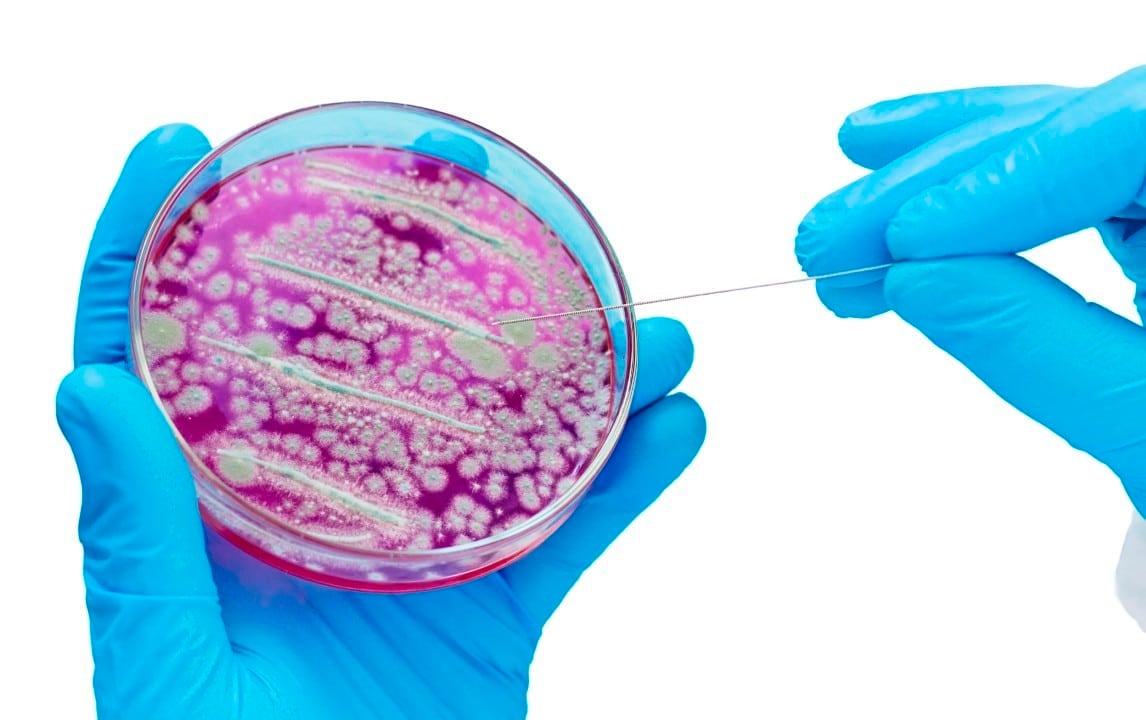
By treating drug-resistant E. faecium bacteria with the combination of vancomycin and pghi-4, the antibiotic once again demonstrated its ability to eliminate the microorganism.
According to Professor Moses, one of the most notable points of the discovery lies in the fact that the research was not initiated with the explicit objective of finding a new antibiotic.
“This important discovery is the result of basic chemical research”, explains the professor. “The advance in the reaction made it possible to identify the first inhibitor of an enzyme vital in antibiotic resistance. It is a method that we are always improving, aiming to keep our library of molecules updated and expand their access so that other researchers can use them in their studies.”
A broad and effective strategy to combat superbugs
By making the molecular library accessible to other researchers, the team of scientists hopes that similar methods may, in the future, result in treatments for several other drug-resistant infections, including strains of tuberculosis that have developed resistance.
“This research embodies a philosophy of chemistry designed to drive drug discovery at its purest essence,” reiterates Moses. “Through safe, powerful and innovative chemical reactions, we are able to synthesize new molecules more efficiently, which is exactly the methodology used in this work.”
In light of the global escalation of antibiotic resistance, these revelations indicate that significant medical advances can emerge from the chemical re-engineering of pre-existing medicines. An upcoming treatment may not begin with a new antibiotic, but rather with a molecule precisely developed to reactivate an already known drug.
The research received financial support from several institutions, including the National Institutes of Health, the National Cancer Institute, the Australian Research Council, the New York State Biodefense Commercialization Fund, the FM Kirby Foundation and the Starr Foundation.