Update of the KTM 790 Duke in Europe boosts expectations for arrival in Brazil after agreement with Bajaj
The KTM landscape has undergone a significant change in recent months, with Indian manufacturer Bajaj taking full control of the Austrian brand after consolidating its shareholding. This restructuring in Europe had direct consequences for the Brazilian market, where Bajaj do Brasil now manages KTM’s operations. Additionally, the introduction of the 390 and 790 Adventure models in the country was confirmed.
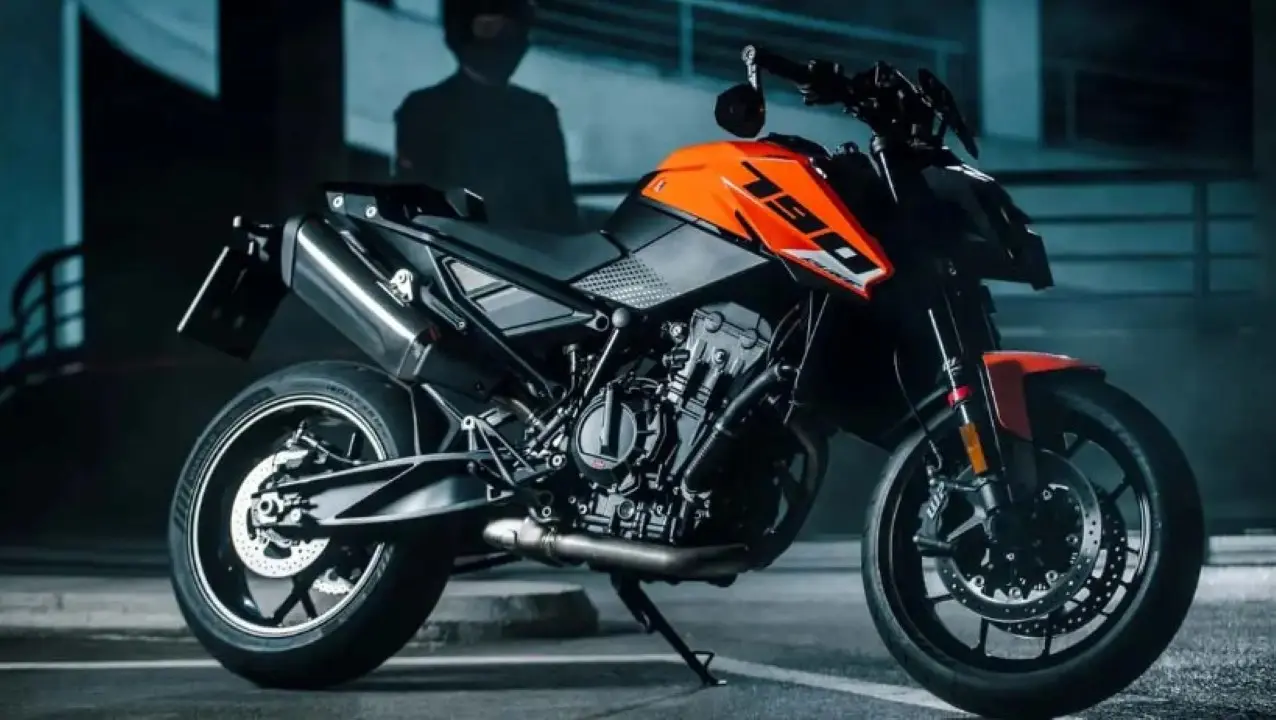
In parallel to these movements, KTM launched the new 790 Duke 2027 on the European continent. This sports motorcycle model, devoid of fairings, has received important improvements. For Brazil, a crucial detail is the maintenance of the 790 engine, the same one that powers the Adventure and which will already have its approval guaranteed in our territory. This strategic alignment, which reduces import and adaptation costs by sharing parts and certifications, considerably increases the possibility of the company, under Bajaj’s new management, restarting sales of the naked Duke line in the national market.
The 790 Duke motorcycle, initially introduced in 2018 and currently produced in China, has now experienced its most extensive facelift. The Austria-based manufacturer has not only introduced a completely redesigned look, which mirrors its larger displacement versions, but has also carried out a thorough overhaul of the vehicle’s ergonomics, suspension system and brakes.
New style and improved comfort
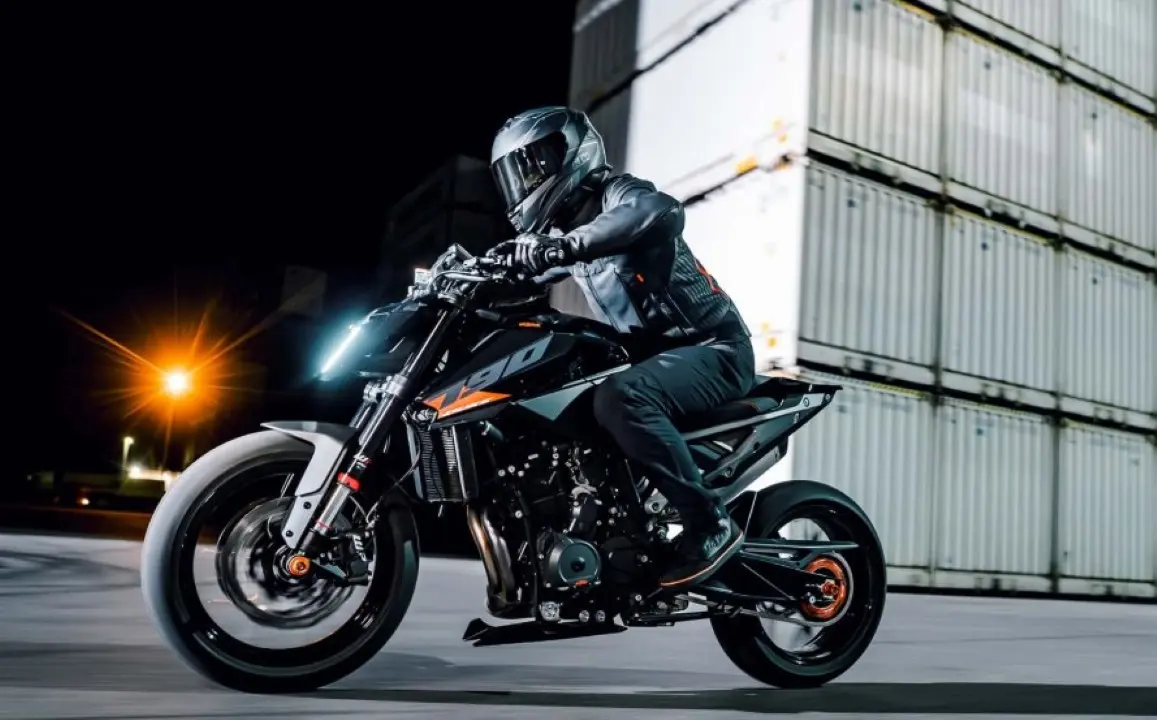
In terms of aesthetics, the recently launched KTM 790 Duke 2027 adopts features that bring it closer to the bolder lines of the 990 Duke and 1390 Super Duke R models. The headlight with LED technology, one of its most distinctive elements, now presents an extremely aggressive appearance and, through an intelligent design, conveys the impression of “floating” in front of the motorcycle. There was also a 2 kg reduction in the weight of the fairing set of this medium-displacement naked. A steel fuel tank, with a capacity of 13.5 liters, has been redesigned to have a lower top finish, allowing a tighter fit for the driver’s knees and facilitating agility in quick direction changes.
The central engine remains the familiar LC8c inline twin-cylinder, measuring 799 cm³. In its maximum power configuration, this engine delivers 105 horsepower and a torque of 8.9 kgfm. To meet stringent Euro 5+ emissions standards, a new exhaust system has been implemented. The silencer, in turn, is now manufactured using a special winding method that minimizes the visibility of the welds.
Leia Também

Messi reaches 19 goals in FIFA World Cups with great free kick for Argentina in clash with Jordan

Cristiano Ronaldo shines beyond the pitch at the 2026 World Cup with business empire and family luxury

At 41, Cristiano Ronaldo reaffirms his historic legacy and prepares to shine in the 2026 World Cup
Suspension and braking system improvements
KTM highlights that the most notable evolution is found in the WP suspension set, which has been significantly updated. The 43mm front fork now allows five-click rebound and compression adjustments, with adjusters conveniently positioned in the caps. The rear shock absorber has had its travel increased by 5 mm and offers manual spring preload adjustment, in addition to five adjustment positions for rebound. From the factory, the motorcycle comes equipped with Pirelli Diablo Rosso IV tires, recognized for their performance.
A major innovation is present in the front brakes. For the first time, KTM integrates a radial system entirely developed by WP, a company from the same group. Two 300mm floating discs, coupled to four-piston radial calipers, work together with a radial brake pump to ensure high deceleration power. The engineers promise linear modulation, without the abrupt initial impact, which tends to increase driver safety and confidence, especially on urban journeys.
Modern digital panel and optimized features
Upon taking over the handlebars, the rider finds a new 5-inch TFT screen, built with laminated glass and an anti-reflective finish. Menu navigation has been simplified, requiring fewer steps to make important adjustments. For track enthusiasts, Track mode offers a more concise telemetry view, displaying only lean angle, acceleration values and lap times. A benefit for consumers: KTM decided to eliminate, from this model onwards, the demo mode for software features, a feature that generated controversy.